A polo shirt with a raised, stitched chest logo sends a different message than a jersey with a crisp player name and number. That is the practical decision behind embroidery vs vinyl printing. Both methods create professional branded apparel, but they perform differently across fabrics, logo styles, order quantities, budgets, and daily wear.
For uniforms, promotional campaigns, school teams, and corporate events, the best choice is rarely about one method being universally better. It is about selecting the finish that represents your organization well and holds up in the way the garment will actually be used.
Embroidery vs Vinyl Printing: The Core Difference
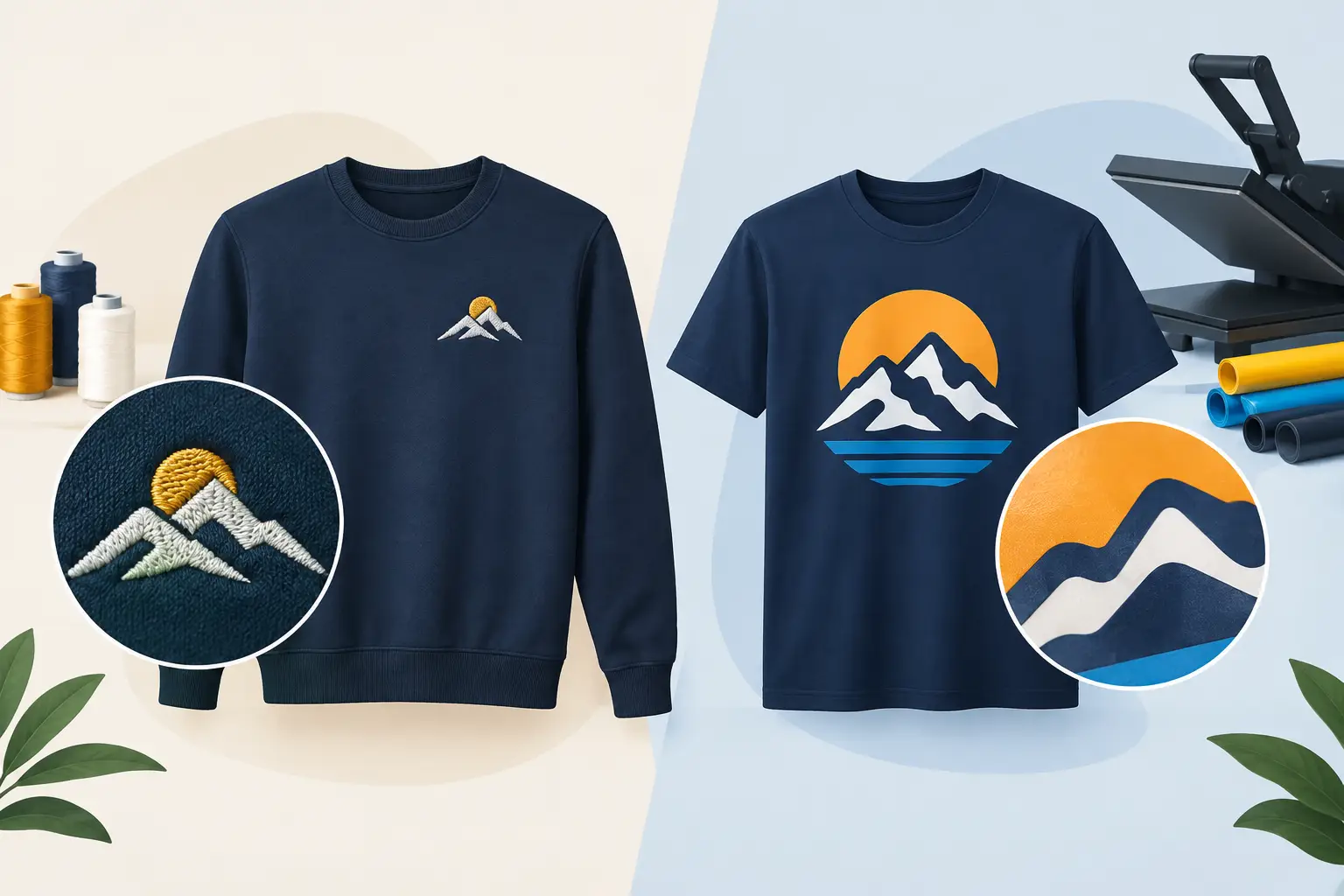
Embroidery creates a design by stitching colored threads directly into the garment or item. The result has texture, dimension, and a premium appearance that works especially well for company logos, names, and small brand marks. It is commonly used on polos, button-down shirts, work jackets, caps, bags, and corporate gifts.
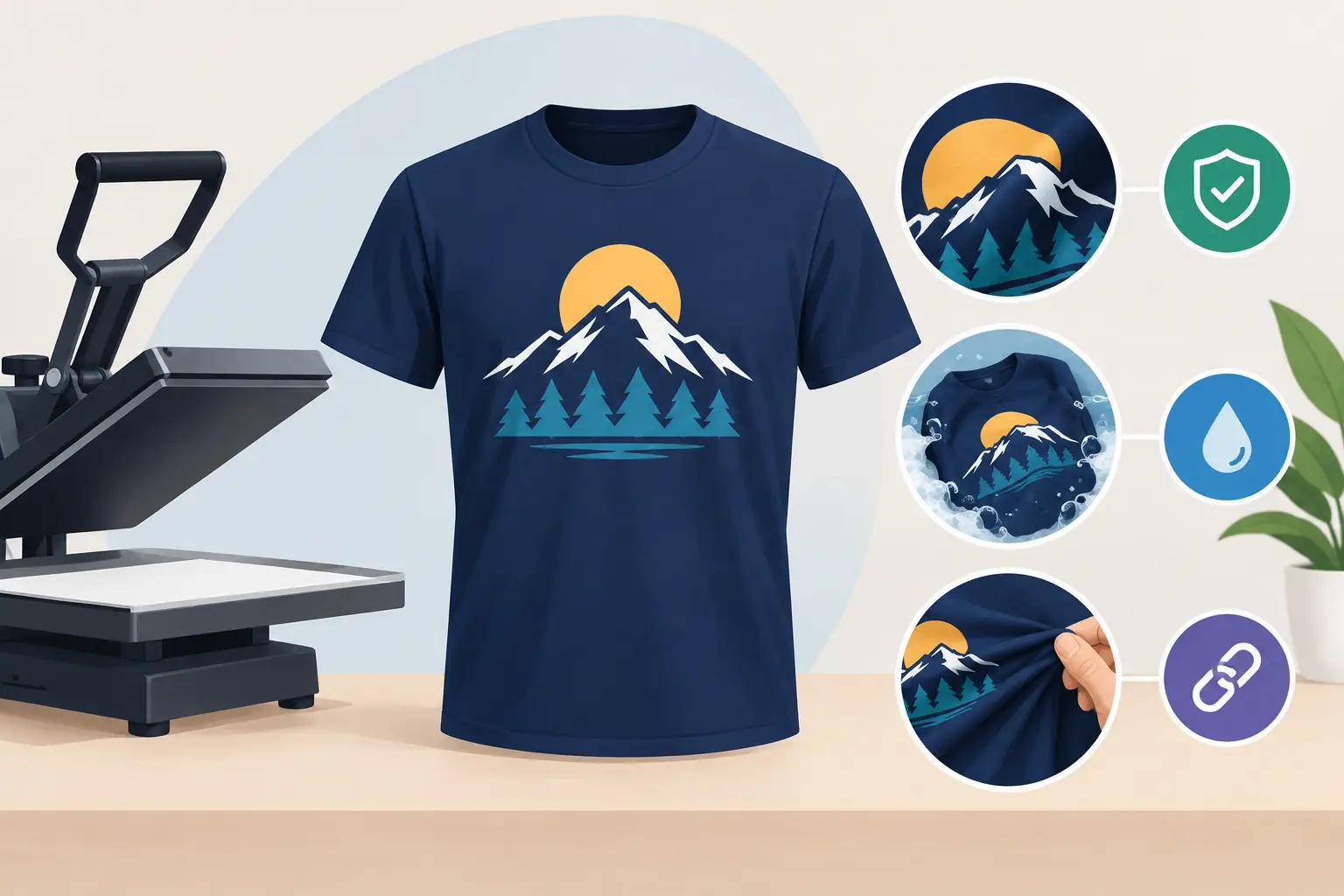
Vinyl printing uses heat and pressure to apply a cut vinyl design to the surface of a garment. It produces clean edges and solid color coverage, making it a strong option for lettering, numbers, simple graphics, and designs that need to stand out from a distance. It is often used for event shirts, sportswear, team names, staff identifiers, and short-run promotional apparel.
The visual difference is immediate. Embroidery becomes part of the garment through thread, while vinyl sits smoothly on top of the fabric. Your logo, garment type, and intended use should guide the choice.
When Embroidery Is the Better Fit
Embroidery is often the first choice when an organization wants apparel that feels established, polished, and long-lasting. A stitched logo adds perceived value without needing a large or complex design. It is particularly effective for customer-facing teams where professional presentation matters every day.
Best for uniforms and premium branded pieces
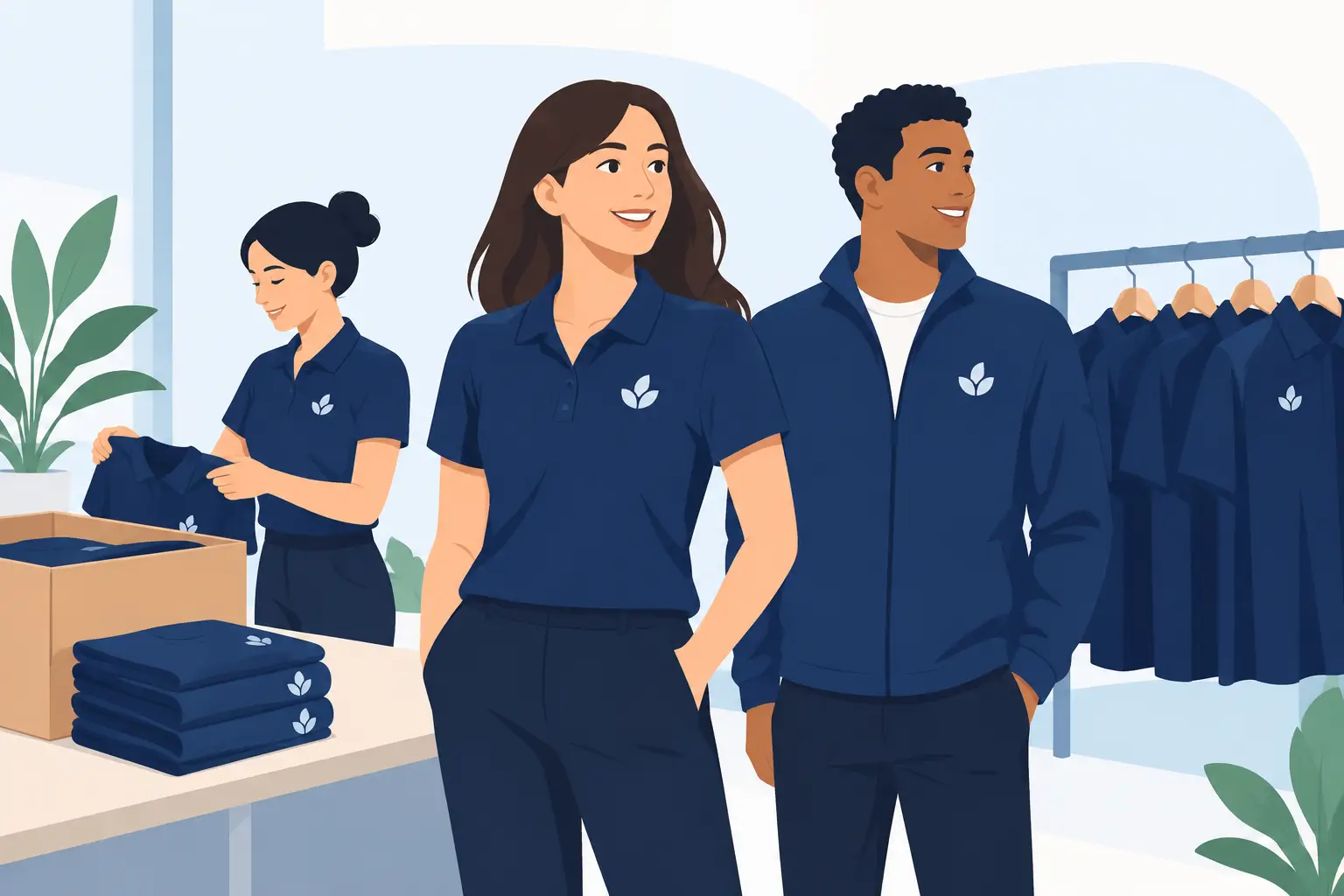
Corporate polos, hospitality uniforms, retail staff shirts, workwear, outerwear, caps, tote bags, and executive gifts all benefit from embroidery. A small left-chest logo on a polo, for example, remains visible without overwhelming the garment. The texture also gives a simple logo more presence than a flat print.
Embroidery handles frequent washing well when the garment and backing are correctly matched. This makes it suitable for staff uniforms that will be worn repeatedly, especially when branding needs to look consistent across departments and locations.
Strong choice for simple logos
Clean logos with bold shapes, readable lettering, and limited colors translate well into stitches. A logo must be digitized before production, which means it is converted into a stitch file that tells the embroidery machine where and how to place thread.
Very fine lines, tiny text, subtle gradients, and photographic artwork may need to be simplified. This is not a limitation to ignore during approval. It is a production consideration that protects readability. A capable decoration team will advise on stitch density, thread colors, and minimum text size before bulk production begins.
Consider the garment weight
Embroidery adds weight and structure to the decorated area. On a polo, jacket, cap, or canvas bag, that is usually an advantage. On an ultra-light performance shirt or thin fashion tee, a dense stitched design can feel heavier and may pull the fabric slightly.
For lightweight garments, keep embroidered logos modest in size and choose a placement that supports the fabric. If the design needs to cover a large area, another decoration method may be more comfortable and cost-effective.
When Vinyl Printing Makes More Sense
Vinyl printing is a practical option when clarity, speed, and personalization are more important than a textured premium finish. It excels at bold, uncomplicated artwork and variable details that change from one garment to another.
Best for names, numbers, and short-run personalization
Sports teams, school houses, company games, volunteer crews, and event organizers frequently need individual names or numbers. Vinyl is well suited to this work because each design can be cut and applied separately without changing a screen or creating a new embroidery setup for every person.
For example, a company can order matching athletic shirts with a shared event logo, then add each participant’s name to the back. A school can use the same jersey layout while assigning different player numbers. This flexibility makes vinyl especially useful where personalization is central to the order.
Clean color blocks and high visibility
Vinyl creates opaque, solid areas of color that can stand out on dark garments. White lettering, metallic finishes, reflective materials, and bright team numbers are common applications. The sharp edges are ideal for block fonts, simple icons, and graphic elements that must remain easily readable at a glance.
This does not mean vinyl is the right answer for every colorful design. Artwork with many shades, detailed illustrations, or large photographic effects can become labor-intensive when each color requires separate cutting and layering. For those designs, screen printing, sublimation, or direct-to-garment printing may be a better production route.
Feel and care requirements
Vinyl has a smooth, slightly different feel from the garment fabric. Modern heat-transfer vinyl can be durable when applied properly, but care instructions matter. Washing garments inside out in cold water, avoiding harsh bleach, and limiting high dryer heat helps preserve the application over time.
A large vinyl print can also reduce breathability in the covered area. On activewear, that matters. A small chest logo or back number is generally comfortable, while a full-front solid design may feel warmer during physical activity.
Compare Cost by Order Purpose, Not Price Alone
Price is a real purchasing factor, but the lowest unit cost does not always deliver the best result for the job. Embroidery costs are influenced by stitch count, design size, number of locations, and digitization. A small logo can be economical across a larger uniform order, while a large, dense logo requires more thread and production time.
Vinyl pricing depends on design size, color layers, placement, and the level of personalization. A one-color name or number is efficient. Multiple layered colors, intricate cuts, or large quantities of different individual names increase handling time.
Consider the garment’s expected lifespan. For a staff polo intended for a year of regular use, a refined embroidered logo may provide greater value than a lower-cost alternative. For a one-day charity walk, a simple vinyl design can meet the brief efficiently and make participant identification easy.
Match the Decoration Method to the Garment
The garment is not just a blank canvas. Its fabric, construction, and purpose affect decoration quality.
Embroidery works well on stable fabrics such as pique polos, cotton twill caps, fleece, jackets, woven work shirts, and structured bags. It can be applied to many materials, but thin, stretchy, or delicate fabrics require careful stabilization to prevent puckering.
Vinyl works across cotton, polyester, cotton-poly blends, and many performance fabrics when the correct material and temperature settings are used. However, some garments have water-resistant coatings, heat-sensitive fibers, textured surfaces, or dye migration risks that require testing before production. Polyester jerseys, for instance, may need a specialty vinyl to prevent dye from bleeding into lighter-colored graphics.
This is why garment selection and decoration selection should happen together. Choosing a shirt first and deciding on branding later can create avoidable compromises.
A Simple Decision Framework for Buyers
Choose embroidery when your priority is a premium uniform look, a compact logo, long-term staff wear, or structured items such as caps and bags. It is the natural fit for organizations that want their logo to feel established and refined.
Choose vinyl printing when you need individual names, jersey numbers, bold text, quick event identification, or a short-run design with simple colors. It is particularly useful when every garment needs a different detail.
If your artwork is detailed, large, or multi-colored, do not force either method to do a job better handled by screen printing, sublimation, heat transfer, or direct-to-garment printing. A full-service supplier should recommend the process that protects the final product, not simply the process that is easiest to sell.
Get the Details Right Before Production
Before approving a bulk order, provide a clear logo file, confirm exact Pantone or brand colors where applicable, and identify every decoration location. Specify whether garments will be worn in offices, outdoors, on the field, or in physically demanding work environments. These details affect fabric recommendations, print sizing, and the decoration method itself.
It also helps to confirm size ranges, garment colors, personalization lists, and delivery deadlines early. For orders with names or numbers, review spelling and numbering carefully before production begins. A production proof is not just an administrative step. It is where brand standards, placement accuracy, and practical wearability come together.
Green Cotton helps organizations align garment selection, decoration method, and production requirements from the first concept through bulk delivery. Your identity is carried by every finished piece, so the right question is not simply whether embroidery or vinyl costs less. It is which finish makes your team, event, or brand look right when it matters most.