
A missed sizing detail can leave a varsity player in a jersey that pulls at the shoulders, while a late approval can put an entire team in last season’s kit on opening day. A strong school sports uniform procurement guide prevents those avoidable problems by treating teamwear as a coordinated production project, not a last-minute purchase. The goal is simple: give every student-athlete a uniform that performs well, represents the school clearly, and arrives when the schedule demands it.
For athletic directors, school administrators, booster clubs, and team coordinators, the right approach balances appearance, comfort, durability, budget, and lead time. Each decision affects the next, from fabric selection through artwork approval and bulk delivery.
1. Start With the Season Calendar, Not the Catalog
Procurement should begin with the first date uniforms are needed, then work backward. Account for team selection, player number assignments, design approval, size collection, production, quality checks, packing, and delivery. Add contingency time for late roster changes or a replacement order.
The ideal lead time depends on the garment and decoration method. A stock jersey with a straightforward print may move faster than a fully custom sublimated uniform with custom colors, names, and numbers. Embroidered warm-up jackets, specialty fabrics, and multiple garments per athlete also require more planning. Ordering early gives the school more choices and more room to correct details before production starts.
Create one shared calendar that includes the coach, athletic department, purchasing contact, and supplier. Approval delays are often the real reason uniforms arrive late, so identify who has final sign-off on colors, logos, placement, and budget before artwork is prepared.
2. Build a Uniform Specification Before Requesting Quotes
A quote is only as accurate as the information behind it. Rather than asking for “sports uniforms” in general, define exactly what each athlete needs. A basketball program, for example, may require home and away jerseys, shorts, warm-up tops, and optional staff polos. A track team may need race singlets, shorts, hoodies, and event-specific layers.
Your specification should state the garment type, fabric, base colors, trim colors, logo locations, player name and number requirements, sizes, and quantities. Include whether the order covers athletes only or also coaches, managers, volunteers, and booster staff. If an item must meet league rules, such as number size or logo placement, document that requirement at the start.
It also helps to separate required items from optional items. A mandatory game uniform should receive the highest budget and production priority. Spiritwear and extra training pieces can be added if the timeline and funding allow. This prevents a nonessential item from delaying the kit the team must wear on game day.
Choose fabric for the sport and the climate
Fabric should support how the uniform will actually be used. Lightweight moisture-wicking polyester is a common choice for high-movement sports because it dries quickly and holds color well. Mesh panels can improve ventilation, while heavier knits may suit cooler weather, contact sports, or warm-up apparel.
Cotton-rich garments can feel familiar and work well for fan apparel, team travel shirts, or casual training, but they may retain moisture during intense competition. There is no single best fabric. The right choice depends on the sport, local weather, washing frequency, and whether the garment is for performance, presentation, or both.
3. Select Decoration That Fits the Design and Wear Conditions
School identity needs to stay sharp after repeated washing, travel, and hard play. The decoration method should match the garment material, design complexity, order quantity, and expected use.
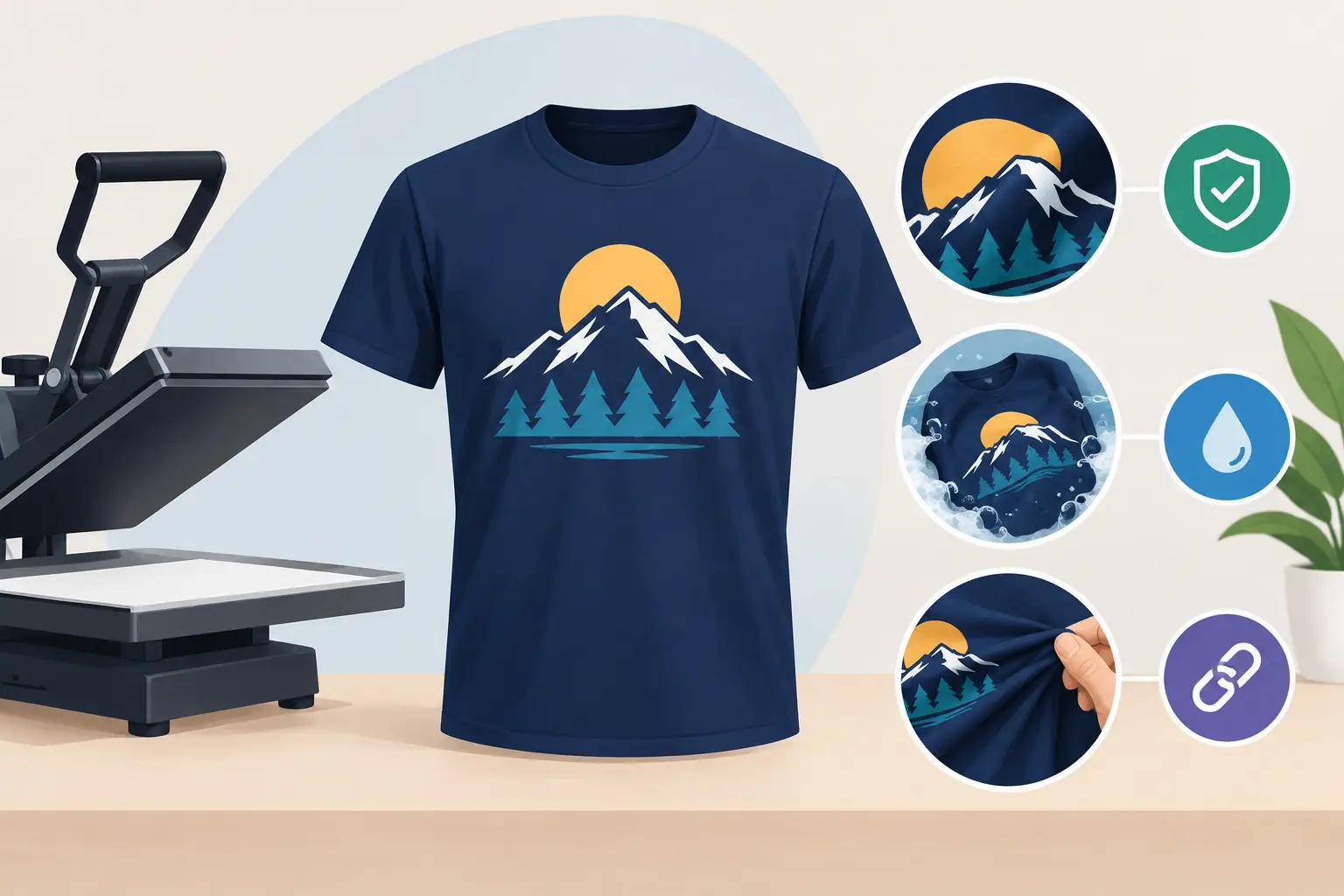
Sublimation is especially effective for polyester jerseys with full-color artwork, gradients, bold side panels, and integrated player numbers. Because the design becomes part of the fabric, it will not crack or peel in the way a surface-applied print can. It is a strong option for fully custom teamwear, though it generally requires more design and production planning.
Screen printing is practical for clear, high-volume graphics with a limited color count, such as team T-shirts or event apparel. Heat transfer can suit individual names and numbers, especially where personalization varies by athlete. Embroidery gives polos, caps, jackets, and coach apparel a premium, structured finish, but it is usually less suitable for lightweight performance jerseys.
Ask to review the proposed artwork at actual production scale. A crest that looks crisp on a screen can become too detailed when stitched onto a cap or printed on a youth jersey. Confirm logo size, thread or print colors, and the visibility of names and numbers against the garment background.
4. Treat Sizing as a Data Collection Task
Sizing is one of the most common causes of dissatisfaction because manufacturers’ measurements are not interchangeable. A medium in one cut may fit differently from a medium in another. Never rely only on the size labels from a previous supplier.
Use a size chart with garment measurements, and where possible, arrange physical samples for athletes to try on. Coaches should tell players whether the intended fit is relaxed, standard, or close to the body. This matters in sports where protective gear, compression layers, or freedom of movement changes the size choice.
Collect each athlete’s size through a controlled form rather than scattered messages. Include the athlete’s name, team, garment size, preferred number, and any approved personalization. Set a firm deadline, then lock the roster before production. For growing programs, order a small number of blank spares in commonly requested sizes. That modest buffer is often less expensive than a rushed one-off reorder later.
5. Compare Total Value, Not Just Unit Price
The lowest unit price may not be the lowest overall cost. A procurement decision should account for fabric quality, decoration durability, setup charges, individual numbering, packing, delivery timing, and the supplier’s ability to replace an error. A cheaper jersey that fades early or arrives after the first tournament creates a cost the original quote never showed.
Request quotes based on the same specification so comparisons are fair. If one supplier quotes a basic stock shirt and another quotes a custom-cut performance jersey, the difference is not simply a pricing issue. It is a different product with a different use case.
Budget planning should also anticipate variables. Player names, numbers, additional logos, extended sizing, and late additions may change the final amount. Establish a per-athlete budget, a total program budget, and a contingency amount for roster movement. For multi-sport schools, consider standardizing brand colors and core garments where appropriate. Consistency can simplify future ordering without forcing every sport into the same uniform style.
6. Approve a Production-Ready Proof
Before bulk manufacturing begins, review the proof as if it were the final uniform. Check the school name, mascot spelling, colors, logo version, number font, number placement, player names, size breakdown, and total quantities. Have at least two people review it independently. Familiar details are easy to skim past, which is why a second set of eyes matters.
Confirm what the supplier will use as the color reference. Screen colors can vary by device, and terms such as “blue” or “green” are not precise enough for school branding. Provide approved brand files and, if available, color standards. For a major redesign or first-time custom order, a pre-production sample can be worthwhile, particularly when fit, fabric weight, or color accuracy is central to the decision.
This is the point to resolve questions, not after garments are decorated. Once personalized pieces are in production, changes become expensive and may affect the delivery date.
7. Manage Delivery, Distribution, and Reorders
A reliable supplier relationship does not end when the order is placed. Confirm the delivery address, receiving hours, contact person, packing method, and how personalized items will be labeled. Individually packed uniforms by athlete can make distribution faster for large programs, while bulk packing may be more practical for simple spiritwear orders.
When the shipment arrives, check it against the approved proof and packing list before distribution. Verify garment counts, sizes, names, numbers, and decoration placement. Report discrepancies promptly, with clear photos and order details. Keep the final artwork, specifications, and size data on file for the next season.
For recurring programs, record what worked and what did not. Did athletes prefer a different cut? Did certain sizes run short? Were warm-up jackets more popular than expected? That information turns the next order into a controlled repeat rather than another full restart.
A school uniform is worn in front of families, rival teams, and the wider community. It carries the team’s discipline and the school’s identity with every game. Work with a production partner that can translate approved specifications into dependable bulk delivery. At Green Cotton, your identity is treated as a production responsibility, from fabric and decoration choices through final quality checks. Plan early, approve carefully, and give your athletes apparel they can wear with confidence when the season begins.