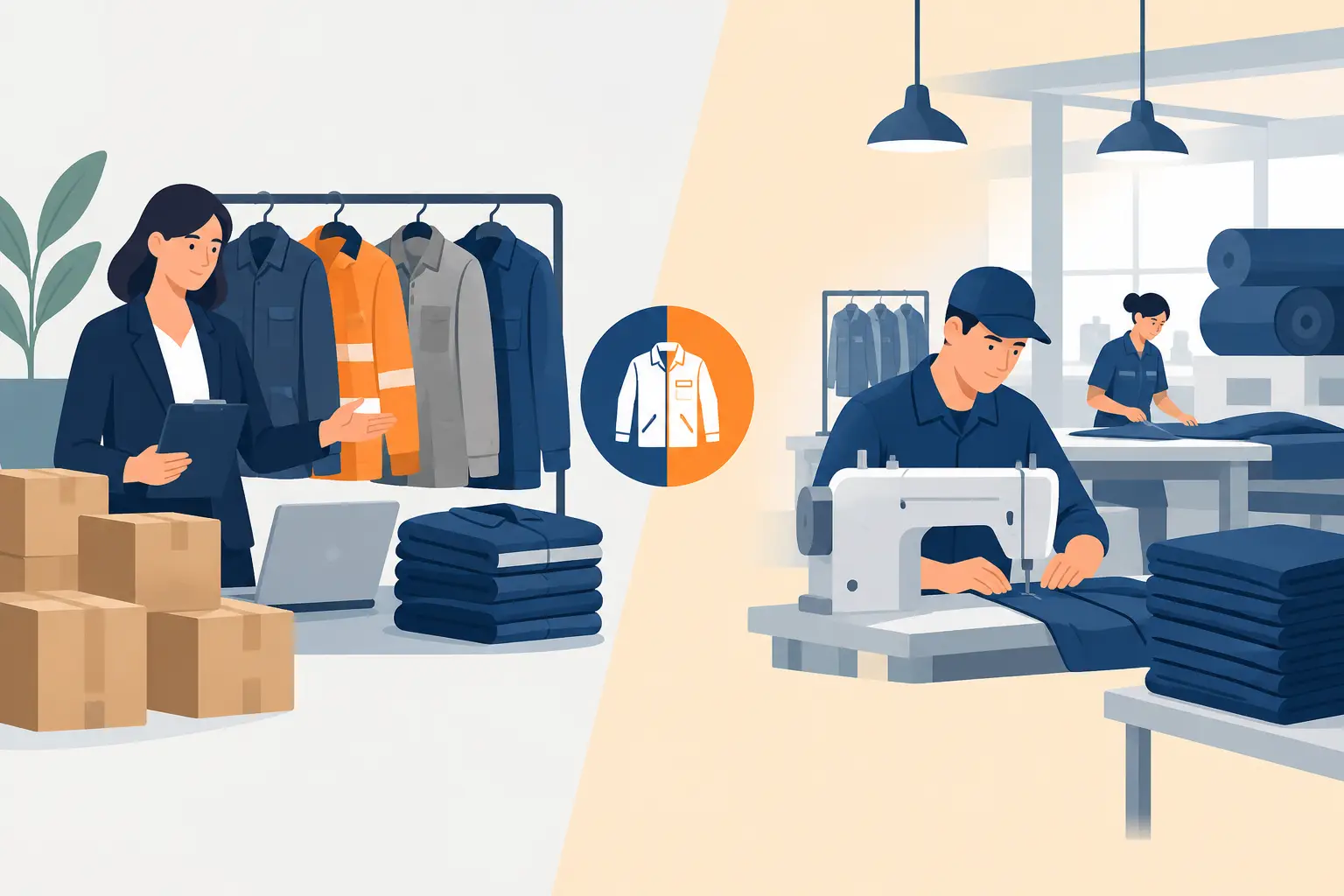

A front-desk employee, warehouse supervisor, sales representative, and event crew member may all represent the same company, but they do not need the same garment. Effective custom uniforms start with that practical reality. They must make people recognizable, comfortable, and ready for the work in front of them while presenting one clear, consistent brand identity.
For HR, procurement, and operations teams, uniforms are not simply another apparel order. They are a recurring business asset. The right program helps employees look prepared, supports safety and comfort, simplifies dress expectations, and gives customers a stronger first impression. The wrong program creates sizing issues, faded branding, delayed replenishment, and complaints from the people expected to wear it.
Start Custom Uniforms With the Job, Not the Logo
A logo matters, but it should not be the first decision. Start by defining where, how, and how often the garment will be worn. A customer-facing hospitality team may need polished polo shirts or button-up workwear that holds its shape through long shifts. A logistics crew may need breathable, durable shirts with practical pockets and high-visibility details. A corporate team attending a trade show may prioritize a refined fit, lightweight fabric, and brand colors that stand out in a busy venue.
This early assessment prevents a common mistake: choosing one garment style for every department because it appears easier to manage. Standardization is valuable, but it should not come at the expense of function. A coordinated uniform system can use different garments while keeping the same color palette, logo placement, typography, and decoration style.
Before requesting a quote or creating artwork, confirm the wear environment, shift length, climate, movement requirements, laundering expectations, safety needs, and projected order quantity. These details guide better fabric, construction, and decoration choices from the start.
Choose Fabric for Performance and Presentation
Fabric affects how employees feel in uniform, how the garment photographs, and how well it performs after repeated washing. There is no universal best choice. The right material depends on the role and the standard your organization needs to maintain.
Cotton is often preferred for its familiar, comfortable feel and natural breathability. It works well for casual staff shirts, school programs, community events, and promotional apparel. However, 100% cotton may shrink or wrinkle more than blended options, and it may not dry as quickly in active work settings.
Cotton-polyester blends offer a practical balance for many uniform programs. They tend to be more durable, easier to care for, and better at holding shape across repeated wear. Polyester performance fabrics are particularly useful for sportswear, outdoor teams, delivery crews, and event staff because they are lightweight and moisture-managing.
For demanding environments, consider fabric weight as carefully as fiber content. A heavier fabric can feel more substantial and last longer in physical roles, but it may be uncomfortable in warm conditions. A lighter garment is more breathable, yet may need a higher-quality construction to avoid looking thin or wearing out too quickly. Swatches and sample garments are worth reviewing before a large production run, especially when color accuracy and hand feel are central to your brand.
Fit Is Part of Employee Adoption
Even a well-made uniform will be poorly received if the fit is restrictive, inconsistent, or too limited. Use an inclusive size range and provide a clear size guide before collecting orders. Where possible, sample sizing sessions reduce exchanges and help employees choose with confidence.
Think beyond chest measurements. Sleeve length, body length, shoulder room, and stretch can make a significant difference for employees who stand, lift, drive, or work outdoors. A more tailored polo may suit client-facing staff, while a relaxed-cut work shirt may be better for operational teams. One style rarely serves every body type or job function equally.
Match the Decoration Method to the Design
The best logo treatment depends on the garment, artwork, order volume, and desired finish. Decoration should look intentional, remain legible, and withstand the conditions employees face every day.
Embroidery gives polos, caps, jackets, and corporate workwear a dimensional, premium appearance. It is a strong choice for simple logos, names, and small chest placements. Fine details and very small lettering may not reproduce as clearly in thread, so artwork may need to be adjusted for the stitch process.
Screen printing is a dependable option for bold graphics and larger quantities, particularly on T-shirts, event apparel, and promotional uniforms. It delivers strong color coverage when artwork uses defined shapes and limited colors. For highly detailed designs, color gradients, or individualized names and numbers, other methods may be more suitable.
Sublimation is ideal for full-color jerseys and polyester garments because the design becomes part of the fabric rather than sitting on top of it. This makes it useful for sports teams, activewear, and vivid all-over branding. It is generally best suited to light-colored polyester fabrics, so it is not the answer for every uniform category.
Heat transfer and direct-to-garment printing can be effective for smaller runs, variable names, and detailed artwork. The trade-off is that the feel, durability, and cost can vary based on the garment and print method. A capable production partner should recommend the method that serves the application, not simply the one that is easiest to produce.
Build a Consistent Uniform System
Consistency does not mean placing the same oversized logo on every item. It means establishing clear visual rules employees and suppliers can follow as your uniform program grows.
Set the approved logo versions, thread or print colors, placement dimensions, garment colors, and optional personalization rules. Decide which items are core uniforms and which are seasonal, promotional, or role-specific. For example, all employees may wear a navy polo with a left-chest logo, while supervisors receive embroidered outerwear and field teams use performance shirts in a complementary brand color.
This approach makes future ordering faster and reduces variation between departments, locations, and reorders. It also helps protect brand standards when your organization expands or runs multiple campaigns during the year.
A uniform spec sheet is particularly valuable for larger organizations. It can document garment style codes, fabric composition, approved artwork, placement measurements, size range, and decoration method. Small details such as logo position or ink color can change the final result, so written specifications are more reliable than relying on a previous sample or verbal instruction.
Plan Quantities, Reorders, and Delivery Early
Bulk ordering creates cost advantages, but ordering only for headcount can be short-sighted. Consider new hires, replacements, seasonal staff, size exchanges, and urgent event needs. Keeping a reasonable buffer of core items can prevent a rushed reorder when a new employee starts or a key garment is damaged.
Timing deserves the same attention as product selection. Custom production involves artwork approval, garment sourcing, decoration, quality control, packing, and delivery. A tight deadline may limit garment options, decoration methods, or customization details. If uniforms are required for an opening, trade show, school term, tournament, or company-wide rollout, begin the approval process early enough to allow for samples and corrections.
Accuracy at the approval stage protects the entire order. Confirm spelling, colors, garment quantities, sizes, logo placement, and delivery date before production begins. A clear approval process reduces avoidable revisions and keeps the project moving on schedule.
Treat Uniforms as a Brand Experience
Employees wear your brand in public spaces where signage and advertising cannot always reach. A clean, comfortable, well-fitted uniform signals organization and care. For customers, that can build trust before a conversation even begins. For employees, it can create a stronger sense of belonging when the garment feels appropriate for their role rather than imposed as an afterthought.
At Green Cotton, we approach each order as a production partnership, from garment selection and fabric options to decoration, quality checks, and bulk fulfillment. Your identity is carried by every finished piece, so specifications deserve careful attention at every stage.
The most useful next step is simple: gather input from the people who will wear the uniforms. Ask what they need to do their jobs comfortably, then pair those insights with your brand standards and operational requirements. That is how a uniform order becomes a program your team is willing to wear with pride.