
A branded tote bag that tears after one event, a polo shirt with an incorrect logo color, or a corporate gift arriving after the campaign launch can cost far more than the item itself. This promotional product sourcing guide is built for teams that need to buy branded merchandise at scale without leaving quality, timing, or brand consistency to chance.
For procurement teams, marketers, HR managers, and event organizers, sourcing is not simply choosing a product from a catalog. It is the process of translating a brand requirement into a clear production specification that a supplier can manufacture, inspect, pack, and deliver correctly. The strongest orders begin with decisions made before artwork is approved or a purchase order is issued.
Start With the Job the Product Must Do
The first question is not, “What is the cheapest item?” It is, “What should this product achieve?” A staff uniform needs durability, comfortable sizing, and a professional appearance through repeated washing. An event giveaway may need visual impact, easy distribution, and a unit cost that supports a large attendance count. A client gift needs to feel considered enough to represent the value of the relationship.
Define the audience, setting, duration of use, and desired action. A lightweight cotton T-shirt can be a practical choice for a charity run, while a moisture-wicking sublimation jersey is better suited to an active team. A canvas tote may deliver more daily brand visibility than a novelty giveaway, but only if the audience will actually carry it.
This decision also affects quantity. A company ordering uniforms may need a size run with replacement stock. An event organizer may prefer a slightly higher quantity to cover walk-ins, speakers, volunteers, and last-minute registrations. Build a reasonable buffer into the order rather than treating the initial headcount as final.
Build a Clear Promotional Product Sourcing Brief
A vague request such as “500 branded shirts” creates room for assumptions. A proper sourcing brief protects your budget and reduces revisions because it gives the supplier the information needed to quote accurately from the beginning.
Your brief should identify the product type, intended use, quantity, required delivery date, decoration locations, brand colors, and artwork files. For apparel, include target fabric composition, fit preference, available sizes, and any special requirements such as pockets, reflective details, custom neck labels, or individual name personalization. For bags and gifts, specify materials, dimensions, packaging expectations, and whether the product must meet a particular quality level or event theme.
Be specific about what is fixed and what is flexible. If the delivery date cannot move because of a launch or tournament, say so. If the material can change provided the item stays within budget, say that too. This helps the supplier recommend alternatives that preserve the purpose of the item instead of simply reducing quality to meet a price target.
Set the Budget Around Total Delivered Value
Unit price matters, but it is not the full cost of sourcing. Decoration setup, custom fabric dyeing, embroidery stitch count, special packaging, split sizes, freight, and rush production can all change the final figure. Comparing only the lowest initial quote often leads to unexpected charges later or a product that does not meet the expected standard.
Ask for pricing based on the complete specification and confirm what is included. If you are considering several quantities, request tiered pricing. The price difference between 300 and 500 units may be small enough to justify additional stock, especially for long-running campaigns or uniforms with future hires in mind.
Choose Materials and Decoration Methods Together
The product material and the branding method should be selected as one decision. A design can look sharp in a digital mockup yet perform poorly if the ink, thread, transfer, or print process is not suited to the fabric and intended use.
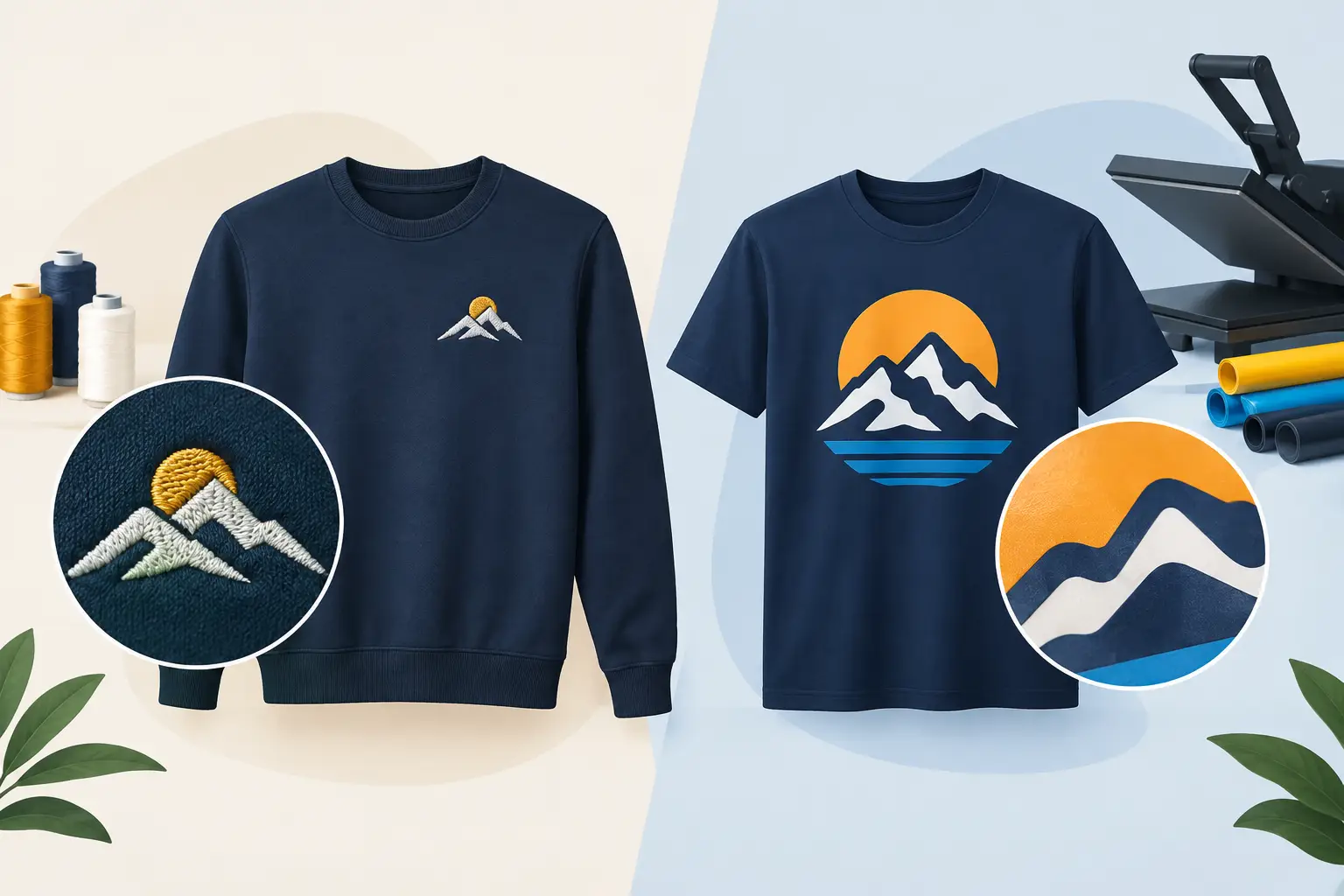
Screen printing is a dependable option for bold designs and higher quantities, particularly on cotton T-shirts, tote bags, and event merchandise. Embroidery adds texture and a premium, durable finish for polo shirts, caps, jackets, and corporate uniforms. Sublimation is well suited to all-over designs on compatible polyester garments, making it a strong choice for jerseys and performance wear. Heat transfer and direct-to-garment printing can suit detailed graphics, variable names, and smaller runs, depending on the garment and design requirements.
Each method has trade-offs. Embroidery can feel substantial and professional, but highly detailed artwork may need simplification and large stitch areas can affect garment drape. Screen printing is efficient for consistent bulk artwork, but every additional color may affect setup and cost. Sublimation delivers vivid, long-lasting color, but it is not a universal method for every fabric type.
Request practical guidance rather than choosing a process based on appearance alone. An experienced production partner should explain how the material, logo detail, order quantity, and wear conditions influence the best option.
Confirm Artwork Before Production Begins
Artwork is one of the most common sources of preventable production issues. Supply the best available logo files, preferably vector artwork where possible, and identify the approved version of every logo, tagline, and color. Do not assume colors displayed on a screen will reproduce exactly on fabric, thread, or coated merchandise.
Provide brand color references and clarify whether an exact color match is essential. For custom apparel, fabric swatches and print samples can be especially useful when the garment color is a central part of your identity. If the order includes multiple items, check that the logo placement and scale feel consistent across shirts, caps, bags, and gifts.
A production proof should confirm more than the artwork. Review garment color, product dimensions, decoration size, placement, spelling, size breakdown, accessories, and packaging instructions. Assign one decision-maker to consolidate feedback and issue final approval. Multiple uncoordinated approvals are a reliable way to introduce errors late in the process.
Evaluate Suppliers on Execution, Not Catalog Size
A broad catalog is helpful, but it does not guarantee dependable delivery. The supplier needs the operational ability to manage your specification from product selection through decoration, quality control, and packing.
Ask how production is handled, what quality checks are performed, and how delivery timelines are planned. For apparel, confirm whether the supplier can support custom sizing, fabric choices, color matching, and decoration in-house or through a managed production process. For promotional merchandise, ask about samples, lead times, packaging options, and how substitutions are handled if a selected item becomes unavailable.
A capable supplier should be direct about feasibility. If an artwork detail is too fine for embroidery, if a requested turnaround requires a different product, or if a color may vary by material, you need that information early. Honest production guidance is not a barrier to your idea. It is how your idea becomes a reliable finished order.
Green Cotton supports organizations that need apparel, uniforms, promotional merchandise, and decoration services coordinated through one accountable production partner. That consolidation can reduce handoffs, simplify approvals, and make it easier to maintain a consistent brand standard across product categories.
Protect the Timeline With Real Approval Dates
A delivery date is only meaningful when it is supported by a production schedule. Work backward from the date the products must be in hand, not the date they will be distributed. Allow time for product selection, quote approval, artwork preparation, sample review when needed, production, quality inspection, packing, freight, and a contingency window.
Custom-made products generally require more planning than ready-stock items. That is often worthwhile when you need custom fabric colors, tailored garment details, personalized accessories, or a distinctive product that does not look generic. But those benefits depend on early decisions and fast approvals.
Avoid changing artwork, quantities, or product specifications after approval unless the impact on timing and cost is confirmed in writing. A small change can affect materials, decoration setup, packaging, and production sequencing.
Inspect Quality Before Distribution
Quality control should match the risk of the order. For a large uniform rollout, inspect representative pieces across sizes and cartons. Check logo placement, color consistency, stitching, print adhesion, labels, measurements, and quantity counts. For gifts, inspect the finish, functionality, packaging, and any personalized details.
If the products are going to multiple locations, define the packing method before production. Individual polybags, labeled cartons, department bundles, or person-by-person packing can save substantial time for the team receiving the shipment. This is particularly valuable for schools, multi-site businesses, and large events where sorting hundreds of items at the last minute creates unnecessary pressure.
The best sourcing decisions make the final handoff feel easy. Give your supplier a clear brief, approve with care, and choose products that people will genuinely use. When the merchandise performs well in the real world, your brand keeps working long after the order is delivered.