A cotton T-shirt can carry a staff uniform, a campaign message, or a team identity for years – but only if the decoration method suits the garment, artwork, and order size. The best printing methods for cotton are not interchangeable. A bold one-color logo on 500 work shirts needs a different production approach than a detailed event graphic on 30 premium tees.
For businesses, schools, teams, and event organizers, the right choice comes down to four practical factors: artwork detail, number of colors, quantity, and the feel you want on the finished garment. A good production partner will assess all four before recommending a method, rather than applying the same solution to every order.
Best Printing Methods for Cotton: The Main Options
Cotton is one of the most versatile fabrics for custom apparel because it accepts ink well and offers a comfortable, familiar feel. However, cotton can vary by weight, weave, color, and finish. Ring-spun cotton, heavyweight cotton, cotton blends, and garment-dyed pieces may each call for a slightly different print setup.
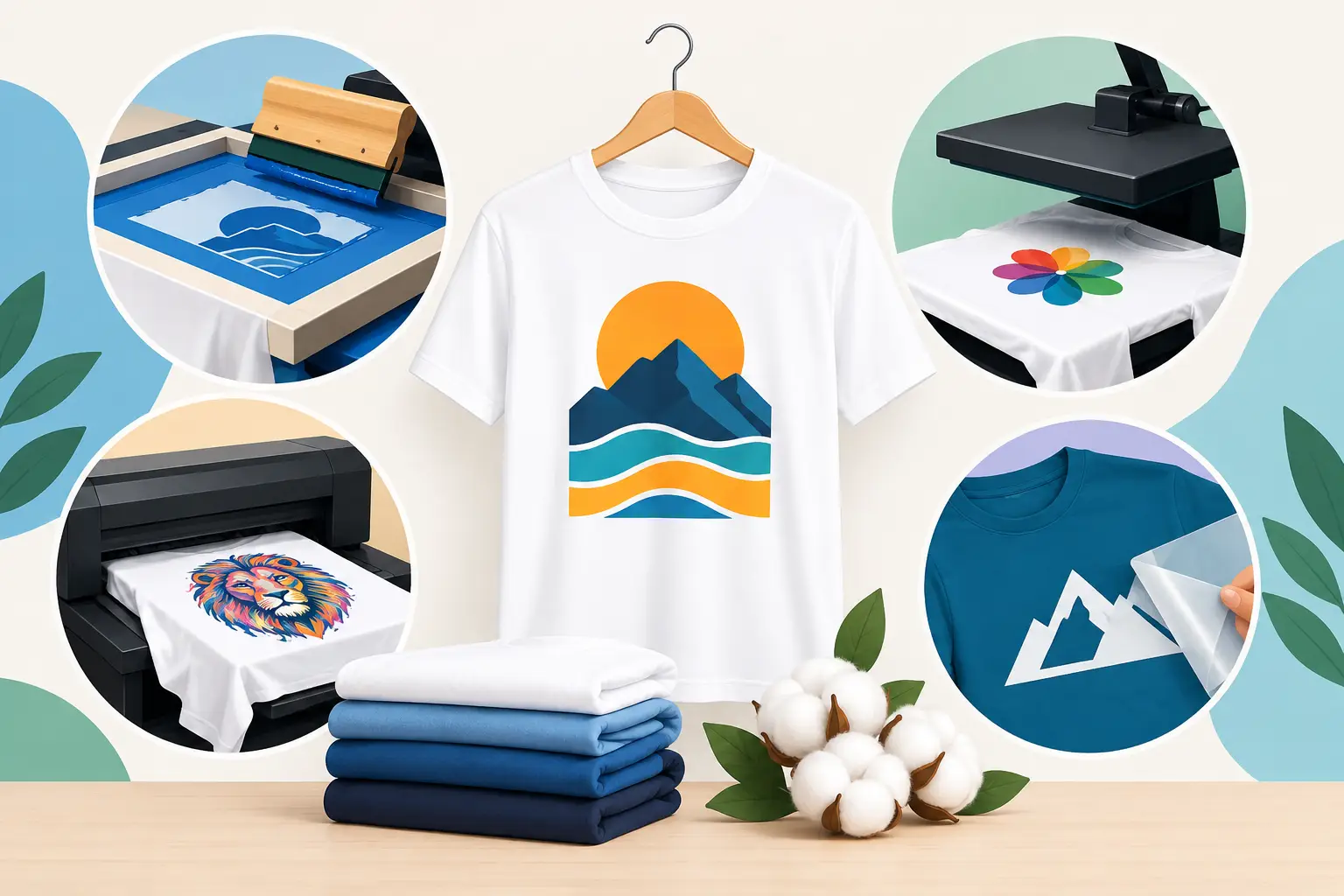
The most common decoration choices for cotton apparel are screen printing, direct-to-garment printing, heat transfer, and embroidery. Sublimation is also widely used in custom apparel, but it is generally not the right choice for standard cotton garments because the process works best on high-polyester, light-colored fabrics.
Screen Printing for Durable Bulk Orders
Screen printing remains a leading choice for cotton T-shirts, polo shirts, uniforms, tote bags, and promotional apparel. Ink is pushed through a prepared screen onto the fabric, with a separate screen typically required for each color in the design. The result is a crisp, consistent print built for repeat production.
This method is particularly effective for organizations ordering medium to large quantities. Once the screens are prepared, printing becomes efficient and cost-effective at scale. A school ordering event shirts, a company outfitting multiple departments, or a brand launching promotional merchandise can achieve reliable color consistency across the entire run.
Screen printing performs especially well with bold logos, text, simple graphics, and solid brand colors. Plastisol inks offer strong opacity on both light and dark cotton, while water-based inks can produce a softer, more breathable hand feel. The choice of ink matters. A heavy ink deposit can make a print feel more noticeable, while a softer ink system may feel more integrated with the garment.
The trade-off is setup. Each ink color adds preparation time and cost, so screen printing is less economical for small orders with highly detailed, full-color artwork. It is also not the best fit when every shirt needs different names or numbers.
Direct-to-Garment Printing for Detailed Artwork
Direct-to-garment, commonly called DTG, uses specialized printers to apply water-based ink directly onto cotton fabric. Think of it as a highly controlled process for reproducing full-color artwork, fine details, gradients, and photographic images.
DTG is an excellent option for small to mid-sized orders where artwork has many colors. It eliminates the need to create individual screens for every color, making it practical for complex designs that would be expensive to screen print. It also supports print-on-demand workflows and short runs for campaigns, merchandise testing, or personalized apparel programs.
On cotton, DTG can create a soft, high-detail finish, particularly on high-quality combed or ring-spun garments with a smooth surface. Dark garments usually require a white underbase beneath the colored ink so the artwork stays vibrant. That preparation step is normal, but it means the final feel may be slightly more substantial than a print on white cotton.
DTG does have limits. Print speed is slower than screen printing for large-volume orders, and the garment quality has a direct impact on the finished result. A rough, uneven, or low-grade cotton surface can reduce sharpness. For large orders using a simple logo, screen printing is usually the more efficient route.
Heat Transfer for Flexibility and Personalization
Heat transfer applies a pre-printed design to cotton using heat and pressure. The design may be produced with digital transfer printing, cut vinyl, or another transfer film system, depending on the artwork and intended use.
For team shirts, staff apparel, and event garments with changing names, job titles, or numbers, heat transfer is a practical solution. A company can use the same printed logo across every garment while adding individual names without rebuilding screens or altering the main design setup. It is also useful for smaller quantities, quick-turnaround projects, and artwork that includes multiple colors.
Modern transfer technologies can deliver vivid color and sharp detail on cotton, including dark garments. The key question is not whether heat transfer works, but which transfer material is appropriate. Some films have a more noticeable texture, while premium options can be thinner, more flexible, and more comfortable for daily wear.
For a large corporate uniform program, consider placement carefully. A small chest logo, sleeve detail, or individual name transfer is usually an ideal use. Covering a large area of a lightweight cotton shirt with transfer material may reduce breathability, especially in warm working environments.
Embroidery for Polos, Caps, and Premium Uniforms
Embroidery is not a print method, but it belongs in the decision because it is often the strongest branding option for cotton polos, workwear, caps, jackets, and premium corporate apparel. Thread creates dimension, texture, and a professional finish that stands up well to frequent use.
A stitched logo is particularly effective when your goal is a polished uniform rather than a large graphic statement. It works best with simplified artwork. Fine lines, tiny lettering, and complex gradients may need to be adjusted before production so the logo remains readable in thread.
Embroidery adds weight to the fabric, which is usually not an issue for polos, caps, or heavyweight garments. On lightweight cotton T-shirts, however, a large embroidered design can pull on the fabric or feel bulky. In that case, a small print or heat transfer may be the better choice.
How to Choose the Right Method for Your Cotton Order
Start with the purpose of the garment. Promotional event shirts often need visual impact at an efficient unit cost, which favors screen printing for larger runs. Staff uniforms need durable, professional branding, making embroidery or a clean screen print strong options. Product merchandise may need full-color artwork and shorter production runs, where DTG or heat transfer can make more sense.
Next, look closely at the artwork. A one- or two-color logo is ideal for screen printing. Artwork with photographs, fine shading, or many colors is more suitable for DTG or a digital transfer. If the design includes personalization, heat transfer provides the flexibility to apply unique names and numbers efficiently.
Quantity changes the calculation. There is no universal minimum that applies to every project, but generally, screen printing becomes more attractive as quantities increase. DTG and heat transfer can be more practical for small batches because they reduce setup requirements. Your supplier should quote the order based on the actual artwork, garment, placement, and deadline – not quantity alone.
Finally, consider the cotton garment itself. Dark cotton needs opaque ink or a suitable underbase. Heavyweight cotton can support bolder prints, while lightweight cotton benefits from softer inks and carefully chosen transfer materials. If the apparel will face frequent washing, physical work, or outdoor activity, durability testing and correct curing are essential.
Prepare Artwork for Better Print Results
Production quality starts before the first shirt reaches the press. Send vector artwork when possible for logos and clean graphic elements. Vector files maintain sharp edges when scaled for a left-chest print, large back design, or tote bag panel. For photographic or detailed artwork, use high-resolution files sized for the intended print area.
Brand colors should also be specified clearly. A screen-print color can be matched closely to a brand standard, while DTG and digital transfers reproduce color through a different process. If exact consistency across uniforms, gifts, and promotional products matters, approve a sample or digital proof before bulk production.
Placement is another detail worth confirming. A centered chest print, a left-chest logo, and a back print each require different positioning. Sizes should be graded appropriately across adult, youth, and extended sizes so the design looks balanced rather than oversized or too small.
Green Cotton approaches this as a production decision, not simply a decoration add-on. The garment, logo, order volume, print placement, and delivery date should work together from the start. That is how branded apparel arrives accurate, consistent, and ready to represent your organization.
The best result is rarely the most complicated method. It is the method that gives your cotton apparel the right balance of appearance, comfort, durability, and cost for the people who will wear it.