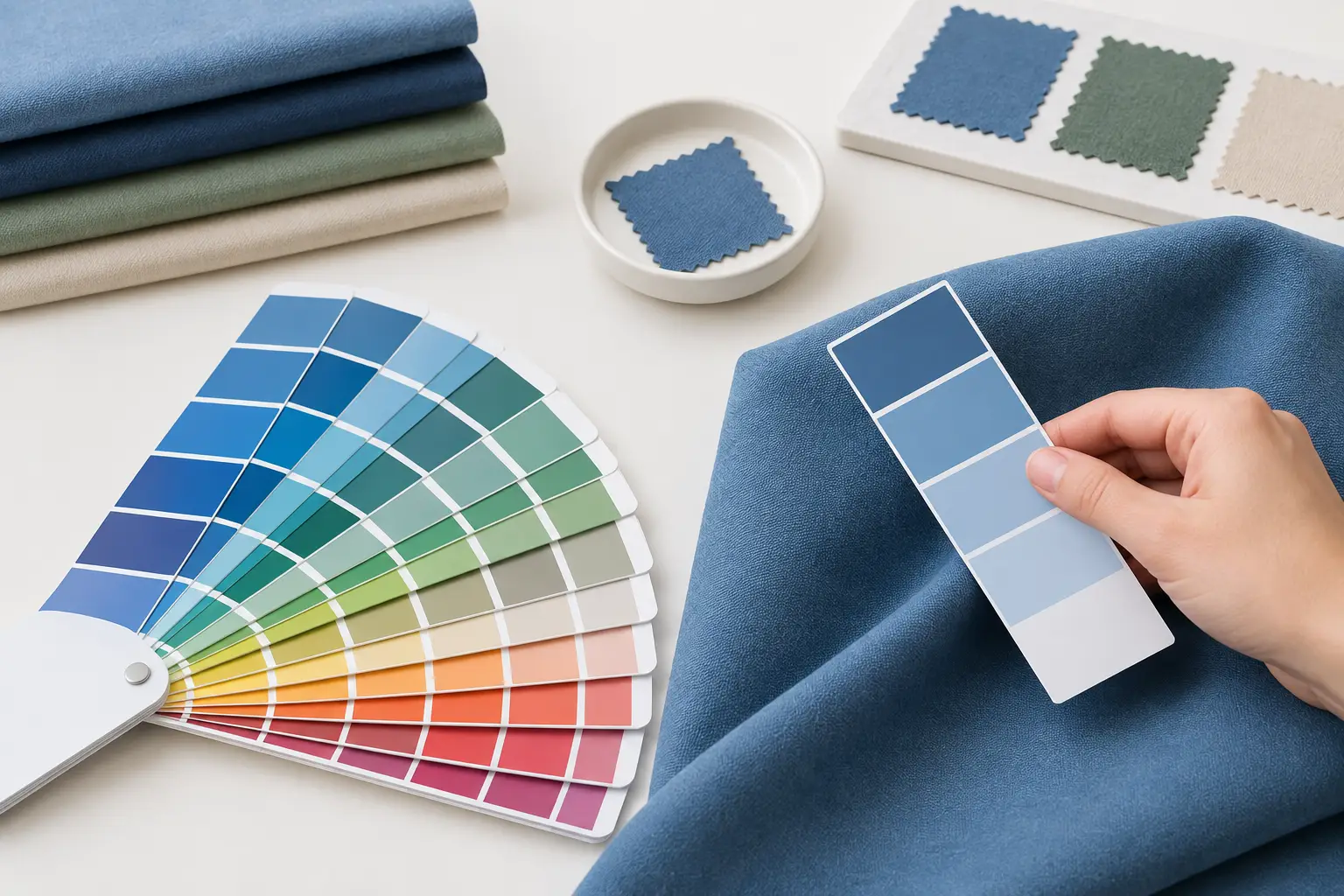

A bulk delivery can look perfect in sealed cartons and still create a problem the moment your team starts handing items out. A logo may sit slightly off-center, a polo color may vary between production batches, or a tote bag handle may fail after a few uses. Branded merchandise quality control is what prevents those small production misses from becoming a visible reflection of your organization.
For uniforms, campaign giveaways, event apparel, and corporate gifts, quality is not limited to whether an item arrives. It means the product matches the approved design, performs as intended, fits the audience, and reaches you on schedule. Your logo carries your reputation. Every garment, cap, bag, or gift should carry it accurately.
Branded Merchandise Quality Control Starts Before Production
The strongest quality process begins with a clear specification, not a final inspection table. If a supplier receives only a logo file and a general request for “black T-shirts,” there is too much room for interpretation. Black has different shades. Cotton has different weights and finishes. A logo can be printed, embroidered, transferred, or sublimated, with very different results on different materials.
A production-ready brief turns preferences into measurable requirements. It should confirm the product style, fabric composition and weight, color reference, size range and quantity breakdown, decoration method, artwork placement, dimensions, packaging, and required delivery date. For customized products, approved details such as collar style, button color, woven labels, zipper pulls, or custom-dyed fabric should also be documented.
This level of detail protects both the buyer and the manufacturer. It gives the production team a standard to work toward and gives your internal team a reliable point of reference when reviewing samples and final goods. Specification accuracy is not paperwork for its own sake. It is the foundation of brand consistency.
Choose Materials for the Job, Not Just the Look
A low-cost item can be the right choice for a short event, while a staff uniform needs a different standard. The best material depends on how the merchandise will be used, washed, carried, or displayed.
For example, a lightweight cotton shirt may suit a one-day promotional activity, but it may not hold its shape as well as a blended polo for daily front-of-house wear. An embroidered logo can add a premium finish to caps and workwear, while screen printing may be more effective for bold, high-volume artwork on T-shirts. Sublimation creates vivid, all-over sports jerseys, but it is designed for suitable polyester fabrics rather than every garment type.
Good quality control asks practical questions early: Who will use this item? How often? In what environment? Does it need to withstand industrial washing, outdoor exposure, travel, or repeated handling? The answers guide the product and decoration choices before budget is spent on a production method that does not fit the purpose.
Approve a Sample That Represents the Final Order
A digital mockup confirms the general appearance of a design. It does not confirm fabric hand feel, garment construction, actual color, print coverage, thread density, or the way a logo sits on a finished item. For sizeable orders, a physical pre-production sample is one of the most valuable checkpoints available.
The sample should reflect the final garment or merchandise item, not a substitute product. Review it under normal lighting and compare it against the approved artwork and specifications. Check that the logo is sharp, readable, and correctly positioned. Look at seams, collar shape, zippers, handles, closures, and accessories. Try the item as the recipient will use it.
For apparel, fit matters as much as appearance. Confirm the size chart, then check a sample against it. A labeled medium is not useful if its chest measurement differs significantly from what your team expects. If the order includes multiple styles, sizes, or colorways, agree on how consistency will be controlled across each variation.
Sample approval should be formal. Once changes are requested, the revised version should be approved before bulk production moves forward. This step can add time, but it is far less costly than correcting thousands of finished pieces. When timing is tight, the right approach is not to skip approval. It is to start the specification and sampling process earlier.
Control the Details During Production
Quality cannot be inspected into a product after every stage is complete. It must be managed while materials are received, garments are cut and sewn, logos are applied, and items are packed. This is especially important when an order combines several product categories, such as staff polos, caps, tote bags, and premium gifts for the same campaign.
At the material stage, the team should check fabric color, weight, flaws, and consistency against approved references. For custom apparel, cutting and sewing checks help identify uneven panels, loose stitching, incorrect measurements, or mismatched components before the entire run is assembled.
Decoration requires its own controls. Screen prints should have clean edges, correct color registration, and sufficient ink coverage. Embroidery should be dense enough to look polished without causing puckering in the fabric. Heat transfers need proper temperature and pressure so they adhere well without leaving marks or peeling prematurely. Direct-to-garment prints should reproduce fine details without unwanted fading or rough texture.
Placement is a common source of avoidable errors. A logo that is only half an inch too high, low, left, or right may seem minor, yet it becomes obvious when a whole team wears the same uniform. Production teams should use placement guides and measure from fixed garment points, rather than relying on visual judgment alone.
Inspect the Finished Order With a Clear Standard
Final inspection should confirm more than the total carton count. It should assess whether a representative portion of the production run meets the approved standard and whether the packing information matches the order.
The inspection process should cover four connected areas:
- Appearance: Correct colors, artwork, logo placement, sizing labels, and overall presentation.
- Construction: Secure seams, functional zippers or closures, clean finishing, and durable handles or attachments.
- Decoration quality: Accurate print colors, crisp detail, stable embroidery, and decoration that withstands normal handling.
- Order accuracy: Correct quantities by size, style, and color, along with the agreed packaging and labeling.
Not every variation is automatically a defect. Slight differences can occur between fabric dye lots, and certain handmade or natural materials have reasonable tolerances. The key is to define what is acceptable before production begins. For a high-visibility brand launch, color tolerance may need to be very tight. For a casual internal event, a minor variation may be acceptable if it does not affect the overall impression or function.
What should never be treated as acceptable is a repeated defect that weakens usability or brand presentation: unreadable logos, incorrect sizes, stains, damaged items, missing components, or decoration that lifts, cracks, or frays under normal use.
Quality Control Also Protects Your Delivery Date
A late order can fail even when the products themselves are well made. Event shirts that arrive after registration, uniforms that miss an opening date, or client gifts delivered after a campaign has ended create immediate operational pressure.
Reliable delivery depends on realistic scheduling. Design approvals, sample revisions, material sourcing, decoration capacity, final inspection, packing, and freight all need time. Rush production may be possible for some items and decoration methods, but it can limit customization options or increase cost. A capable supplier will explain those trade-offs clearly instead of promising an unrealistic date.
For time-sensitive orders, confirm the deadline in practical terms: the date you need goods in hand, the shipping destination, the packaging requirement, and whether partial delivery would help. Build time for internal approval as well. A delayed artwork sign-off can affect production just as much as a delayed fabric delivery.
At Green Cotton, quality control is treated as part of the production commitment, not a final add-on. From custom fabric and garment details to printing, embroidery, packing, and bulk fulfillment, each approved requirement gives the team a clearer path to deliver merchandise that represents your organization properly.
Ask the Questions That Reveal a Supplier’s Process
Before placing a large order, ask how samples are approved, how artwork and colors are matched, what checks happen during production, and how final quantities are verified. Ask what happens if a defect is found, who owns communication during the order, and how the supplier manages deadline changes.
The answers should be specific. A dependable production partner can explain the checkpoints, the documents used for approval, and the practical limits of each product or decoration method. Broad claims about “high quality” are not enough when your brand identity is on every item.
The goal is not perfection in the abstract. It is a controlled, accountable process that delivers the correct product for the intended use. Give your supplier a clear standard, approve what matters before bulk production, and insist on checks that protect the people who will wear, carry, and receive your brand.