A registration table stacked with unrelated giveaways rarely creates the impression an event team wants. The best event merchandise bundles feel intentional: every item has a role, the branding is consistent, and attendees can picture themselves using the products after the event ends. For procurement teams and event organizers, the goal is not simply to order more merchandise. It is to build a coordinated package that supports the event experience, budget, and brand.
A bundle can be simple, such as a branded T-shirt and tote bag, or more premium, combining apparel, drinkware, bags, and welcome gifts. The right choice depends on who is attending, how long the event runs, and what you need the merchandise to achieve.
What Makes an Event Merchandise Bundle Effective?
An effective bundle starts with purpose. Conference merchandise should help attendees navigate a full day of sessions and networking. A company kickoff package should create team unity. A product launch kit should make the new campaign visually memorable and easy to share.
The strongest bundles balance a practical item with a brand-building item. A tote bag gives attendees a place to carry materials. A quality T-shirt, polo, or cap turns participants, staff, and guests into visible representatives of the event. Add a useful gift such as a tumbler, notebook, or travel accessory, and the bundle has value beyond the venue.
Quality matters because branded merchandise is a physical reflection of your organization. A shirt with poor sizing, a faded print, or a bag that cannot carry basic materials works against the experience you have invested in creating. Specify the fabric, dimensions, decoration method, colors, and packaging expectations before production begins. Clear specifications protect both brand consistency and delivery schedules.
Best Event Merchandise Bundles by Event Type
There is no single package that fits every audience. Choosing products around the event format keeps costs focused and gives attendees items they will genuinely use.
The Conference Welcome Bundle
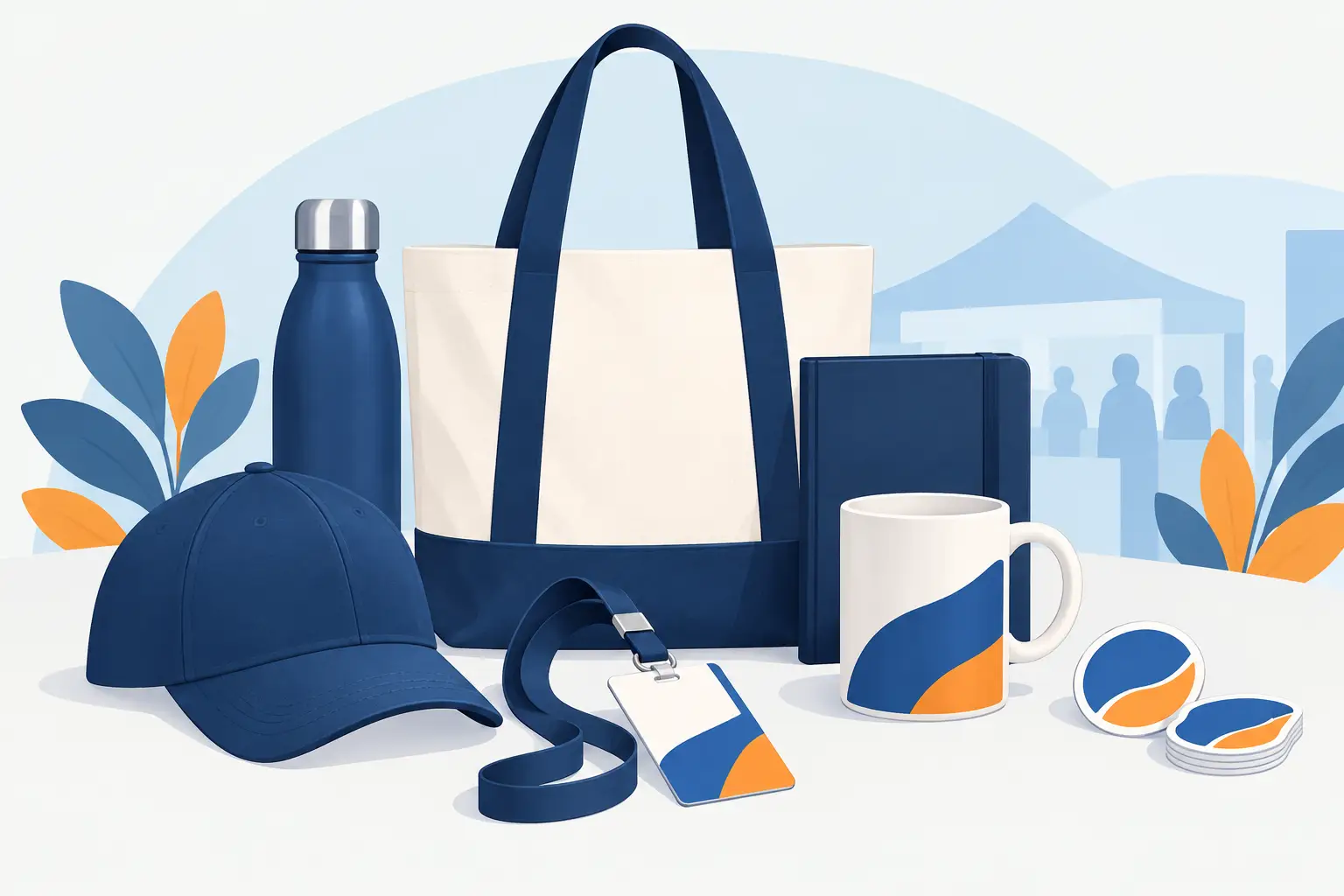
For conventions, seminars, trade events, and professional forums, start with products that make a busy day easier. A branded tote bag, event T-shirt, lanyard, and notebook is a dependable foundation. The tote carries schedules, brochures, and samples, while the shirt creates a shared visual identity for staff, volunteers, or registered participants.
If the budget allows, add a reusable water bottle or insulated tumbler. This is especially useful for full-day programs and supports a more considered alternative to disposable drinkware. For a premium attendee tier, a compact travel bag or embroidered polo can make the package feel more exclusive without changing the core kit for every guest.
The Corporate Team Day Bundle
Team-building events need merchandise that feels less like a giveaway and more like belonging. Matching custom T-shirts are often the most effective starting point because they are visible, practical, and easy to organize across large groups. Choose a fabric based on the activity: breathable performance material for outdoor challenges, or cotton and cotton-blend options for a relaxed indoor session.
Pair the shirt with a cap, drawstring bag, or towel for active events. For an office-oriented retreat, a polo shirt, notebook, and drinkware set may be a better fit. The key is to align the bundle with what participants will actually do. A premium polo makes sense for a leadership offsite; it may be unnecessary for a color run or casual family day.
The Product Launch Bundle
A launch bundle should put the campaign identity at the center. Consider a hero apparel piece, such as a custom T-shirt or cap, paired with a tote bag and a branded premium gift. This approach gives guests something wearable, something functional, and something they are likely to keep.
Keep launch branding focused. A campaign name, icon, or short message can be more effective than placing a full corporate logo on every surface. When the design has a clear visual system across garments, packaging, and gifts, it looks planned rather than promotional. This is particularly valuable when guests may photograph and share the items on social channels.
The School, Sports, or Community Event Bundle
For schools, tournaments, fundraisers, and community programs, durability and sizing accuracy are central. Team jerseys, event T-shirts, caps, and drawstring bags are practical choices for participants and supporters. Sublimation is well suited to jerseys that need bold all-over graphics, names, numbers, and sponsor placement.
Where multiple age groups are involved, build a clear size collection process before ordering. Adult and youth sizing should not be treated as interchangeable. It also helps to separate participant merchandise from organizer uniforms, so staff and volunteers remain easy to identify throughout the event.
Build the Bundle Around One Anchor Item
The easiest way to prevent a bundle from feeling random is to choose one anchor item first. For many events, that is apparel. A T-shirt creates volume and visibility, while a polo gives the package a more corporate finish. For premium guest programs, a travel bag or quality gift set may be the anchor instead.
Once the anchor is selected, use the supporting products to solve real attendee needs. A lightweight tote complements event apparel. A cap works well with outdoor activities. A tumbler supports long schedules and travel. Avoid adding items only because they are inexpensive. Low-value extras can dilute the impact of a well-designed package and complicate packing, storage, and distribution.
Branding should follow the same discipline. Use the event logo, corporate logo, colors, and message in a way that works across different materials. Embroidery gives polos, caps, and bags a refined finish. Screen printing is effective for bold apparel graphics at scale. Heat transfer supports detailed designs and individual names, while direct-to-garment printing can suit smaller runs or artwork with many colors. The right method depends on the product, artwork, order quantity, and desired finish.
Plan Quantities, Sizes, and Lead Times Early
Most merchandise problems are planning problems. An event date may be fixed, but headcounts, size breakdowns, final artwork, and approval timelines often move. Start the merchandise process as soon as the event concept and estimated attendance are confirmed.
For apparel, collect size data when registration opens whenever possible. If exact sizes are not available, use a sensible size curve based on your audience, then include a controlled buffer for late registrations and staff changes. The right buffer varies by event. A public event with walk-ins needs more flexibility than an invitation-only executive gathering.
Your production brief should confirm the following details before the order moves forward:
- Product type, material, color, and size range
- Decoration locations, artwork files, and brand color references
- Quantities by item, size, and variation
- Required in-hand date, delivery location, and packaging needs
- Approval process for samples or pre-production artwork
Do not treat the in-hand date as the production date. Allow time for design review, sampling where needed, manufacturing, quality checks, packing, shipping, and any event-side sorting. If kits must be assembled individually by attendee name or ticket type, say so at the quotation stage. Kitting adds value, but it also requires accurate data and additional handling time.
Budget for Perceived Value, Not Item Count
A high item count does not automatically create a better bundle. Three well-chosen products can feel more premium than six low-cost items. Consider where the event budget will have the greatest visible effect: better fabric, a more durable bag, upgraded decoration, or thoughtful packaging can improve perceived value more than adding another small giveaway.
It also helps to create tiers when audiences have different needs. Staff may receive a polo, cap, and lanyard. General attendees may receive a T-shirt and tote. VIP guests may receive a premium travel bag or gift set. This structure keeps the experience appropriate without requiring every recipient to receive the same package.
Ask your supplier to advise on practical substitutions as well. If a preferred item has a longer lead time, a comparable product in stock or a different decoration method may protect the event deadline. Flexibility is useful, but it should never mean accepting a product that does not represent your brand well.
Make Distribution Part of the Event Plan
The bundle is only successful if it reaches people in good condition and without creating a registration bottleneck. For large events, pack items by size or attendee category and label cartons clearly. For staff uniforms, distribute garments before event day so fit issues can be identified early.
For attendee kits, decide whether merchandise will be handed out at check-in, placed in hotel rooms, delivered to offices, or collected from a dedicated booth. Each method affects packaging and staffing. A tote-based kit may be ideal for registration, while individually labeled packs can be better for corporate events with multiple departments or remote participants.
Green Cotton can support the process from product selection and customization through bulk production, quality control, and delivery planning. When one production partner manages apparel, bags, and promotional gifts together, it is easier to maintain consistent colors, branding, and specifications across the entire package.
The most memorable event merchandise does not need to be complicated. Choose items people can use, make the design unmistakably yours, and allow enough time to get every detail right. Your identity is carried home in every shirt, bag, and gift, so make each one worth keeping.