A uniform can carry a company logo perfectly and still fail its purpose if employees do not feel comfortable wearing it. That is why uniform sizing questions should be settled before artwork approval, fabric selection, and bulk production. For HR teams, procurement managers, school administrators, and event coordinators, a clear sizing process prevents avoidable exchanges, delayed distribution, and inconsistent brand presentation.
Uniform sizing is not simply about asking people whether they wear small, medium, or large. Different garment cuts, fabrics, suppliers, and intended uses can change the fit significantly. A polo for front-of-house staff needs a different fit consideration than a moisture-wicking jersey for an outdoor event or durable workwear for a warehouse team. Getting the details right early gives every wearer a better experience and keeps the order on schedule.
Why Uniform Sizing Questions Matter Before Production
Bulk apparel production works best when specifications are confirmed upfront. Once fabric is cut, changing the size breakdown can mean additional cost, wasted material, or a separate production run. A thoughtful sizing plan protects your budget while helping your team look consistent from day one.
Poor sizing also creates a practical workplace issue. Employees may avoid wearing uniforms that are too tight, too long, restrictive at the shoulder, or uncomfortable around the waist. This matters especially for customer-facing teams, hospitality staff, field crews, and event personnel who wear branded apparel for long shifts. The right fit supports confidence, mobility, and a more professional appearance.
There is also a branding reason to take sizing seriously. A shirt that pulls across the chest can distort a printed logo. An oversized garment may make an embroidered emblem sit too low or appear less intentional. Fit and decoration placement should be planned together, particularly when your design includes a large front print, sleeve detail, name personalization, or multiple logo locations.
The Most Common Uniform Sizing Questions
Should we use standard sizes or body measurements?
Standard size labels are useful for collecting initial information, but they should not be the only decision point. A medium in one brand may fit closer to a small or large in another. The most reliable method is to provide the specific garment measurement chart for the style being ordered and ask wearers to compare it with a shirt they already own and like.
For business uniforms, garment measurements are usually more practical than body measurements. A wearer can lay a favorite polo, T-shirt, jacket, or work shirt flat and compare chest width, body length, shoulder width, or sleeve length with the chart. Make sure everyone understands whether the chart shows garment dimensions or body dimensions. Confusing the two is one of the most common causes of incorrect orders.
If uniforms require a more tailored appearance, such as corporate shirts, blouses, blazers, or fitted outerwear, individual body measurements may be appropriate. This adds administration, but it can be worthwhile for smaller teams where presentation is central to the role.
Are the garments unisex, men’s, women’s, or youth cut?
This question should be addressed clearly at the start. A unisex garment generally offers a straighter cut and may run wider through the body than a women’s fitted style. Men’s cuts may have different shoulder, chest, and length proportions. Youth sizing follows its own scale and should never be estimated by simply selecting a smaller adult size.
For mixed teams, offering more than one cut can improve comfort and participation. The trade-off is that it increases the number of size combinations to manage. When the order quantity is limited, a unisex option may be the most efficient choice. When the uniform is worn daily or expected to create a polished corporate image, providing men’s and women’s fits can be a better investment.
How does fabric affect fit?
Fabric composition changes how a garment feels and moves. A 100% cotton T-shirt can have a different drape and shrinkage consideration than a polyester performance shirt. Stretch blends may feel more forgiving across the shoulders and chest, while structured workwear fabrics can feel firmer and require more room for movement.
Ask whether the garment has been pre-shrunk and follow the recommended care instructions. If a uniform will be washed frequently, consider allowing reasonable ease in the fit, particularly for cotton-rich products. For active teams, look at mobility as well as chest and waist measurements. A shirt that fits well while standing may feel too restrictive when lifting, reaching, or moving quickly.
What size range should we order?
Your size run should reflect actual wearer data, not assumptions. Do not build the order around a generic ratio unless you have no other information. Collect sizes from each participant whenever possible, then review the totals before confirming production.
For organizations ordering for future hires, volunteers, or event walk-ins, it is sensible to add a small buffer. The right buffer depends on your headcount, turnover, and garment purpose. A company with stable staff may only need a few spare pieces. A large public event may need more flexibility, especially in commonly requested sizes.
Avoid over-ordering a large number of extra garments without a plan. Leftover uniforms with a dated campaign, staff title, event year, or personalized name can be difficult to reuse. Neutral branded items are more suitable for stock because they can support future onboarding or promotions.
A Better Process for Collecting Sizes
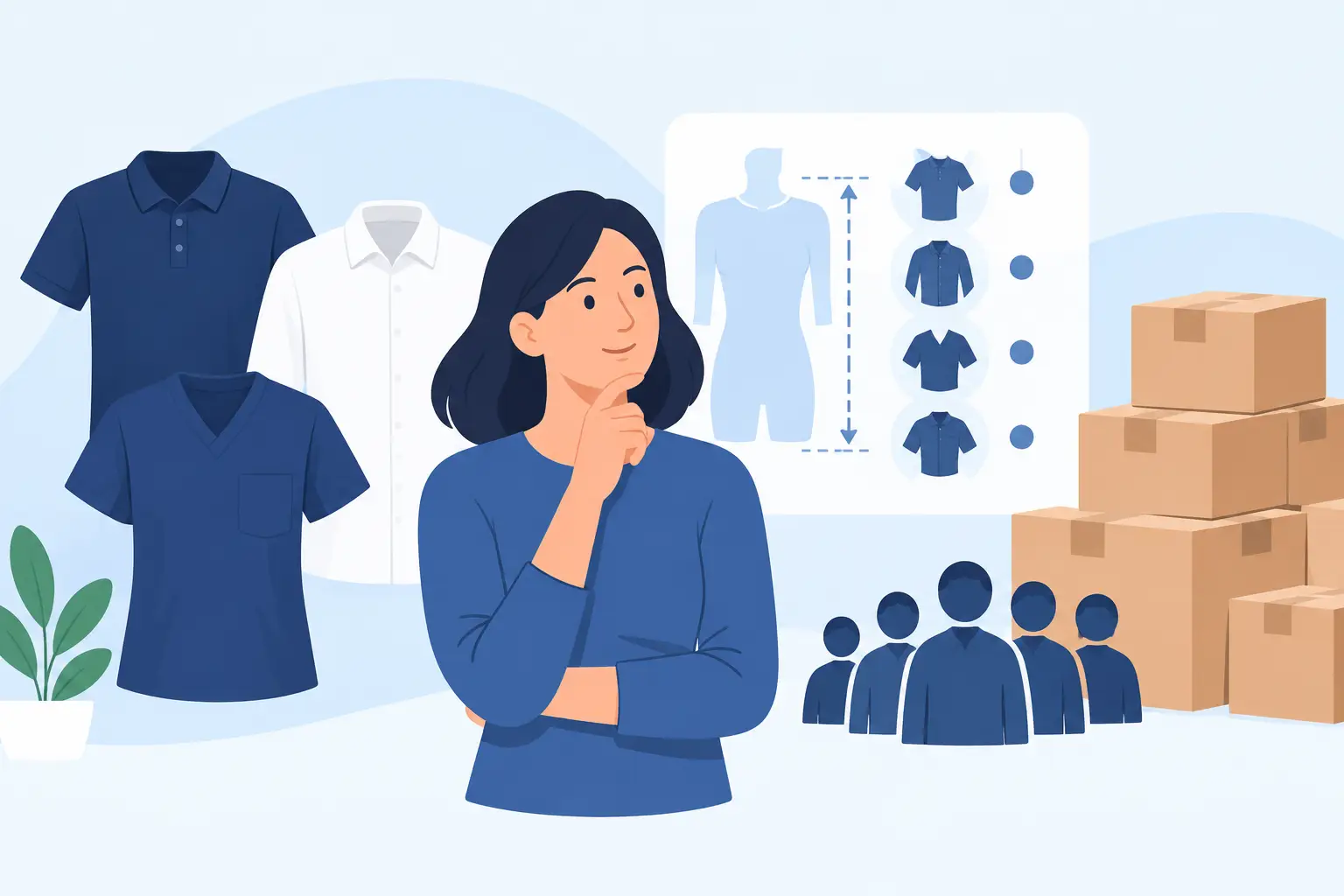
A simple collection method produces better results than a long email chain. Share one approved product image, the exact style name, its fit description, the relevant size chart, and a clear deadline. Ask each wearer to select a size based on the provided garment measurements, not based only on the label they normally buy.
For larger orders, create a single size collection form managed by one internal coordinator. This gives procurement or HR a clean record of names, departments, garment cuts, and requested sizes. Before production, review the data for unusual entries such as a youth size for an adult employee, a missing size, or a request that falls outside the available range.
A physical fitting session is often the strongest option for daily uniforms or higher-value garments. Request sample sizes so employees can try on the actual style before the final size run is submitted. This takes more coordination, but it reduces uncertainty and helps stakeholders approve the overall look and feel of the uniform.
If a fitting session is not practical, select a small group that represents a range of body types and job roles. Their feedback can highlight issues with length, collar comfort, sleeve opening, stretch, or movement before the full order is released.
Plan Decoration Around the Garment Size
Sizing affects more than the shirt itself. It affects how your branding appears across the full size range. A left-chest logo that looks balanced on a medium polo may need placement adjustments for very small or very large garments. Similarly, a full-front print has to be sized carefully so it remains readable without overwhelming smaller sizes.
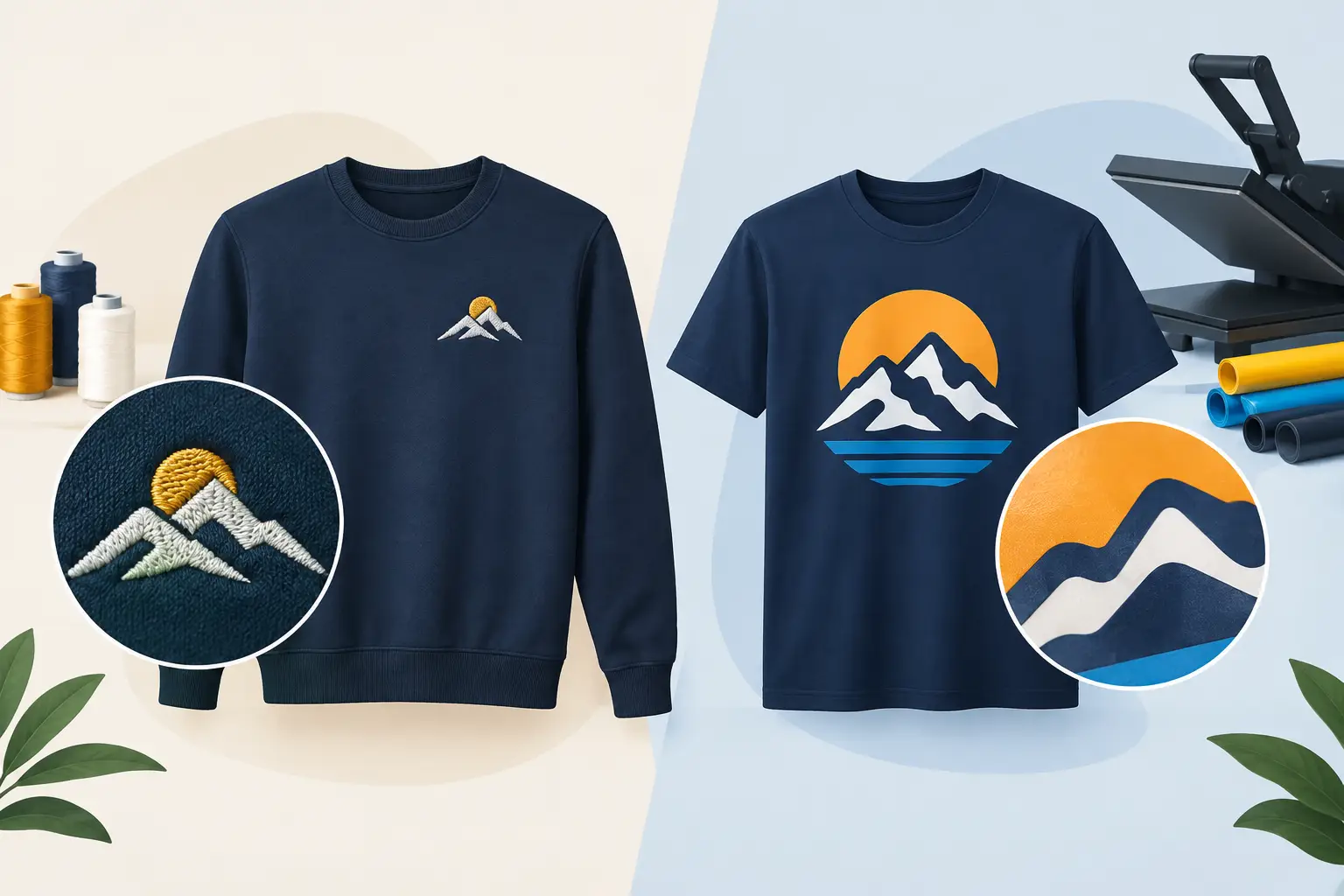
This is where production guidance matters. Screen printing, embroidery, heat transfer, sublimation, and direct-to-garment printing each have different placement and scale considerations. Embroidery has stitch limits and can feel heavier on lightweight fabric. Large prints need enough clear surface area and should account for seams, zippers, pockets, and plackets.
Ask for a final artwork proof that shows decoration position and dimensions. For complex programs, confirm whether the artwork size will remain consistent across all garments or be adjusted for youth, XS, or extended sizes. Neither approach is automatically right. Consistency can simplify production, while proportional adjustments can create a more polished result.
Build Flexibility Into Your Uniform Order
A well-managed uniform program balances standardization with real human needs. Set a clear approval date for size collection, but leave enough lead time for corrections before fabric cutting begins. If your team includes new hires, temporary staff, or changing event registrations, discuss the possibility of a follow-up run and its minimum quantity requirements.
It is also worth deciding who owns sizing approvals. Employees can submit preferences, but one designated coordinator should validate the final list and approve the size breakdown. This prevents duplicate requests, last-minute changes from multiple departments, and uncertainty over which file is final.
Green Cotton supports this process by helping clients align garment style, fabric choice, size charts, decoration methods, and bulk production requirements before manufacturing begins. That preparation is what turns a collection of branded garments into a uniform program people can wear with confidence.
The most useful closing question is not, “What size do you usually wear?” It is, “Does this exact garment fit the way you need it to perform?” Answer that before production, and your uniforms will be ready to represent your team from the first shift, first event, or first customer interaction.