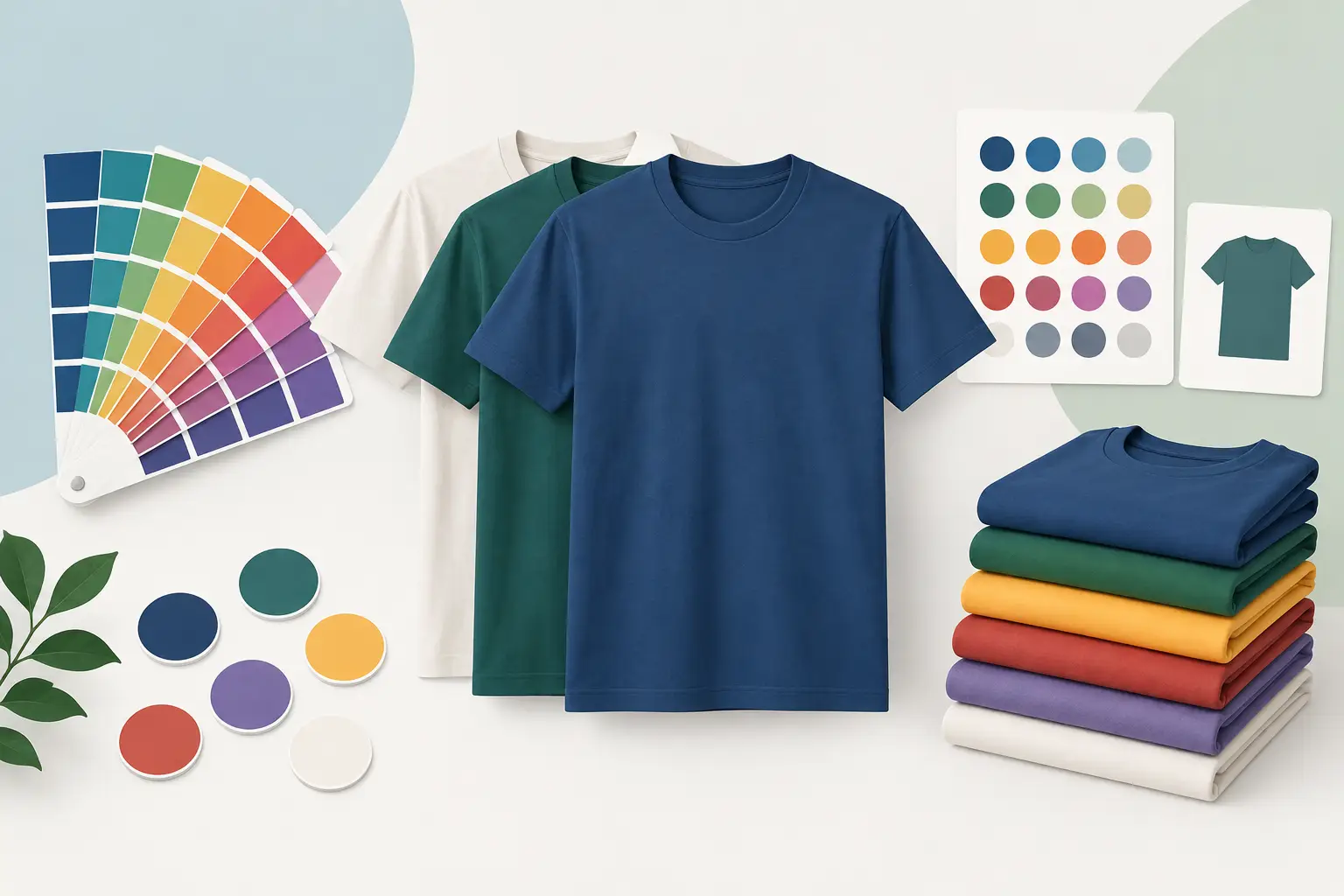

A logo can look sharp on a sample shirt and still fail in the real world. It may crack after repeated washing, lift at the corners on a high-stretch polo, or feel too heavy across a staff uniform. That is why choosing heat transfer for logos should begin with how the garment will be worn, washed, stored, and seen – not simply with the artwork file.
For company uniforms, campaign merchandise, school apparel, and teamwear, heat transfer can deliver crisp branding with impressive flexibility. The right transfer method produces consistent color, clean small details, and dependable adhesion across a bulk order. The wrong match can create avoidable rework. Your identity is our responsibility, so the production decision needs to protect it from day one.
What Heat Transfer Does Best for Branded Apparel
Heat transfer applies a prepared design to a garment using controlled heat, pressure, and time. Depending on the application, the logo may be printed onto a carrier film, cut from colored material, or produced as a specialty transfer before it reaches the garment. This makes heat transfer particularly useful when a design includes multiple colors, fine lettering, gradients, or individual names and numbers.
Unlike embroidery, heat transfer does not add thread bulk or pull at lightweight fabric. Unlike some direct-print methods, it can be a practical choice for certain performance fabrics, difficult colors, and shorter runs. It is also highly effective for placing branding where a traditional print may be less suitable, such as sleeve logos, chest marks, sports jersey names, and small personalized details.
The result should not be judged by appearance alone. A good transfer needs to suit the fabric, sit comfortably on the garment, and remain stable through the level of use the item is expected to receive.
Choosing Heat Transfer for Logos by Garment Type
The garment is the starting point. Cotton, polyester, cotton-poly blends, stretch fabrics, nylon, and treated workwear each react differently to heat and adhesives. Before production, confirm both the garment composition and its intended use.
Cotton T-shirts and casual apparel
Cotton is generally a reliable surface for heat-applied logos. It works well for staff tees, event shirts, promotional apparel, and retail-style merchandise. Transfers can reproduce detailed artwork cleanly and provide a strong color match for corporate branding.
For a large front design, however, consider the feel of the finished print. A broad solid transfer may be durable but can feel warmer or less breathable than other decoration options. If the artwork is large and mostly solid color, screen printing may be worth comparing. If it includes photo-quality detail, many colors, or short-run personalization, heat transfer often offers the more practical route.
Polyester uniforms and performance jerseys
Polyester requires more technical control. Sports jerseys, dry-fit shirts, and active uniforms are popular because they are lightweight and moisture-wicking, but they can be vulnerable to dye migration. This happens when dye from the fabric rises into the printed layer during heat application, changing the appearance of light-colored logos.
A transfer designed to block dye migration can reduce that risk. Heat settings also matter. Too much heat can damage the fabric or create shine; too little can compromise adhesion. For performance wear, use a production partner that tests the transfer and garment combination before committing to the full run.
Stretch polos, fitted apparel, and leggings
When fabric stretches, the logo needs to stretch with it. A standard transfer may look excellent while the garment is relaxed but crack or distort once worn. Stretch-compatible transfers are designed to move with spandex blends and flexible knit fabrics.
This is especially relevant for fitted corporate polos, hospitality uniforms, sportswear, and active team apparel. A small left-chest logo may need only moderate flexibility, while a large back design on a compression-style garment needs much more. Placement and artwork size affect performance as much as the transfer material itself.
Workwear, jackets, and bags
Heavy cotton, canvas, poly-cotton workwear, and selected bags can all support heat-applied branding, but their surfaces are rarely identical. Seams, pockets, zippers, waterproof coatings, and textured panels can interfere with even pressure. A logo that works on a flat T-shirt may not be suitable for a structured jacket or travel bag.
For workwear, also think about wash conditions. Industrial laundering, frequent cleaning, exposure to heat, and daily abrasion place higher demands on decoration. In some cases, embroidery may be the better long-term choice. In others, a specialty transfer gives a cleaner result for detailed logos or safety-related graphics. The right answer depends on the garment specification, not a one-size-fits-all rule.
Match the Method to Your Artwork and Brand Standards
Heat transfer is not one single finish. The best option depends on what the logo needs to communicate.
Fine text, thin lines, full-color artwork, and gradient effects are where printed transfers often stand out. They can preserve details that may be difficult to reproduce through cut vinyl or embroidery. This is useful for corporate logos with small taglines, event graphics, sponsor marks, and illustrated promotional designs.
Cut heat transfer vinyl can be effective for simple lettering, names, numbers, and bold one- or two-color graphics. It is a common choice for sports personalization because every jersey can carry a different name or number without changing the core production setup. Its limitation is complexity: intricate artwork with many small isolated shapes may be slow to weed and less efficient at scale.
Special-effect transfers can add metallic, reflective, puff, glitter, or textured finishes. These should serve the purpose of the item, not distract from it. Reflective branding can be valuable on selected workwear or event crew apparel. A glitter finish may suit a retail promotion or school celebration. For daily corporate uniforms, a clean matte or soft finish is usually the stronger brand decision.
Always provide the best available logo artwork. Vector files are preferred for clear edges and accurate scaling, while high-resolution artwork is essential when photographic or detailed printed designs are required. A production-ready logo protects color consistency across T-shirts, polos, caps, bags, and other branded items.
Consider Order Size, Personalization, and Timeline
Heat transfer is often chosen because it supports flexible quantities and variable data. If 80 employees need the same uniform but each shirt requires an individual name, department, or number, heat transfer can keep the design consistent while making every piece distinct.
For a small campaign run, a detailed multi-color transfer may be more efficient than setting up several screen print colors. For a very large order with a simple, repeated design, screen printing may offer stronger cost efficiency. The decision is not about declaring one method better than another. It is about selecting the method that gives your organization the best balance of appearance, durability, production speed, and unit cost.
Lead time should be discussed early, particularly for product launches, school events, tournaments, onboarding programs, and trade shows. Artwork approval, garment stock, test pressing, and personalization all influence the production schedule. Clear specifications at the beginning prevent the most common causes of delay: incorrect logo versions, unconfirmed placements, missing size breakdowns, and last-minute color changes.
Ask for a Test Before Bulk Production
A sample or test press is one of the most valuable checkpoints in a custom apparel order. It confirms the logo size, placement, color appearance, hand feel, and bond to the selected fabric. For critical uniforms or large-volume merchandise, it also gives decision-makers a physical reference before approving the full production run.
Review the sample under normal conditions. Stretch the fabric if it is a performance garment. Look at the logo under indoor and outdoor light. Check whether small text remains readable. Consider how the transfer feels against the body, especially on chest, back, or shoulder placements. If the garment will be washed frequently, ask about recommended wash care and expected performance.
At Green Cotton, we approach this as a production decision rather than a decoration add-on. Garment type, logo detail, placement, quantity, and delivery date need to work together. That is how organizations maintain a professional, consistent look across every staff member, participant, or campaign item.
Care Instructions Protect the Finished Logo
Even a correctly applied transfer benefits from proper care. In most cases, garments should be turned inside out before washing, cleaned in cold or warm water as recommended, and kept away from harsh bleach. High dryer heat and direct ironing over the logo can shorten the life of the decoration.
For uniforms issued to large teams, include simple care guidance with the handover. This small step helps preserve branding and reduces premature replacement requests. It is particularly worthwhile for sportswear, activewear, and garments with large transferred designs.
The best logo application is the one that performs quietly: it stays aligned, keeps its color, and lets your people represent the brand with confidence. Start with the garment’s real working conditions, approve a test that reflects them, and your finished apparel will be ready to carry the identity you have worked hard to build.