
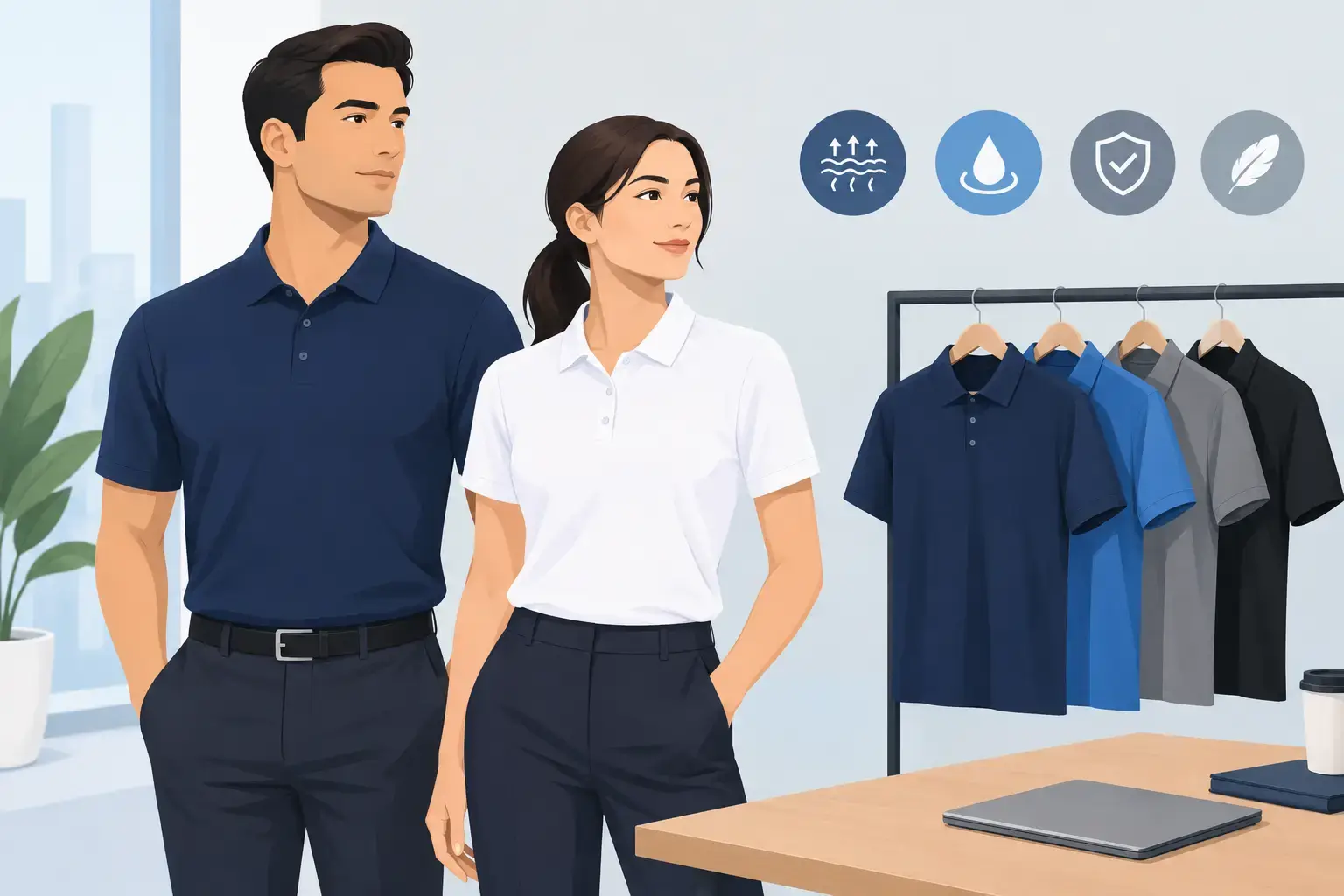
A polo shirt can look like a simple uniform choice until your team wears it through a humid commute, a full trade show, repeated wash cycles, and customer-facing meetings. To choose corporate polo shirts well, procurement teams need to balance appearance, comfort, branding, budget, and production requirements from the start. The right decision gives employees a uniform they will actually wear with confidence while keeping your organization’s identity clear and consistent.
Start With the Job the Polo Needs to Do
Corporate polos are not one-size-fits-all, even when they share the same logo. A receptionist, field technician, sales representative, event crew member, and golf-day participant may all need polos, but their working conditions are very different.
For office and client-facing teams, a structured polo with a smooth finish creates a clean, professional appearance. It should hold its shape through a long workday and pair easily with trousers, skirts, or workwear bottoms. For active teams, outdoor staff, and event crews, breathability, moisture management, and ease of movement matter more. A lightweight performance fabric can keep staff more comfortable when they are setting up booths, moving equipment, or working outdoors.
Think about how often the shirt will be worn, where it will be worn, and whether employees need to layer it with jackets or safety garments. Those answers should guide the fabric, cut, color, and decoration method before you approve a sample.
How to Choose Corporate Polo Shirts by Fabric
Fabric affects nearly every part of the finished polo: comfort, durability, logo appearance, maintenance, and perceived value. The best fabric depends on your use case rather than a single universal standard.
Cotton polos have a familiar, natural feel and are a strong choice for hospitality, office teams, schools, and casual corporate uniforms. Pique cotton, with its textured knit, is especially popular because it looks polished while allowing airflow. However, pure cotton can retain moisture and may need more care to minimize shrinkage or wrinkles.
Polyester polos are often selected for active, outdoor, and high-volume programs. They are lightweight, colorfast, quick-drying, and generally more resistant to wrinkles. Performance polyester is practical for roadshows, sports events, logistics teams, and staff who work in warm environments. The trade-off is that lower-grade polyester can feel less breathable or develop odor retention, so fabric quality matters.
Cotton-poly blends offer a dependable middle ground. They combine cotton’s comfort with polyester’s durability and easier care, making them a practical option for companies that need an all-purpose staff uniform. If your teams have varied roles, a quality blend can simplify ordering without compromising a professional finish.
Fabric weight also deserves attention. A heavier polo can feel premium and structured but may be too warm for outdoor use. A lighter fabric is more comfortable in heat but can appear less formal or show through in pale colors. Ask for fabric swatches and physical samples whenever possible. A photo cannot tell you how a collar recovers after washing or how the fabric feels during a full shift.
Fit Is Part of Your Brand Presentation
An excellent logo cannot compensate for a polo that fits poorly. When employees are uncomfortable, they tend to avoid wearing the uniform, size up excessively, or leave shirts untucked when the intended look calls for a neater appearance.
Start with a size range that accommodates the real people on your team. This usually means offering unisex, men’s, and women’s fits where appropriate, rather than assuming one cut works for everyone. A women’s fit may have a more tailored silhouette and adjusted sleeve or body length, while a unisex cut can be useful for event programs that need flexible sizing and fast distribution.
Look beyond the chest measurement. Check body length, shoulder width, sleeve opening, collar construction, and side vents. For active staff, allow enough room through the shoulders and torso for movement. For client-facing staff, avoid cuts that are overly slim or too loose. A reliable size chart, sample fitting, and a clear ordering deadline prevent many of the avoidable issues that appear when bulk orders arrive.
Choose Colors That Work Beyond the First Event
Brand colors should be recognizable, but a polo also needs to remain wearable after dozens of washes and practical during daily operations. Very light colors can show stains quickly. Black looks sharp and hides marks, but it can feel hot outdoors and may show lint. Bright colors create visibility for promotions and event crews but may not suit every professional setting.
A strong approach is to choose a primary uniform color that supports everyday wear, then use contrast details for brand recognition. This may include a colored collar edge, sleeve piping, placket accent, inner neck tape, buttons, or a small embroidered logo. Custom-dyed fabric can help organizations match specific brand colors when standard stock shades are not close enough.
Also consider logo contrast early. A dark embroidered logo can disappear on navy, charcoal, or black fabric. White logos may look crisp on dark polos but can become harder to maintain in high-contact environments. Review a digital mockup, then inspect a physical strike-off or sample before committing to production.
Select the Right Decoration Method
The decoration method should suit your artwork, garment fabric, logo size, and expected wear. For corporate polos, embroidery is often the preferred choice because it gives a textured, premium finish and stands up well to regular laundering. It is particularly effective for chest logos, names, and simple brand marks.
Screen printing can work well for larger graphics, bold event branding, or multi-location designs, especially when ordering in volume. Heat transfer is useful for detailed logos, individual names, numbers, or smaller runs that require flexibility. Sublimation is ideal for all-over graphics on compatible polyester garments, but it is not the best fit for every corporate uniform program.
Avoid choosing a decoration method based on price alone. Fine logo details may not reproduce cleanly in embroidery, while a large printed graphic can feel heavy on a lightweight polo. A capable production partner should review your artwork and recommend a finish that protects both the design and the garment’s performance.
Build Your Order Around Real Operational Needs
Before placing a bulk order, confirm the details that influence accuracy and delivery. This includes final quantities by size and style, logo positions, thread or print colors, garment color, packaging needs, employee names, and delivery date. If polos are required for a launch, conference, onboarding program, or opening event, build in time for sampling, approvals, production, and shipping.
Use this pre-production checklist to keep the project on track:
- Confirm the intended wearer, work environment, and frequency of use.
- Approve the fabric composition, weight, color, and fit sample.
- Provide final logo files and confirm decoration placement and dimensions.
- Validate size quantities with a size chart or fitting session.
- Set a production timeline with room for approvals and quality checks.
Ordering a small quantity without a clear plan can create inconsistent uniforms later. If you expect new hires, seasonal staff, or recurring events, consider keeping the same fabric, color code, and branding specifications on file. This makes reorders faster and helps every new batch match the original program.
Do Not Treat Price as the Only Measure of Value
A low unit price may look attractive on a quotation, but it can become expensive if the polos fade early, shrink unevenly, feel uncomfortable, or arrive with inaccurate sizing. The better question is whether the shirt will perform for the length of your uniform cycle.
Consider the total value: garment quality, customization accuracy, durability, employee acceptance, and reliable turnaround. A polo that remains presentable after frequent wear protects your brand longer and reduces replacement costs. For large teams, it may be worth ordering a slightly higher-quality garment rather than managing complaints and urgent replacements after distribution.
Green Cotton helps organizations turn these decisions into a clear production specification, from fabric selection and sizing to embroidery, printing, and bulk fulfillment. Your identity is our responsibility, and the details on a polo shirt are often where that responsibility becomes visible.
The best corporate polo is not simply the one with your logo on it. It is the one your team can wear comfortably, your customers can recognize immediately, and your organization can reorder with confidence when the next deadline arrives.