
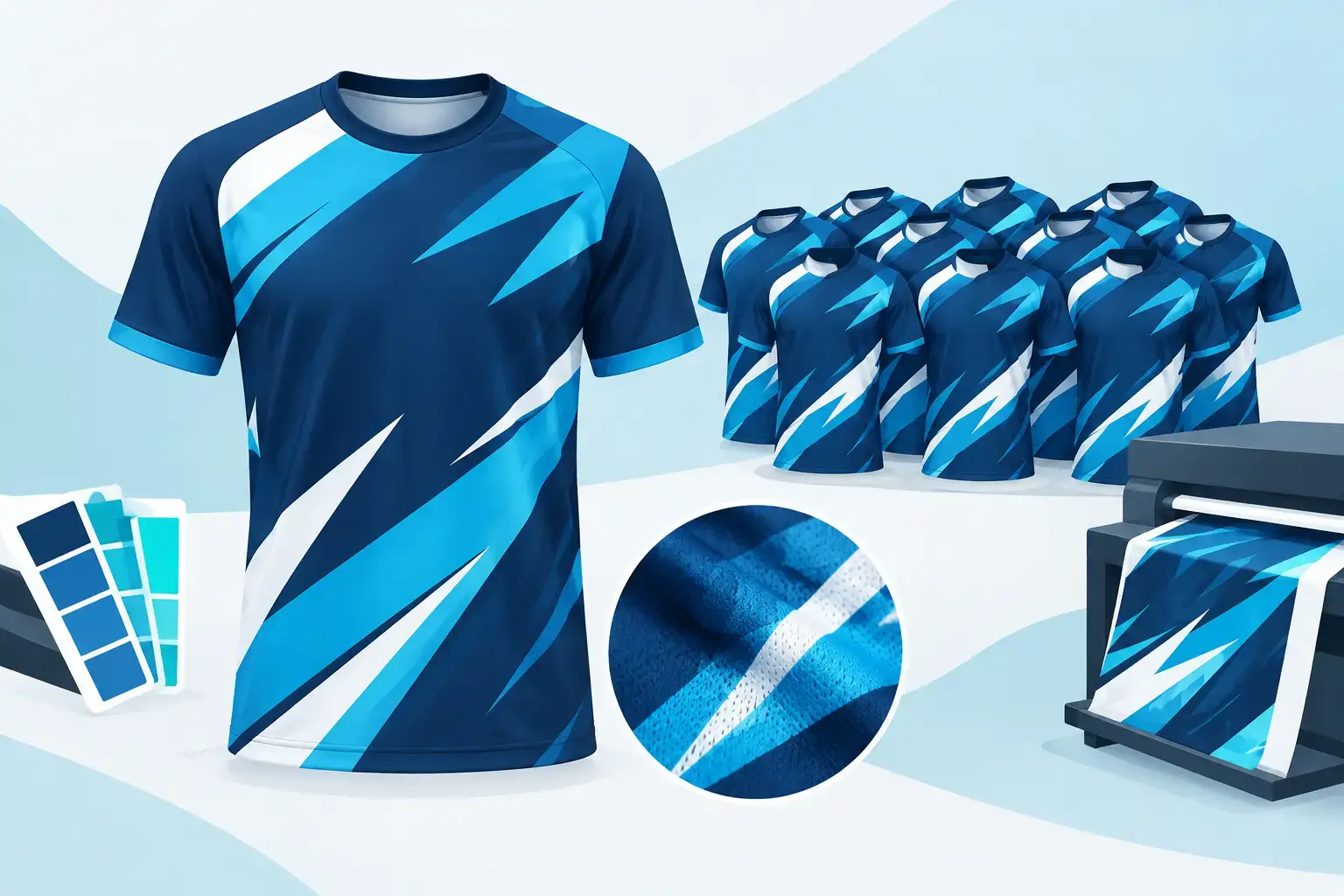
A jersey can look sharp in a digital mockup and still disappoint once it reaches the field, event floor, or staff team. This sublimation jersey review focuses on what bulk buyers should assess before approving production: print permanence, fabric performance, fit consistency, artwork accuracy, and the supplier’s ability to deliver every piece to specification.
For sports teams, schools, corporate events, and promotional campaigns, a sublimation jersey is not simply a shirt with a logo. It is a visible part of your identity. Names, numbers, sponsor marks, colors, and finishing details all need to remain clear and consistent from the first jersey in the order to the last.
Sublimation Jersey Review: What Makes It Different?
Sublimation is a dye-based printing process designed for polyester garments or polyester-rich fabrics. Under heat and pressure, the ink becomes part of the fabric rather than sitting on top of it. That distinction matters in real use. A properly sublimated design will not feel like a heavy printed layer, crack across the chest, or peel around numbers after repeated washing.
The process also gives organizations far more creative freedom than a standard spot-print approach. Full-front graphics, sleeve patterns, gradients, player names, detailed illustrations, and color-heavy branding can be built directly into the garment design. For a tournament jersey, company fun run shirt, or school house team uniform, this creates a cleaner and more unified result.
There is a trade-off. Sublimation works best on light-colored polyester bases because the process dyes fabric rather than covering it with opaque ink. If your brief requires a dark cotton jersey or a small run with frequent design changes, another decoration method may be more suitable. The right choice depends on fabric, quantity, intended use, and the level of visual detail your brand requires.
Fabric Feel Comes Before Artwork
A strong design gets attention, but fabric determines whether people actually want to wear the jersey. For active teams, lightweight polyester with moisture-management properties is usually the practical starting point. It helps move perspiration away from the skin and dries faster than cotton, making it suitable for outdoor activities, sports days, and long event shifts.
Fabric weight should match the application. A lighter jersey can feel cooler for running events, indoor sports, and warm-weather promotions. A slightly heavier fabric may provide a more structured appearance for staff uniforms, esports teams, or organizations that want a more substantial garment. Neither option is automatically better. The key is matching the material to how and where it will be worn.
Ask for a fabric sample or swatch before approving a large order. Assess the hand feel, stretch, thickness, and opacity. Hold the fabric against light, especially when choosing pale colors. A lightweight material may be comfortable, but it should still provide appropriate coverage and maintain a professional appearance across different body types.
Check Construction, Not Just the Fabric Label
Two garments can use similar polyester fabric and perform very differently because of construction. Review the stitching around the collar, sleeves, side seams, and hem. Seams should be tidy, secure, and comfortable against the skin. For athletic use, a well-finished collar and reinforced stress points help the jersey retain its shape through movement and regular laundering.
Also consider the cut. A relaxed unisex fit works well for many company events and volunteer groups. Competitive teams may prefer an athletic cut with closer sleeves and a more tapered body. If your order includes a broad mix of sizes, request a clear size chart and confirm whether the measurements refer to the garment itself or the wearer’s body measurement. That small detail prevents costly size confusion.
Color Accuracy Is a Production Test
One of sublimation’s major advantages is its ability to reproduce detailed, all-over artwork. It can deliver vibrant color, fine lines, and patterns without adding weight to the garment. However, bright digital artwork does not guarantee an identical fabric result.
Screens display color with light, while sublimation produces color on textile. Fabric texture, base color, finishing, and production settings can all influence the final appearance. For brand-critical projects, provide your approved color references and review a physical sample whenever timing allows. This is particularly important for corporate colors, school identities, sponsor logos, and jerseys that must match existing uniforms.
Pay close attention to large solid areas. Deep black, vivid red, and saturated blue can look excellent in sublimation, but they should be reviewed for consistency across panels. A capable production partner will prepare artwork with panel placement in mind, so a stripe, logo, or pattern does not land awkwardly on a seam or become distorted near the side body.
Artwork Placement Should Work in Motion
A jersey is not a flat poster. It folds, stretches, and moves. A logo that looks centered on a digital layout may shift visually when worn if the placement has not considered the garment’s cut. Chest marks need appropriate breathing room from collars and seams. Player names and numbers should remain easy to read at a distance. Sleeve graphics should not disappear into a fold.
This is where guided design support adds real value. Before production, confirm the front, back, sleeves, collar, and any optional details such as piping, contrast panels, or personalized names. Approval should cover spelling, number assignments, logo versions, color references, and size quantities. Specification accuracy at this stage protects the entire order.
Durability Is the Real-World Measure
A useful sublimation jersey review cannot stop at first impressions. The strongest benefit of the process is long-term print durability. Because the dye is integrated into the fibers, the artwork should remain flexible and visually stable through normal wash cycles. There is no raised print layer to split or flake away.
That does not mean every sublimated garment will last forever without care. Fabric can still snag, seams can still experience stress, and high heat can affect polyester over time. Give wearers practical care instructions: wash inside out in cold water, use a mild detergent, avoid bleach, and skip high-heat drying when possible. These habits help preserve both fabric performance and garment shape.
For organizations, durability also affects cost control. A well-made jersey can be reused for recurring events, seasonal leagues, staff activities, and promotional programs. Cheaper options that lose shape or look faded after limited use may cost more once replacements are factored in.
Ordering at Scale: Questions That Prevent Problems
Bulk jersey orders need a production process, not just a product selection. Start with the intended use, deadline, headcount, and design requirements. Then confirm the garment style, fabric choice, sizing breakdown, personalization needs, and delivery schedule before artwork is finalized.
The most valuable questions are practical ones: Can individual names and numbers be managed accurately? Is a pre-production sample available for high-stakes orders? What is the approved production timeline after artwork sign-off? How will size and personalization data be checked before manufacturing begins?
A reliable supplier should be able to guide you from concept to completed order, whether you need matching jerseys for a school team or branded apparel for a nationwide campaign. Green Cotton approaches customization as a production responsibility, with attention to garment selection, decoration quality, artwork approval, and on-time fulfillment.
When Sublimation Is the Right Investment
Sublimation jerseys are especially worthwhile when your design uses multiple colors, all-over graphics, gradients, individual names, or changing player numbers. They are also a smart choice when comfort matters and the garment will be worn actively or repeatedly. The finished result can feel more integrated and professional than a basic shirt with a front-only print.
For a simple one-color logo on a cotton event shirt, sublimation may not be the most efficient route. But when the jersey itself needs to carry your team identity, campaign message, or sponsor visibility, the added design control is hard to match.
Approve the fabric sample, inspect the artwork carefully, and treat sizing data as seriously as the logo file. When those decisions are handled early, your jerseys arrive ready to represent the people wearing them with confidence.