A staff uniform can look sharp on delivery day and still disappoint after a few weeks of washing. That is why buyers ask, are heat transfers durable? The practical answer is yes, when the transfer type, garment fabric, artwork, and application process are specified correctly. When those details are treated as an afterthought, cracking, peeling, fading, or lifting at the edges becomes much more likely.
For organizations ordering branded apparel in volume, durability is not simply about whether a logo stays attached. It is about maintaining a consistent, professional identity across a team, campaign, school, or event. A durable decoration method protects the investment in every garment and reduces the need for early replacements.
Are Heat Transfers Durable? It Depends on the Process
Heat transfer is a broad term for designs applied to a garment using heat and pressure. It can include heat transfer vinyl, digitally printed transfers, direct-to-film transfers, and screen-printed transfers. These methods do not perform identically, so a blanket promise of a certain number of washes is rarely useful without knowing the full production specification.
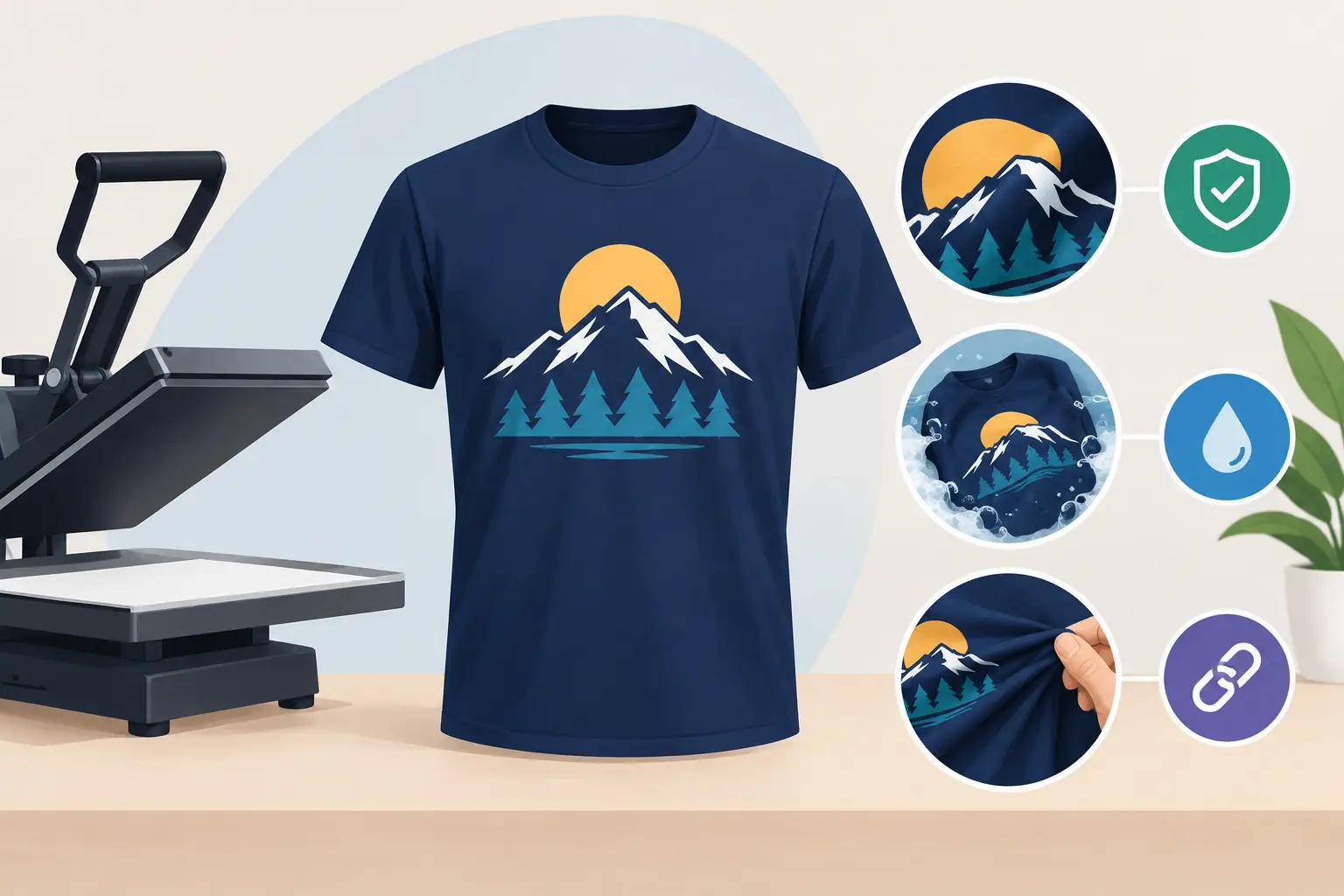
A professionally made transfer, applied with calibrated heat, pressure, and dwell time, can withstand regular home laundering very well. It is especially effective for detailed logos, small runs with variable names or numbers, and designs that need bright color on dark garments. The finish is often clean, precise, and consistent across a bulk order.
The trade-off is that transfers sit on the surface of the fabric. Large, solid designs may feel heavier than ink printed directly into the garment, and the wrong transfer film can struggle on highly textured, stretchy, coated, or heat-sensitive materials. Durability comes from choosing the right system for the job, not forcing one method onto every product.
What Determines How Long a Heat Transfer Lasts?
The transfer material and ink system
Not all transfer films and inks are built for the same use. A standard fashion transfer may be perfectly suitable for promotional T-shirts worn occasionally. A sports jersey, warehouse uniform, or hospitality polo worn and washed every week needs a material selected for repeated flexing and laundering.
Higher-quality transfers are designed to resist cracking and color loss while maintaining adhesion. For logos with fine lines, gradients, and multiple colors, digitally printed transfers can deliver excellent detail. For bold artwork and larger quantities, screen-printed transfers may offer a strong combination of color opacity, wash performance, and production efficiency.
Fabric composition and garment construction
Cotton, polyester, cotton-poly blends, performance fabrics, and stretch materials all react differently to heat. Polyester is common in uniforms and teamwear because it is durable and colorfast, but it requires careful temperature control. Excessive heat can cause dye migration, where color from the fabric moves into a light-colored transfer.
Stretch fabrics need transfers with enough flexibility to move with the garment. A rigid material on a stretchy athletic jersey may crack over time even if the initial application looks perfect. Similarly, water-resistant coatings, heavily textured fabrics, and garments with seams or pockets near the print area require a more deliberate approach.
Garment quality also matters. A transfer can only perform as well as the surface beneath it. If a low-grade shirt twists, pills, or loses its shape quickly, the logo may still be intact while the garment no longer presents your brand well.
Application accuracy
Heat transfers rely on a controlled application process. Temperature, pressure, and press time must match the transfer manufacturer’s specification and the garment’s tolerance. Too little pressure or too short a press time can leave weak adhesion. Too much heat can damage the fabric, distort the transfer, or create visible press marks.
Placement matters too. A logo applied across a seam, zipper, pocket edge, or uneven panel has less consistent contact with the press. For bulk uniforms, production teams should confirm placement measurements and use repeatable setup methods so every piece aligns with the approved sample.
The size and location of the artwork
A small left-chest logo experiences less stress than a full-front solid graphic. Large designs cover more fabric, reduce breathability, and flex more during wear. That does not mean large heat transfers are a poor choice, but they need appropriate materials and realistic expectations.
High-friction areas deserve special attention. Transfers on elbows, knees, side panels, waistbands, and areas frequently rubbed by bags or safety equipment can wear faster than chest or back logos. For workwear, the role of the wearer should guide decoration placement as much as the artwork itself.
Heat Transfers vs. Other Decoration Methods
Heat transfer is one of several dependable ways to brand apparel. The best option depends on the garment, the artwork, order quantity, intended use, and desired finish.
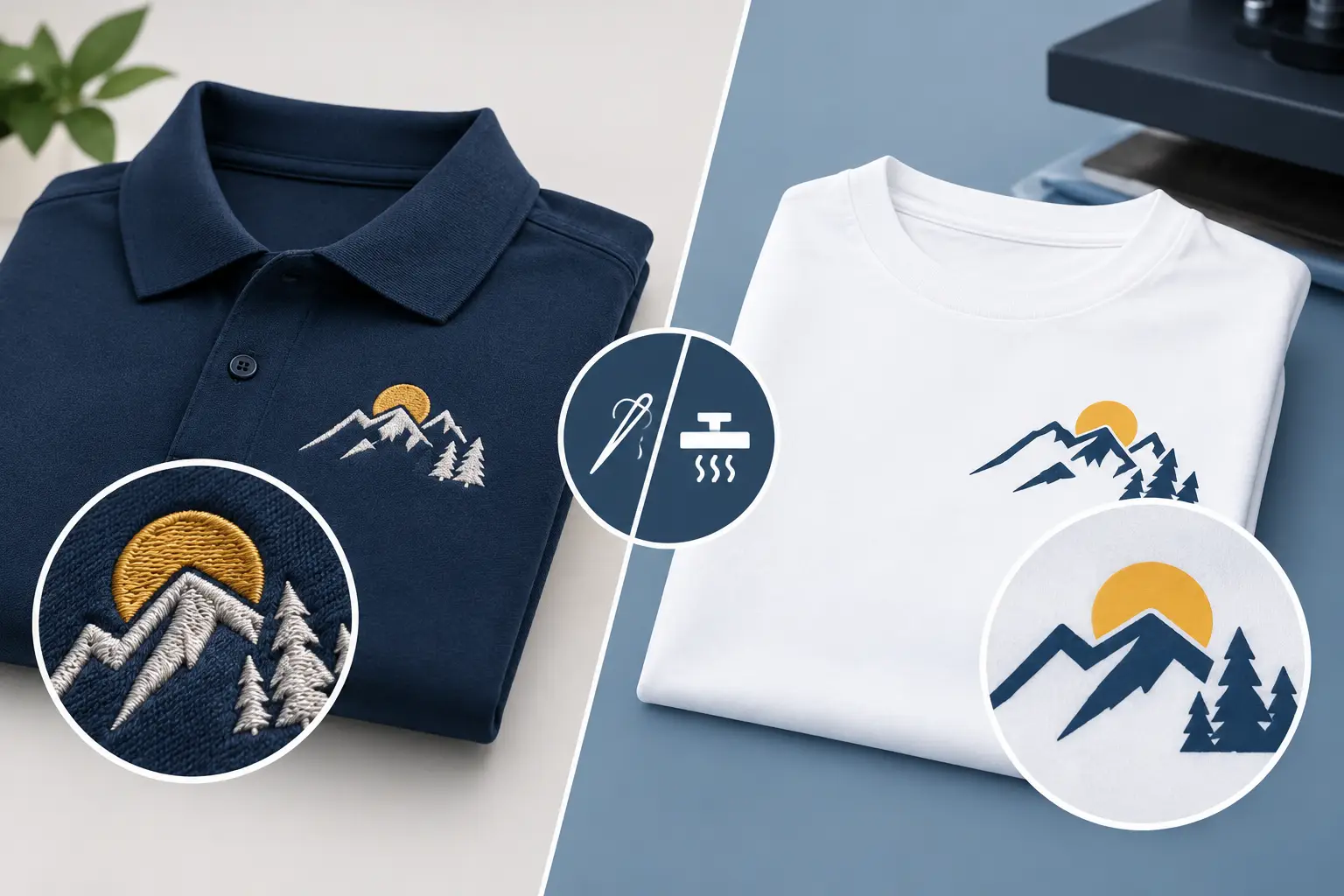
Screen printing is often a strong choice for larger runs of simple, bold designs on cotton or blends. Because the ink is cured into the fabric, it can provide excellent durability and a familiar printed feel. It becomes less practical when every garment needs a different name, number, or version of the design.
Embroidery delivers a premium, textured appearance that works particularly well for polos, caps, jackets, and corporate uniforms. It is highly durable, although dense stitching may not suit lightweight fabrics or very detailed artwork. Small text and gradient-heavy designs can lose clarity when converted to thread.
Sublimation is ideal for white or light polyester garments, especially full-coverage sportswear. The design becomes part of the fabric rather than sitting on top of it, so there is no transfer layer to peel. It is not the right method for cotton garments or dark apparel.
Direct-to-garment printing can create soft, high-detail artwork on suitable cotton-rich garments. Its results depend heavily on garment preparation, pretreatment, curing, and wash care. Heat transfer is often the more flexible route for mixed-fabric orders, individual personalization, and certain performance apparel.
How to Specify Durable Transfers for a Bulk Order
The best time to address durability is before production begins. Start by defining how the apparel will actually be used. An event T-shirt handed out once has different requirements from uniforms worn five days a week. Share the expected wash frequency, work environment, garment fabric, logo placement, and whether personalized names or numbers are needed.
Ask for an approved sample when the order involves a new garment-transfer combination, a large design, stretch fabric, or demanding use. A sample confirms color, finish, size, placement, and adhesion before the full run moves forward. It also gives stakeholders a physical item to assess rather than relying only on artwork proofs.
For procurement teams, consistency should be part of the specification. Record the garment model, color, decoration method, transfer type, placement dimensions, and artwork version. This makes reorders faster and helps ensure uniforms ordered months later match the original program.
It is also wise to plan around the most demanding garment in the order. If one group needs a logo on polyester safety polos and another needs the same mark on cotton tees, the same artwork may require different production settings or decoration methods. Treating each fabric correctly protects the final result.
Washing and Care Make a Real Difference
Even a well-applied heat transfer benefits from sensible care. Turn garments inside out before washing, use cold or warm water, and avoid harsh bleach. High dryer heat can gradually stress the adhesive and film, particularly on transfers with large solid areas.
If a garment needs ironing, avoid ironing directly over the decoration. For organizations issuing uniforms, a simple care note can prevent avoidable damage and extend the life of every branded piece. This is particularly useful for school teams, staff uniforms, and promotional apparel distributed to a wide group of users.
Dry cleaning, industrial laundering, chemical exposure, and abrasive work conditions should be raised early in the planning process. Standard transfers may not be the correct solution for every environment. A production partner should recommend materials and methods based on the real conditions your apparel will face, not just the artwork on screen.
When Heat Transfers Are the Right Choice
Heat transfers are a practical, durable option when you need clean logo reproduction, detailed full-color designs, flexible order quantities, or individual personalization. They are especially useful for names and numbers on teamwear, short-run campaign apparel, multi-version event merchandise, and uniforms where different departments require different details.
They can also support efficient brand management. Instead of simplifying a complex logo into a limited-color print or paying for multiple screens on a short run, a quality transfer can reproduce the approved artwork with sharp edges and consistent color. That flexibility helps organizations keep their identity intact across different apparel categories.
The right question is not whether heat transfers are durable in isolation. Ask whether the transfer is engineered, applied, and cared for correctly for your garment’s job. When specifications are handled carefully from fabric selection through final quality control, heat transfer can be a reliable part of a professional apparel program. Bring the intended use to the production conversation early, and your finished garments will be built to represent your organization long after the first wear.