A logo on a staff polo, event shirt, or work jacket has to do more than look good on delivery day. It needs to represent your organization through daily wear, washing, movement, and customer-facing moments. When deciding between embroidery versus heat transfer logos, the right answer depends on your garment, artwork, quantity, budget, and the job that branded apparel must perform.
For a polished corporate uniform, embroidery often delivers the familiar premium finish buyers expect. For colorful campaign tees, sportswear, or detailed artwork, heat transfer can reproduce designs that thread simply cannot. The strongest programs do not choose a decoration method by habit. They choose it based on the specification.
Embroidery Versus Heat Transfer Logos: The Real Decision
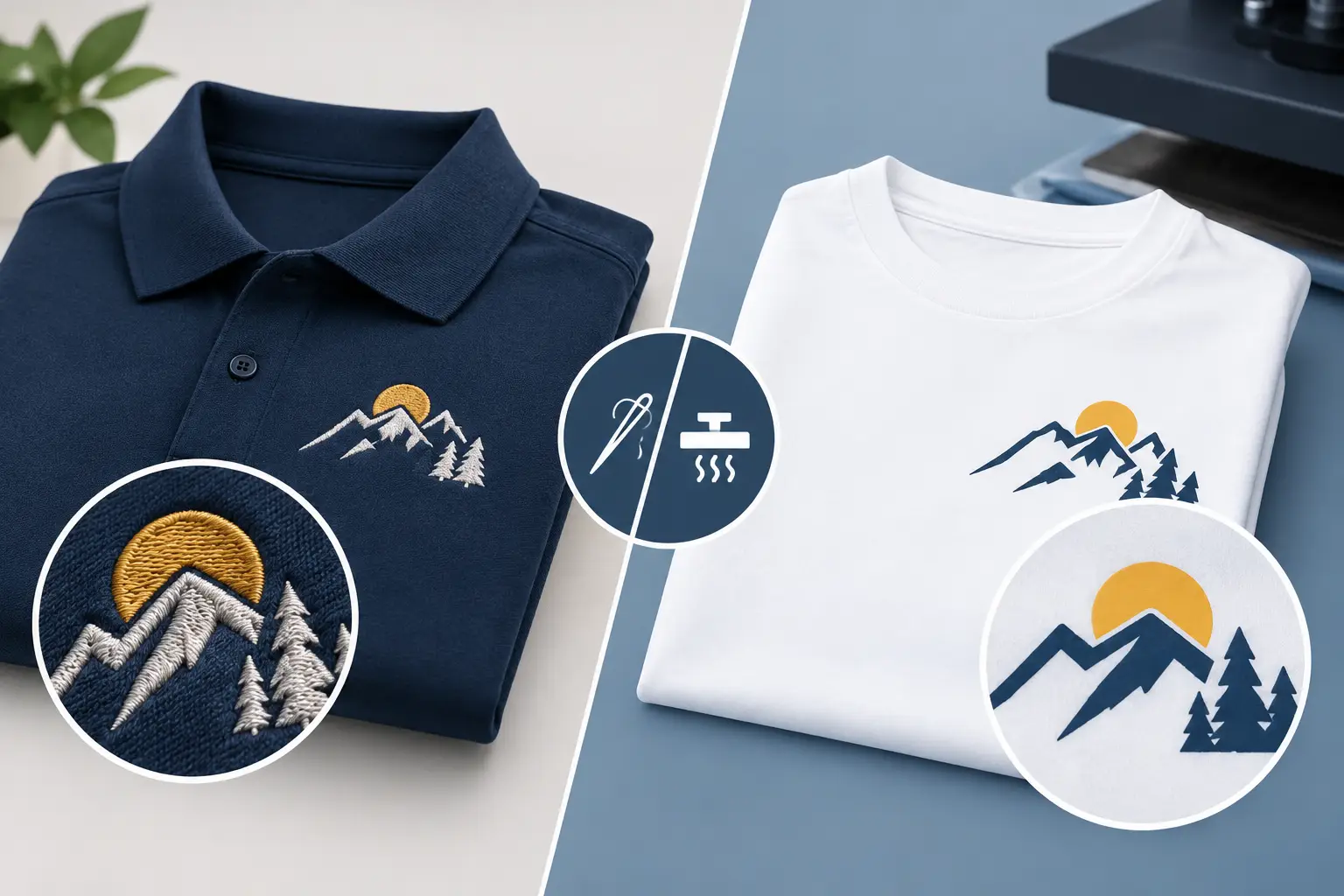
Embroidery creates a logo by stitching colored thread directly into the garment. It adds texture, dimension, and a professional presence that works especially well on polos, button-downs, caps, jackets, bags, and heavier workwear. A well-digitized embroidered logo can make a standard uniform look more established and intentional.
Heat transfer applies a printed or cut design to fabric using heat and pressure. Depending on the transfer type and artwork, it can produce crisp lettering, full-color graphics, gradients, small details, and individual names or numbers. It is a practical choice for T-shirts, performance jerseys, event apparel, promotional campaigns, and designs that need accurate color reproduction.
Neither method is automatically better. Embroidery gives a textured, long-lasting appearance, while heat transfer offers greater freedom for detailed visuals. The best option is the one that protects your brand identity without compromising comfort, garment performance, or production efficiency.
When Embroidery Is the Better Choice
Embroidery is often the first choice for uniforms meant to project authority, service quality, or a premium company image. Think front-chest logos on polo shirts, logos on office shirts, branded caps for retail teams, or names on hospitality uniforms. The raised thread finish is visible from a distance and carries a sense of permanence.
It is especially effective when the logo is simple and bold. Clean lettering, recognizable icons, and limited color palettes translate well into thread. For organizations ordering uniforms for customer service, field teams, schools, security personnel, and management staff, embroidery creates a consistent look across different garment types.
Embroidery also performs well on structured or heavier fabrics. Cotton pique polos, twill shirts, fleece jackets, workwear, backpacks, and caps can support stitching without losing their shape. On these products, a printed design may look flatter than intended, while embroidery feels integrated with the garment.
There are trade-offs. Thread cannot reproduce every small detail. Fine lines, tiny text, photographic elements, and smooth gradients may need to be simplified before production. An embroidered design also has physical weight. On lightweight performance fabric or a thin T-shirt, a dense logo can pull the fabric, feel stiff, or create backing that some wearers find less comfortable.
Logo size matters as well. Very large embroidered designs use more stitches, increase production time, and can become heavy. Embroidery is usually at its best as a focused branding detail, such as a left-chest logo, sleeve mark, cap front, or bag panel.
What to Check Before Approving Embroidery
Before moving into bulk production, review the logo’s smallest lettering, line thickness, and number of colors. Your artwork may look sharp on a screen but require adjustment when converted into stitches. This preparation process, known as digitizing, determines stitch direction, density, and color changes so the finished logo stays clear on fabric.
Also consider the garment material. A logo that looks excellent on a polo may need a different backing or placement on a softshell jacket. Providing a production partner with the intended garments, logo files, sizing requirements, and placement preferences early helps prevent avoidable revisions later.
Where Heat Transfer Logos Perform Best
Heat transfer is built for flexibility. It can reproduce colorful artwork with a smooth finish and much closer visual accuracy to the original design file. If your campaign logo contains gradients, shading, multiple colors, fine text, or a detailed illustration, heat transfer may be the more reliable route.
This method is particularly useful for athletic apparel. Sublimation jerseys, moisture-wicking shirts, training tees, and teamwear need decoration that does not add excessive bulk or restrict movement. Heat transfer can apply player names, numbers, sponsor logos, and event graphics in locations where embroidery would be impractical.
Marketing teams also benefit from heat transfer when each item needs different information. A conference shirt may include individual names. A sports team may need unique jersey numbers. A roadshow campaign may require several short-run designs across different locations. These variable details are easier to manage through transfer production than through separate embroidery setups.
Heat transfer is not limited to casual apparel. It can work very effectively for staff T-shirts, branded outerwear, tote bags, and promotional merchandise when the design and material are compatible. The key is selecting the right transfer application for the fabric and intended use.
The main consideration is care and application quality. Heat transfers must be applied with the correct temperature, pressure, and dwell time. A poorly matched transfer or an incorrect application can affect adhesion and appearance. Proper production control and clear care instructions matter, especially for apparel that will be washed frequently.
Heat Transfer Needs Smart Artwork and Placement
A full-color design can look impressive, but it should still be planned for the garment. Large solid areas may feel warmer on the chest or back of a shirt. For activewear, a smaller logo or a placement away from high-stretch zones may improve comfort. For uniforms, consider whether the logo will sit near a pocket, zipper, seam, or reflective strip.
Heat transfer also gives you options for visible placements such as full back graphics, sleeve branding, neck labels, and individual personalization. That makes it useful when your apparel needs both a company identity and a campaign-specific message.
Compare the Finish, Cost, and Wear Experience
Embroidery has a tactile, dimensional finish. It makes an understated logo look refined, which is why it remains popular for executive uniforms, hospitality teams, golf shirts, caps, and premium corporate gifts. Its cost is influenced by stitch count, logo size, and color changes, rather than simply the number of printed colors.
Heat transfer has a smoother finish and is generally better for artwork complexity. Its pricing depends on design size, transfer type, quantity, and personalization requirements. A detailed full-color graphic that would be difficult to embroider may be more practical as a transfer, particularly on T-shirts or performance garments.
Durability is not a one-method conversation. A properly produced embroidered logo holds up extremely well, but it can snag against rough surfaces. A correctly applied heat transfer can also withstand regular use and washing, but it needs appropriate laundering and must be matched to the garment fabric. The real question is how the item will be worn.
For construction crews, hospitality staff, retail teams, school groups, or event volunteers, garment use is different. A work jacket may benefit from embroidery. A one-day event shirt may prioritize bright graphics and cost control. A sports jersey may require heat transfer because it needs lightweight personalization. The intended environment should guide the decision.
Choosing the Right Method for Your Order
Start with the garment, not just the logo. Ask whether the fabric is structured, stretchy, lightweight, textured, or heat-sensitive. Then consider the logo itself: Is it a simple corporate mark or a complex full-color campaign design? Finally, define the purpose of the order. Is this a long-term uniform program, a premium gift, a sports team, a product launch, or a high-volume event?
For many organizations, the best answer is a combination. Your front-office polos might use embroidered logos, while event T-shirts use heat transfer graphics. Caps and travel bags may be embroidered for a premium look, while team jerseys carry transfer names and numbers. A coordinated program can use different decoration methods without losing brand consistency.
At Green Cotton, the production process begins by matching the design to the product and the end use. That means checking artwork suitability, recommending practical placements, confirming specifications, and managing bulk production with quality control in mind. Your identity is not a generic graphic. It is a standard every finished piece needs to meet.
The most useful next step is to prepare your logo file, target garment list, estimated quantity, and intended use case. With those details in hand, you can choose decoration based on performance rather than guesswork – and give every wearer a branded item that feels right for the job.