
A client gift can be opened in seconds and remembered for months. The difference is rarely the logo alone. It is whether the items feel useful, considered, and consistent with the relationship you want to build. Knowing how to choose promotional gift sets starts with that standard: select products people will genuinely keep, then make every detail reflect your brand accurately.
For procurement teams, HR departments, marketers, schools, and event organizers, gift sets also need to work operationally. They must suit the recipient, stay within budget, arrive on schedule, and hold up to daily use. A well-planned set makes your organization look prepared. A rushed collection of unrelated items can do the opposite.
Start With the Purpose of the Gift Set
Before comparing products, define what the gift set must achieve. A welcome kit for new employees has a different job from a premium appreciation gift for key clients. Event giveaways need broad appeal and easy distribution, while a partner gift may justify more personalized, higher-value items.
Be specific about the desired response. Do you want recipients to feel welcomed, rewarded, recognized, or reminded of your business after an event? This decision shapes the product category, presentation, customization level, and budget.
For example, an onboarding set may combine a branded polo shirt, notebook, reusable drinkware, and tote bag. These items help a new team member feel part of the organization from day one. A campaign kit for a trade show may prioritize a practical travel bag, cap, and compact accessories that attendees can carry immediately. For executive gifting, fewer items with better materials and refined packaging will often make a stronger impression than a larger assortment.
Know Exactly Who Will Receive It
The most effective promotional gifts are chosen for the recipient’s routine, not simply for the buyer’s product preference. Consider where recipients work, commute, travel, exercise, study, or attend events. A durable tote bag is valuable for staff who carry documents or personal items every day. A performance jersey may be right for a sports day, but not for a formal client presentation.
Audience size matters as well. If you are gifting hundreds of event attendees, choose versatile products with simple sizing requirements. If you are preparing gifts for a smaller internal team, you can include sized apparel, individual names, role-specific details, or premium accessories.
Think about the relationship, too. A gift for prospective customers should feel welcoming without being overly expensive. A milestone gift for long-serving employees can carry more personal value. In many cases, a practical set is the safer choice because it avoids assumptions about taste while giving your brand repeated visibility.
Match Usefulness to the Setting
Usefulness is not a generic quality. It depends on context. A branded insulated bottle suits an outdoor event, a corporate wellness initiative, or a commuting workforce. A polished notebook and pen suit meetings, training sessions, and conferences. Custom apparel can create a strong sense of belonging for staff, volunteers, school groups, and teams, provided the fabric, fit, and decoration method match how it will be worn.
Ask one practical question before approving an item: Would the recipient still use this if the logo were not on it? If the answer is yes, the branding becomes a welcome part of a useful product rather than an interruption.
Set a Budget That Includes the Full Job
A unit price only tells part of the story. When planning promotional gift sets, account for product cost, decoration, individual personalization, packaging, assembly, delivery, and any required rush production. A set that appears affordable at the product-selection stage may exceed the budget once it is packed and branded correctly.
It helps to establish a target range per recipient, then divide it according to the role of each item. Put more budget into the product recipients will use most often. A quality bag, jacket, polo shirt, or drinkware item can carry the set, while smaller accessories add completeness without competing for attention.
Avoid treating every audience the same. You may need one practical, scalable set for event participants and a more premium version for speakers, sponsors, or senior partners. Keeping a shared visual theme across both versions maintains brand consistency while allowing the investment to match the relationship.
Build a Set Around One Clear Idea
The strongest sets feel connected. Instead of assembling unrelated products, choose a theme that gives each item a reason to be there. This could be workday readiness, travel, wellness, team spirit, event essentials, or client appreciation.
A workday readiness set might include a custom polo, notebook, tote bag, and drinkware. A travel-focused set could include a travel bag, cap, luggage tag, and reusable bottle. For a school or sports program, a jersey, cap, drawstring bag, and towel can create a unified team package.
The theme should support your campaign or organization, but it does not need to be overly literal. A sustainability message, for instance, should be backed by long-lasting, reusable products rather than a short-lived novelty item. If you are launching a new brand identity, select products that offer enough surface area and quality for the new colors and logo to be seen clearly.
Choose Materials and Decoration for Real Use
A gift set represents your standards after it leaves the event or office. Product quality, print durability, stitching, fabric weight, zipper performance, and color consistency all affect how recipients perceive your brand. This is where supplier expertise matters.
For apparel, consider the intended environment before selecting fabric. Cotton can offer a familiar, comfortable feel for casual wear. Polyester and performance blends are often better for active teams, outdoor events, or frequent washing. Corporate uniforms may require a more structured fabric and embroidery that stays professional over time.
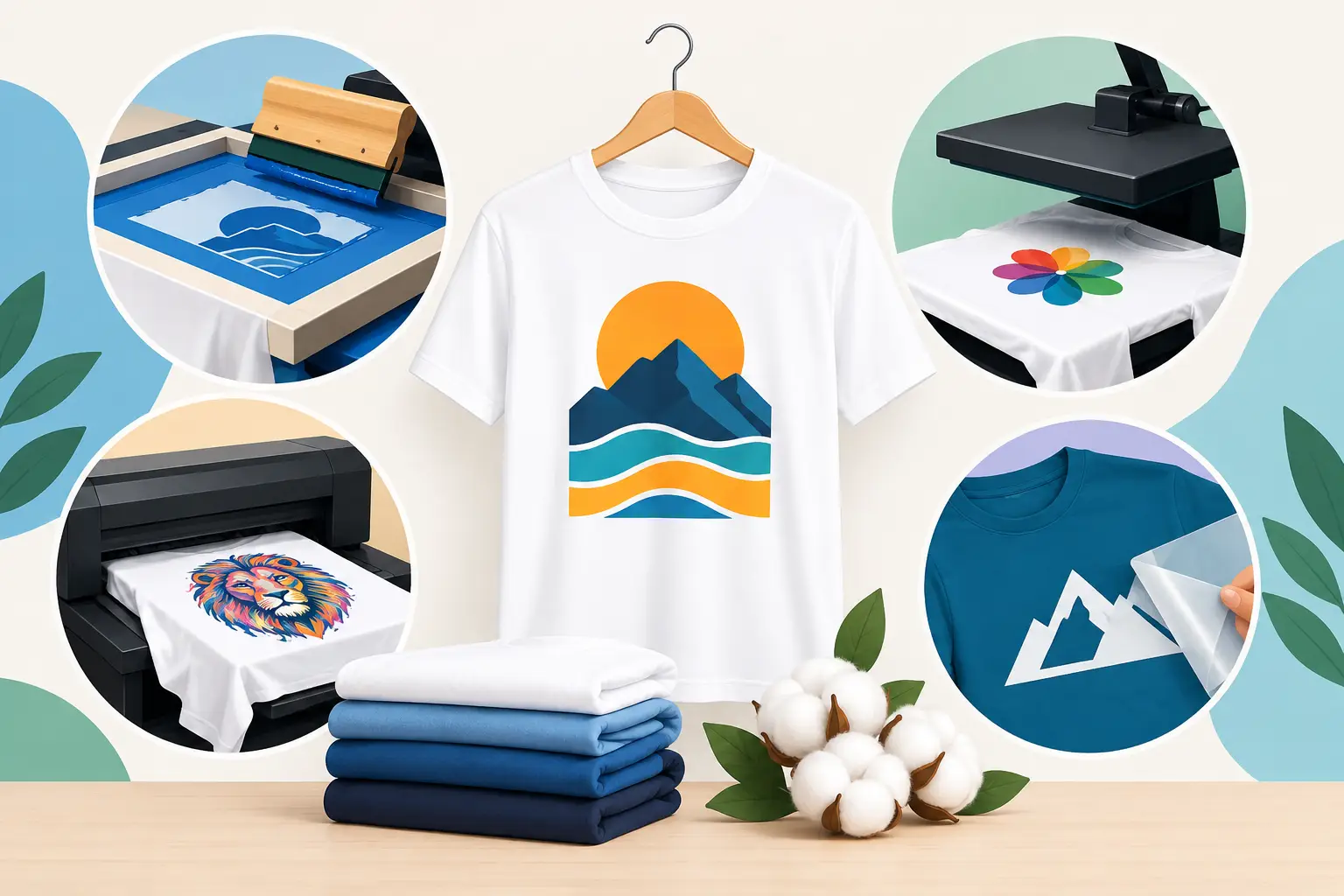
Decoration should follow the product, not the other way around. Embroidery creates a premium, durable finish on polos, caps, jackets, and bags. Screen printing works well for bold designs and larger bulk orders. Sublimation supports full-color artwork on suitable polyester garments, while heat transfer can be effective for names, numbers, and smaller-run personalization. The best method depends on the artwork, material, order quantity, and expected wear.
Do not force a detailed logo onto a small item where it cannot be read. Simplify the mark, use an approved icon, or move the main branding to a product with more visible space. Clear branding is better than oversized branding.
How to Choose Promotional Gift Sets With Brand Consistency
A gift set should look like it came from one organization, even when it includes different product types. Use approved logo files, defined brand colors, and a clear hierarchy for where each element appears. One item may feature the full logo, while another uses a subtle icon, tagline, or color detail.
Consistency does not mean printing the same large logo on everything. In fact, varying the branding can make the set feel more considered. A tote bag may carry a prominent campaign graphic, while a cap uses a small embroidered logo and a notebook uses a discreet debossed mark. The shared colors, materials, and quality level keep the collection cohesive.
Request a visual mockup or production sample when the order involves multiple decoration methods, custom colors, or high-value recipients. This step catches issues with logo scale, placement, contrast, and material finish before bulk production begins. Specification accuracy protects both your budget and your brand identity.
Plan Quantities, Sizes, and Delivery Early
Gift sets have more moving parts than a single promotional item. Every product must be available in the right quantity, decorated correctly, assembled, and delivered to the correct location. If apparel is included, collect size information early and allow for a sensible size breakdown when exact data is unavailable.
Build a production timeline backward from the date recipients need the gifts, not the date you plan to place the order. Factor in artwork approval, sample review, custom manufacturing, printing or embroidery, quality control, packing, and shipping. Custom dyed fabric, personalized names, and specialized packaging may require additional lead time.
It is also worth deciding how gifts will be distributed. Individual recipient names, department codes, or event registration details can make sorting easier. If gifts are headed to multiple offices or event locations, clarify packing requirements in advance. A capable production partner should help turn these details into a clear, manageable order plan.
Make the Presentation Match the Promise
Packaging is part of the gift, particularly for client appreciation, employee milestones, and formal events. It does not have to be elaborate, but it should feel intentional. A reusable bag, branded box, sleeve, or simple message card can give the set a finished appearance.
Check the practical side of presentation as well. Bulky packaging increases shipping and storage needs. Fragile items require protection. If gifts will be handed out quickly at an event, choose packaging that is easy to carry and easy for staff to organize.
Green Cotton can support organizations from product selection and artwork preparation through bulk production, decoration, quality control, and delivery. That end-to-end approach helps keep a multi-item gift set aligned with the approved specification from first concept to final handover.
A promotional gift set earns its value when recipients use it beyond the moment it is given. Choose fewer, better-matched items, insist on dependable production, and give your brand a place in the routines that matter to your audience.