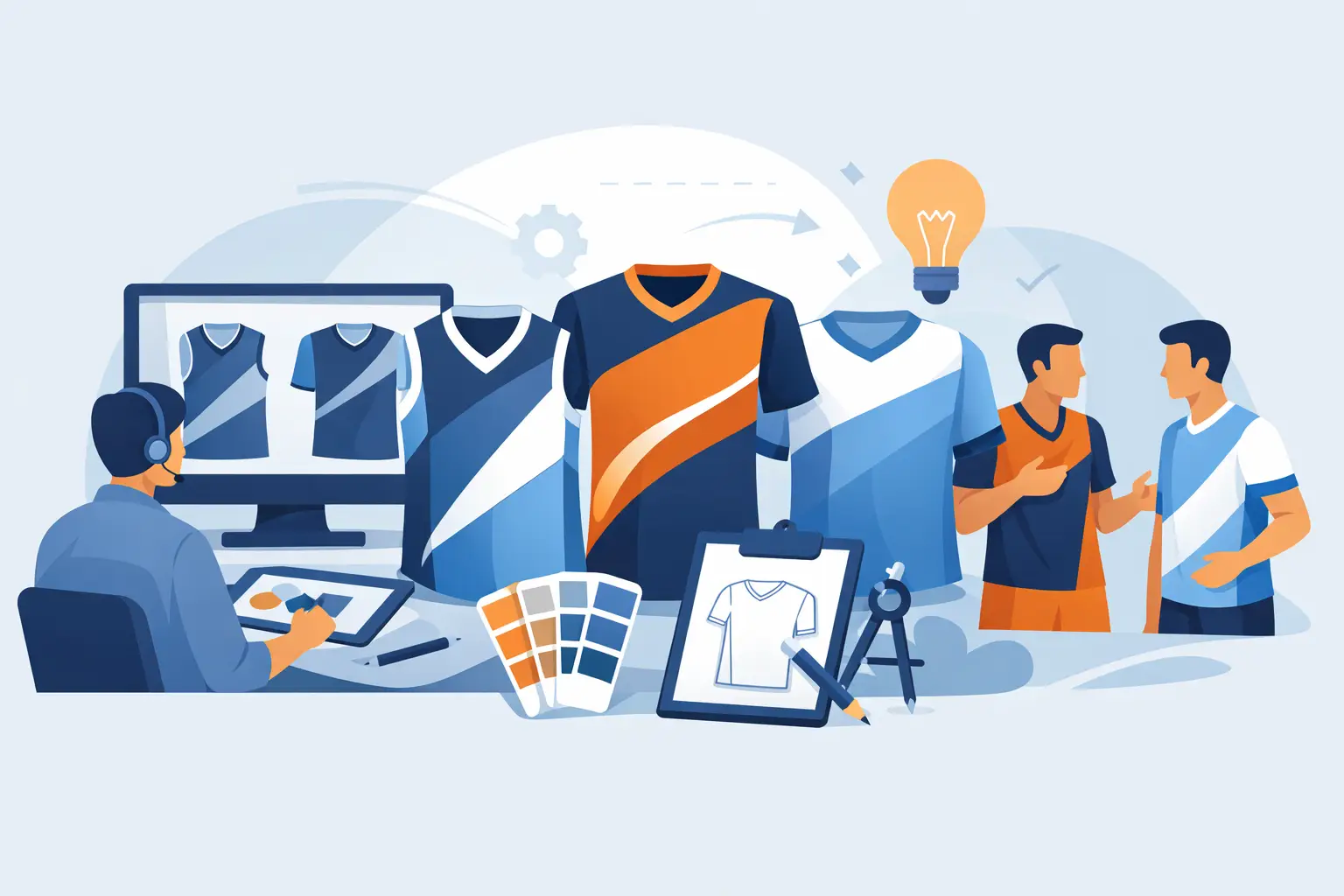
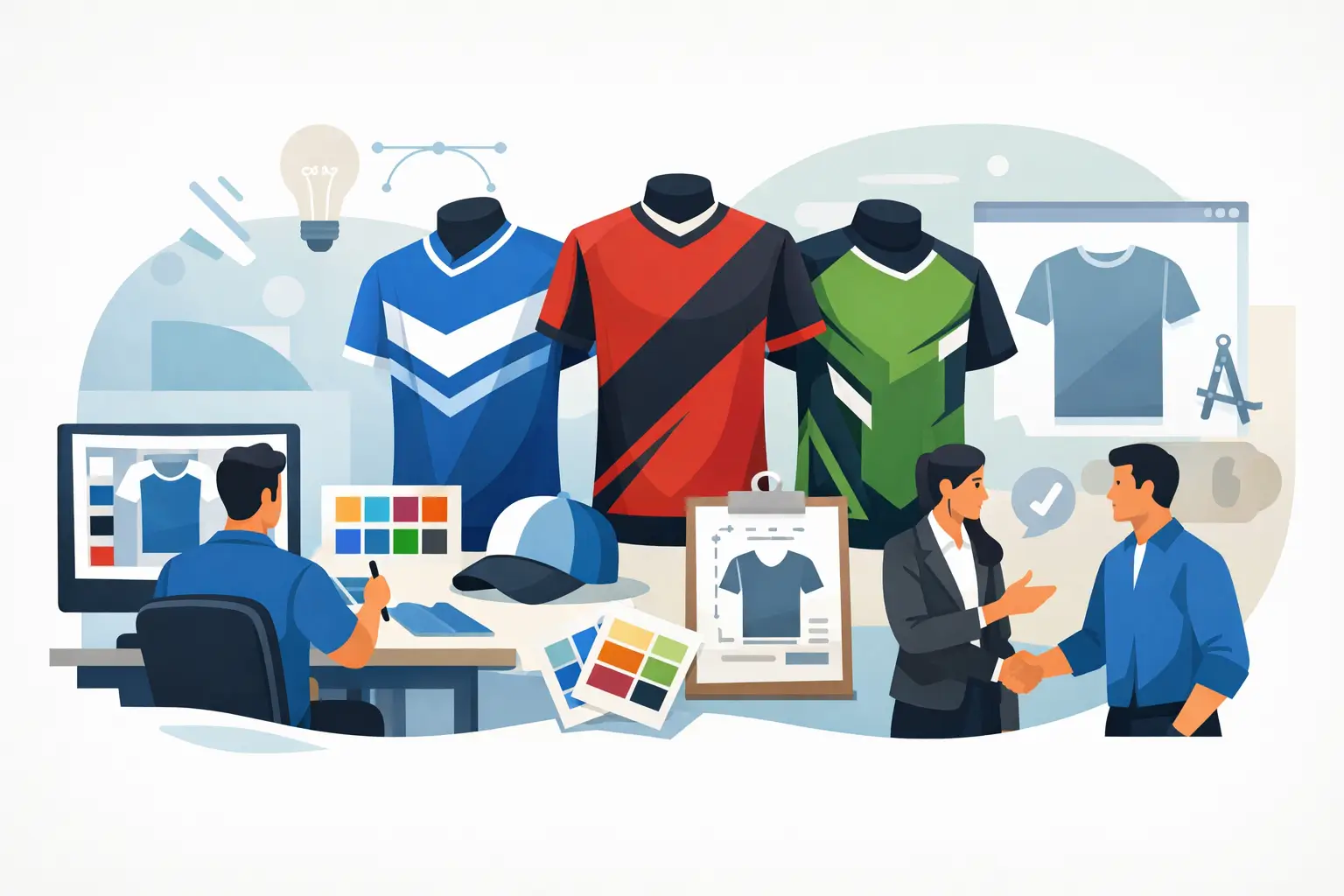
The problem with teamwear usually shows up too late. Sizes run unevenly, colors miss the brand guide, logos look different across garments, or the order arrives just before the event instead of well ahead of it. That is why choosing the right custom teamwear design company is less about finding someone who can print a shirt and more about finding a production partner who can deliver consistency at scale.
For schools, corporate teams, event organizers, and sports coordinators, teamwear is not a side purchase. It affects presentation, morale, visibility, and day-to-day practicality. If your staff is customer-facing, if your event relies on quick visual identification, or if your team represents your organization in public, the details matter. Fabric choice, logo placement, sizing accuracy, and turnaround time all carry real operational consequences.
What a custom teamwear design company should actually handle
A capable custom teamwear design company should do more than decorate ready-made apparel. The stronger option is a supplier that can support the full process from concept to production. That includes garment selection, fabric recommendations, size planning, color matching, branding method advice, sampling, and bulk manufacturing with quality control built in.
This matters because teamwear projects rarely stay simple. A school may need polos for staff, jerseys for students, and caps for an event. A company may want athletic shirts for an internal run, corporate polos for supervisors, and tote bags for campaign giveaways. When one supplier can manage multiple categories under one production standard, procurement gets easier and brand consistency improves.
The difference is especially clear in bulk orders. Small errors multiply fast when you are producing for 100, 500, or 2,000 people. A supplier with in-house decoration and structured production control is better positioned to catch issues before they become expensive delays.
Design is only one part of the result
Many buyers focus first on artwork, which makes sense. Logos, names, numbers, and colors are the visible parts of teamwear. But good results depend just as much on technical execution.
A team jersey designed for outdoor use may need lightweight moisture-management fabric and sublimation for long-lasting color. A corporate polo may need a cleaner structure, more formal texture, and embroidery that holds shape over repeated washing. A volunteer shirt for a one-day event may prioritize cost efficiency and quick identification over premium finishing. These are not interchangeable decisions.
The right supplier should guide those choices clearly. Not every garment works with every print method, and not every decoration technique suits every use case. Screen printing is efficient for bold graphics and larger runs. Embroidery adds texture and a more premium appearance but changes how the garment feels in the decorated area. Sublimation allows all-over designs and strong color retention, but it works best on suitable polyester-based materials. Heat transfer can be useful for names and numbering, especially when personalization is required.
A reliable partner explains the trade-offs instead of pushing one method for every order.
How to assess quality before you commit
If you are comparing vendors, ask better questions than, “What is your price per piece?” Low unit pricing can hide problems that cost more later, especially if the garments arrive with inconsistent sizing, weak stitching, or decoration that cracks after a few washes.
Start with the garment itself. Ask about fabric weight, composition, color consistency, shrinkage behavior, and intended use. Teamwear for an active environment has different demands than apparel for front-desk staff or event crews. If the supplier offers custom-made options, that gives you more control over fit, trim, panels, and color matching. It also requires stronger specification management, so you want a company that treats details seriously.
Then review decoration standards. Look at stitch density for embroidery, print sharpness for logos, alignment across size ranges, and durability expectations. If you need repeat orders over time, ask how the company maintains artwork files, color references, and production specs. Repeatability is a major part of quality, especially for organizations with multiple branches, annual events, or recurring uniform needs.
Sampling also deserves attention. In some cases, a physical sample is worth the extra step because it reduces risk before bulk production begins. That is particularly true for custom cuts, dyed fabrics, or large orders with several garment types.
Why fit and sizing cause the most avoidable problems
A teamwear order can look good in a mockup and still fail in actual use if the sizing is wrong. This is one of the most common issues in bulk apparel projects because buyers assume all size charts are similar. They are not.
A dependable custom teamwear design company should provide clear size guidance and help you account for the audience wearing the garments. School students, warehouse teams, office staff, event crews, and sports participants all have different fit expectations. Some prefer relaxed cuts, some need performance silhouettes, and some require more conservative uniform styling.
This is where guidance matters. If your order includes both men and women, youth and adult sizing, or multiple departments, the size breakdown should be planned carefully rather than estimated casually. It is much easier to prevent mismatch before production than to correct it afterward.
For organizations managing a large rollout, a supplier that can support structured size collection and specification checks adds real value. It reduces returns, avoids internal complaints, and helps the team look unified on launch day.
Delivery timelines are part of product quality
A late order is not a minor inconvenience. For an event, a campaign, a school program, or a scheduled team launch, timing is part of whether the job was done correctly.
That is why production planning should be treated as seriously as design approval. Ask what affects lead time. Custom fabric dyeing, special trims, multiple decoration methods, or mixed product categories can all add complexity. That does not mean you should avoid customization. It means your supplier should be realistic about scheduling and capable of managing it.
A strong production partner will explain milestones clearly: artwork approval, sample confirmation if needed, size confirmation, manufacturing, decoration, inspection, and dispatch. Buyers do not need vague reassurance. They need a schedule they can plan around.
This is one area where operational discipline separates experienced manufacturers from simple resellers. A company that owns more of the process can usually protect timelines more effectively because there are fewer handoffs and fewer chances for miscommunication.
One supplier or several? Usually, fewer is better
Many organizations source teamwear, uniforms, bags, and event merchandise from different vendors because that is how the buying process evolved internally. The downside is inconsistency. Colors drift, logos are scaled differently, materials feel unrelated, and delivery schedules become harder to manage.
Working with one capable supplier often solves more than a branding problem. It simplifies approvals, centralizes specifications, and gives procurement one point of accountability. If you need shirts, caps, tote bags, and premium gifts tied to the same campaign or event, coordinated production keeps the presentation tighter and the ordering process cleaner.
That does not mean one supplier is always the answer. If you need highly specialized technical sports equipment, you may still need niche sourcing. But for most organizations that want branded apparel and merchandise produced reliably in bulk, a single experienced partner is the more efficient route.
What buyers should look for in a long-term partner
The best custom teamwear design company is not just the one with the best-looking catalog. It is the one that can take ownership of your specifications and protect your brand across repeat orders.
Look for breadth of product range, because needs change. Look for multiple decoration methods, because not every project should be produced the same way. Look for guided support, because buying apparel at scale is part creative work and part production management. Most of all, look for accountability.
That accountability shows up in practical ways: accurate quotations, clear proofs, realistic lead times, fit guidance, sampling options, and quality checks before dispatch. It also shows up in how a supplier handles complexity. If they can coordinate custom apparel, uniforms, and promotional items under one workflow, that is a strong sign they are built for business buyers rather than one-off orders.
At Green Cotton, that is the standard we believe organizations should expect – tailored production, dependable quality, and delivery that supports your timeline instead of putting it at risk.
Teamwear does more than identify a group. It represents your standards in motion, and the right production partner makes sure that message holds up the moment your team puts it on.