
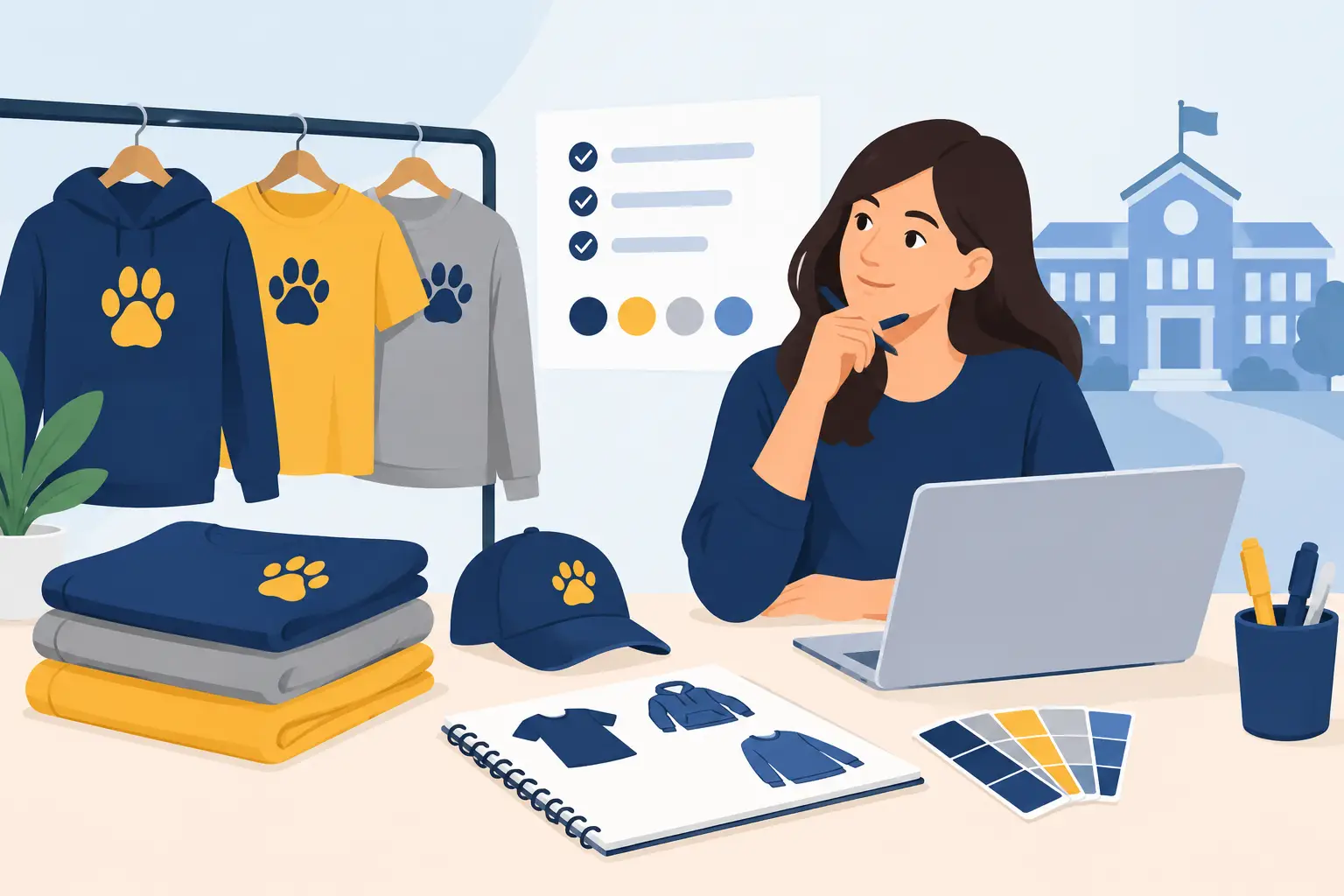
A spirit wear order can either build visible pride across campus or become a box of leftover shirts nobody wants. The difference is rarely just the logo. When you plan school spirit wear around real audiences, school events, and production requirements, you create apparel people are glad to wear well beyond pep rally day.
For school administrators, parent groups, athletic directors, and activity coordinators, the goal is not simply to place an order. It is to deliver a coordinated collection that represents the school accurately, fits comfortably, arrives on time, and works within the available budget.
Start With the Purpose Behind the Collection
Before selecting a T-shirt color or approving artwork, define what the spirit wear needs to accomplish. A fundraiser for the parent-teacher organization has different priorities than apparel for a championship game, new-student orientation, or staff appreciation week. Each use case affects the product mix, quantity, decoration method, and ordering timeline.
A school-wide collection often needs broad appeal. It may include affordable tees for students, polos for staff, hoodies for families, and caps or tote bags for supporters who want a lower-cost option. A sports-focused order may place more emphasis on performance fabrics, player names, jersey numbers, and colors that stand out in the stands.
It also helps to identify the primary buyer. If families will order directly, offer practical items at several price points. If the school is purchasing in bulk for staff or student leaders, prioritize consistency, durability, and easy size collection. Clear goals prevent a collection from becoming too large, too expensive, or too complicated to manage.
Plan School Spirit Wear Around Your School Identity
Strong spirit wear feels recognizable even from across a gymnasium. That starts with using school-approved colors, mascot artwork, logos, and typefaces consistently. A faded interpretation of a school color or a stretched mascot graphic can undermine an otherwise polished program.
Gather the brand assets before design begins. This includes high-resolution logo files, official color references, mascot variations, department names, and any rules for using district marks. If the original artwork is unavailable, a production partner can help prepare artwork for print or embroidery, but approvals should still come from the school’s designated decision-maker.
Keep the collection visually connected without making every item identical. A front-left-chest embroidered polo can carry the same identity as a bold full-front spirit tee. A premium hoodie might feature a larger mascot graphic on the back, while a cap uses a simplified embroidered emblem. The common thread should be the school identity, not a copied design on every product.
Build a collection with clear roles
A balanced school spirit wear program typically includes products for different settings and budgets. Consider offering at least four categories:
- Everyday T-shirts for students, clubs, volunteers, and casual events
- Polos or button-down options for staff, administrators, and formal school functions
- Hoodies, crewnecks, or jackets for cooler weather and higher-value fundraising
- Caps, tote bags, lanyards, or small accessories for supporters and event giveaways
Not every school needs every category. A small elementary school may succeed with one tee, one hoodie, and a tote bag. A large high school with athletics, alumni activity, and multiple student organizations may benefit from a more complete range. The best assortment is the one your community can understand and order confidently.
Choose Garments for Wearability, Not Just Appearance
The lowest unit price is not always the most economical choice. Thin fabric, inconsistent sizing, or poor color retention can lead to complaints and discourage repeat orders. Select garments according to who will wear them, how often they will be washed, and where they will be used.
Cotton or cotton-blend T-shirts are a familiar choice for general spirit wear because they are comfortable and easy to decorate. Ringspun cotton can give a softer retail feel for fundraiser merchandise, while standard cotton may suit large-volume event shirts. Polyester and performance blends are better suited to athletic programs, outdoor activities, and hot-weather events because they dry quickly and hold their shape well.
For staff apparel, polos should feel professional without being restrictive during a full school day. Consider breathable pique fabric, moisture-wicking options, and styles available in both men’s and women’s fits. For outerwear, think beyond appearance: zipper quality, pocket placement, fabric weight, and washability all affect whether the item becomes a regular uniform piece or stays in a closet.
Sizing deserves the same attention as garment style. Request a size chart early, decide which fit options to offer, and collect sizes using a clear deadline. If ordering for a large group, build in reasonable extras for exchanges, late additions, and new staff. A small buffer is often less costly than placing a second production run for a few missing sizes.
Match the Decoration Method to the Design
The decoration method should support the design, garment fabric, expected use, and order volume. It is not a one-size-fits-all decision.
Screen printing is a reliable choice for bold artwork and larger quantities. It produces strong, long-lasting color on T-shirts, sweatshirts, and many cotton-based garments. Because setup is involved, it is generally most cost-effective when the same design is repeated across a substantial order.
Embroidery brings texture and a professional finish to polos, jackets, caps, and bags. It is especially effective for smaller logos, names, and emblems. Very detailed artwork or tiny text may need to be simplified before stitching, so review a proof carefully before production begins.
Sublimation works well for all-over designs and polyester garments, particularly for sports jerseys. Heat transfer can be useful for individual names, numbers, short-run personalization, or graphics with specific color requirements. Direct-to-garment printing can suit detailed, full-color designs on compatible garments when order quantities and artwork call for it.
A capable supplier should recommend the method that protects both the visual result and the order budget. Ask to review the garment color, print placement, logo size, and final artwork proof before approval. Specification accuracy at this stage prevents expensive corrections later.
Set a Production Schedule Backward From the Event
School calendars are full of dates that cannot move: registration days, homecoming, tournament weekends, graduation, open houses, and fundraising launches. Spirit wear needs to arrive before the moment it is needed, not on the day of the event.
Work backward from your distribution date. Allow time for design development, internal approvals, size collection, ordering, production, quality control, packing, and handout. If garments are custom dyed, require specialty fabrics, include individual names, or involve several decoration methods, allow additional lead time.
Avoid treating approval as a formality. A delayed logo confirmation or an incomplete size list can hold up an entire order. Assign one person to consolidate feedback and give final sign-off. This keeps decisions moving and ensures the supplier receives one accurate set of instructions.
For recurring programs, create an annual calendar. Ordering fall apparel during the summer and winter items before the holiday rush gives your school more flexibility in product selection and production scheduling. It also helps the school avoid rushed decisions when event pressure is highest.
Make Ordering and Distribution Easy
The best collection can still create frustration if ordering is confusing. Decide early whether the school will purchase inventory in bulk, collect preorders, or use a combination of both. Preorders reduce leftover stock and help protect the budget, while bulk inventory provides immediate availability for walk-in sales, new families, and event-day demand.
Use simple product names, clear garment images, size charts, and firm order deadlines. Limit options when needed. Too many shirt colors, logo variations, and personalization choices can slow approvals and make fulfillment harder. A focused collection usually performs better than a catalog-sized menu.
Distribution should be planned as carefully as production. Label orders by student, classroom, team, or department. Separate staff apparel from family preorders. If products are for a fundraiser, reconcile quantities and payments before handout day. Organized packing protects the experience your school community has with the program.
Protect Quality With a Final Review
Before the full run begins, review the approved proof with practical questions in mind. Is the logo legible at the selected size? Does the ink color show clearly on the garment? Is the spelling correct for school names, teams, and sponsor recognition? Are names and numbers matched to the right sizes?
Once production is complete, quality control should confirm decoration placement, garment counts, size breakdowns, and overall finish. This is where a full-service production partner earns trust: by treating every approved specification as a commitment, not a suggestion.
Green Cotton supports schools with custom apparel, embroidery, screen printing, sublimation, and bulk production coordination, helping teams move from an initial idea to a finished collection with accountability at each stage.
School spirit is most visible when it feels shared. Give your community apparel that is comfortable, recognizable, and ready when the calendar calls for it, and every hallway, game night, and school event becomes a stronger expression of belonging.