
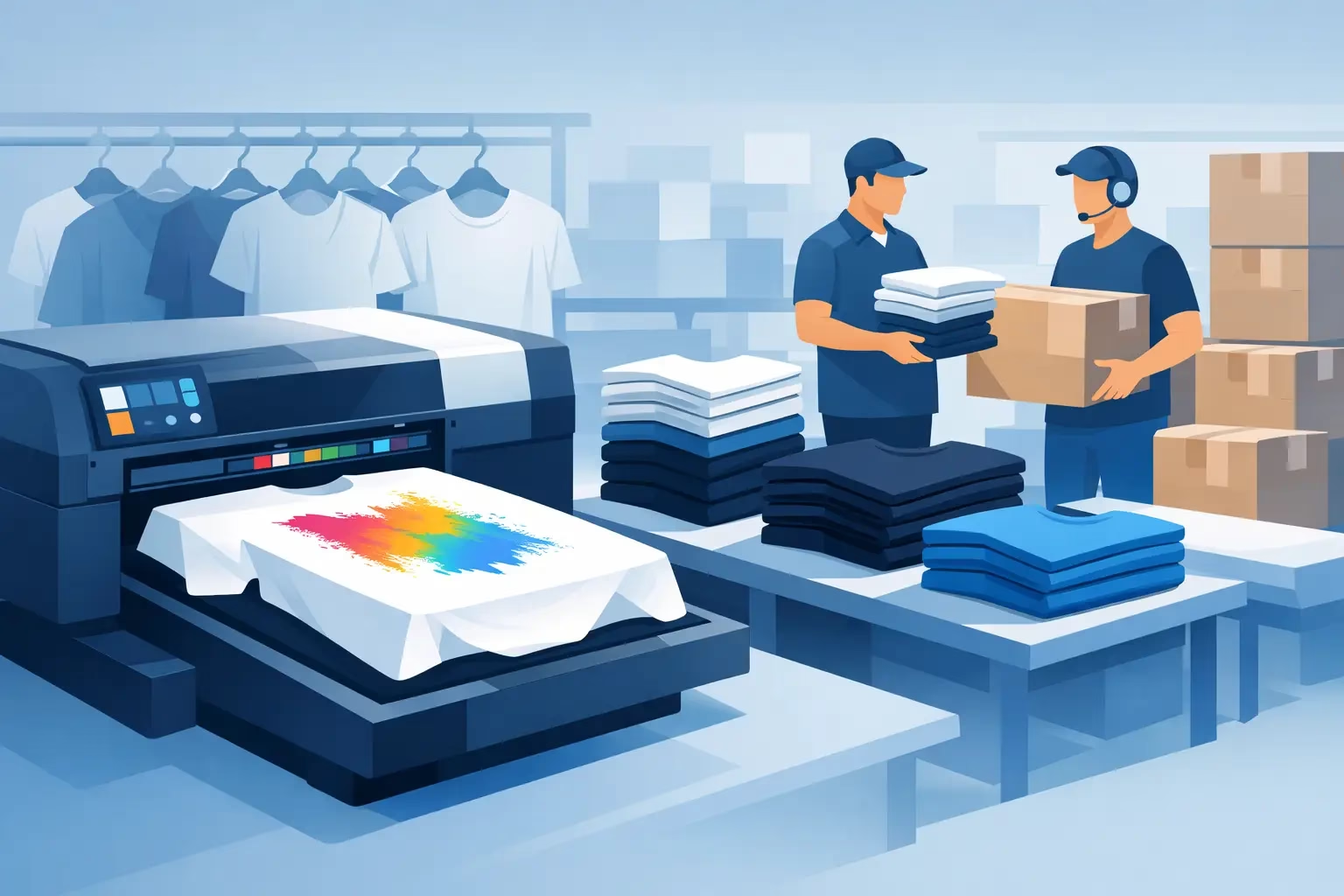
When a campaign shirt needs full-color artwork, staff uniforms need a soft hand feel, or event merchandise has to look sharp without heavy ink buildup, direct to garment printing bulk orders become part of the conversation fast. The real question is not whether DTG can print in volume. It can. The better question is whether it is the right production method for your artwork, garment choice, timeline, and unit economics.
For business buyers, that distinction matters. Procurement teams are not buying a print method. They are buying consistency, turnaround confidence, brand accuracy, and a result that matches the purpose of the apparel. A promotional tee for a product launch has different priorities than a retail-style branded shirt for employees or a premium event run for VIP attendees.
What direct to garment printing bulk really means
Direct to garment printing bulk is the use of DTG technology for larger apparel runs rather than one-off samples or short custom orders. The process applies water-based ink directly onto the garment, which allows for high-detail graphics, gradients, and complex color blends that would be difficult or expensive to separate through more traditional methods.
That sounds straightforward, but bulk production introduces a different level of control. Print placement has to stay consistent across sizes. Fabric composition needs to be compatible with the ink and pretreatment process. The artwork has to be prepared correctly for the shirt color, especially on dark garments. Once quantities rise, even small setup errors can repeat across an entire order.
This is why experienced production planning matters. In a bulk environment, the print method is only one part of the result. Garment sourcing, pretreatment, curing, artwork handling, inspection standards, and delivery coordination all affect whether the order arrives looking production-ready or improvised.
When direct to garment printing bulk orders make sense
DTG is often a strong fit when your design includes photographic detail, tonal shading, or multiple colors that would make screen printing less practical. If your logo treatment includes gradients, textured effects, or artwork that changes frequently between departments, campaigns, or event editions, DTG gives you more flexibility without rebuilding screens for every variation.
It is also useful when brand presentation matters up close. Because the ink sits more naturally in the fabric than heavier print layers, DTG can produce a softer feel, especially on suitable cotton garments. That makes it appealing for company apparel that employees will actually want to wear beyond a single event.
Bulk DTG can also work well when size ranges are wide and forecasting is imperfect. If you are ordering for a school, conference team, internal staff rollout, or multi-branch activation, you may need varied quantities across sizes without compromising artwork quality. DTG supports that flexibility better than methods that become cumbersome when lot composition shifts.
Still, volume alone does not automatically make DTG the best choice. Large quantities with simple spot-color artwork may be more cost-efficient through screen printing. That is where a consultative production partner adds value. The goal is not to push one decoration method across every order. The goal is to match the method to the job.
The trade-offs buyers should understand
DTG has clear strengths, but serious buyers should evaluate it with the same discipline they apply to any sourcing decision. The first trade-off is garment compatibility. DTG performs best on high-cotton or cotton-rich garments. If your project depends on performance fabrics, certain blends, or specialized workwear materials, another decoration method may deliver better durability or visual results.
The second trade-off is cost structure. DTG avoids the screen setup costs associated with traditional screen printing, which is helpful for artwork complexity and variation. But on very large runs with simple designs, screen printing often becomes more economical per unit. That is especially true when the artwork uses limited colors and remains identical across the entire order.
The third trade-off is production pace. DTG can absolutely support larger quantities, but speed depends on artwork coverage, garment color, machine capacity, drying and curing workflow, and quality control standards. A buyer working against a hard event date should never assume that a bulk DTG order moves at the same speed regardless of design complexity. A realistic schedule always starts with the actual job specifications.
There is also the issue of expectation setting. DTG is excellent for detail, but not every file sent by a client is production-ready. Low-resolution artwork, incorrect color builds, and files designed for digital screens rather than fabric can affect the final print. Reliable suppliers address this early, before approval turns into rework.
How to evaluate a bulk DTG order before production
A well-managed order starts with the garment, not the printer. Fabric composition, color, weight, and intended use all influence whether DTG is the right choice. If the shirts are for indoor promotional wear, your decision criteria may lean toward print appearance and comfort. If they are for repeated staff use, washing performance and consistency across reorders become more important.
Next comes artwork review. Fine details, gradients, photo-based graphics, and color transitions usually support the case for DTG. At the same time, artwork size matters. A small left-chest logo is different from a full-front print with dense color coverage. Ink usage, print time, and visual impact all change with coverage.
Then consider quantity by SKU. A bulk order is rarely just one number. It is broken across sizes, colors, garment styles, and sometimes departments or event groups. A good production plan looks at the real order mix. That is how you avoid delays, stock mismatches, and avoidable substitutions.
Approval control is another practical step. Before full production begins, buyers should confirm artwork placement, print dimensions, garment specs, and acceptable tolerance. This is especially important when apparel is tied to a campaign launch, employee onboarding, or a branded event where consistency is visible.
Why supplier capability matters more in bulk
Bulk printing does not reward guesswork. Once quantities increase, you need a supplier that can manage the full production chain with discipline. That means accurate garment sourcing, in-house print control, clear artwork handling, and quality checks that catch issues before packing.
This is where an end-to-end partner makes the difference. Instead of treating printing as an isolated service, the order is managed as a full manufacturing project. Garment selection, fabric suitability, branding method, sizing distribution, and delivery timing are handled together. That reduces friction and gives the buyer one accountable point of coordination.
For organizations ordering across multiple teams or functions, this matters even more. Marketing may care about visual impact. HR may care about employee comfort. Procurement may care about price stability and fulfillment confidence. Operations may care about delivery deadlines. A capable supplier aligns those priorities instead of forcing the buyer to solve production gaps alone.
Green Cotton works with this reality every day. Bulk apparel orders succeed when the specifications are clear, the decoration method matches the use case, and the production team owns quality from concept to delivery.
Direct to garment printing bulk vs other methods
If your design is bold, simple, and repeated in high volume, screen printing will often be the stronger value play. It remains highly efficient for large runs and solid color artwork. If your garments are performance-focused or require edge-to-edge graphics, sublimation may be more appropriate. If the goal is texture, elevated brand presentation, or long-term uniform wear, embroidery may outperform print entirely for selected placements.
DTG fits the space where detail, comfort, and visual flexibility are priorities. It is especially useful when the design would lose its impact if simplified to accommodate another method. For branded merchandise, event shirts, campaign apparel, or employee wear that needs a more retail-like finish, that can be a meaningful advantage.
The best decision is rarely about which method sounds most advanced. It is about which method delivers the right result with the fewest compromises.
Planning for better results
If you are considering direct to garment printing bulk for your next order, start with the intended use, the garment type, and the actual artwork. From there, evaluate quantity, timeline, and cost against alternative decoration methods. A reliable supplier should be able to explain where DTG is the right fit, where it is not, and what adjustments will improve the final outcome.
That kind of guidance protects more than the print. It protects your schedule, your budget, and your brand presentation. When apparel is part of how your organization shows up, every production decision carries weight.
The smartest bulk orders are not the ones that simply get printed. They are the ones that arrive on time, match the approved specifications, and make your team look ready the moment the cartons open.