
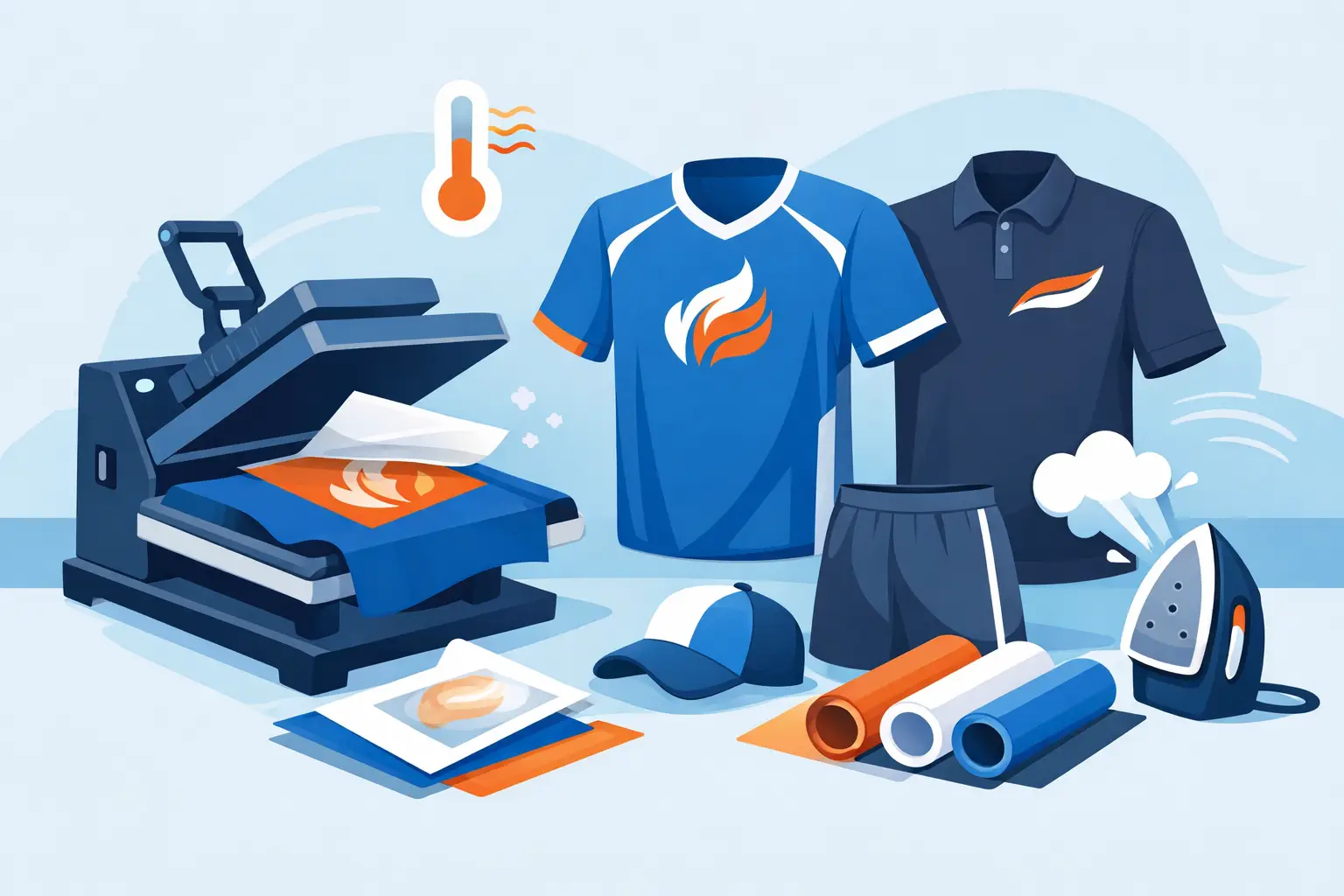
A uniform has to do more than look good in a sample photo. It has to hold up on the shop floor, present the right brand image at the front desk, and stay consistent across every branch, shift, and event. That is why heat transfer printing for uniforms is often the right choice for organizations that need clean branding, flexible placement, and dependable production across multiple garment types.
For procurement teams, HR managers, school administrators, and event organizers, the real question is not whether a logo can be printed. It is whether the print method fits the fabric, the usage, the design detail, the reorder plan, and the timeline. Heat transfer works well because it gives you control. It supports precise graphics, names and numbering, and smaller production runs without forcing you into a one-method-fits-all decision.
What heat transfer printing for uniforms actually does well
Heat transfer printing applies a design to a garment using heat and pressure. In practical terms, that means your artwork is prepared on a transfer material and then pressed onto the uniform surface in a controlled production process. The result is a sharp, consistent print that can be used on T-shirts, polos, jerseys, workwear, jackets, caps, and selected bags.
For many uniform programs, the biggest advantage is flexibility. Heat transfer is especially useful when designs include fine lines, small text, individual names, department labels, or player numbers. It also works when different roles need different markings on the same base garment. A warehouse supervisor, sales promoter, and event crew member may all wear the same shirt, but each may need different back text or identifiers. Heat transfer handles that variation efficiently.
It is also a strong option when branding needs to appear in specific positions beyond the standard chest print. Sleeve logos, upper-back marks, reflective details, and smaller placements are often easier to manage with transfer methods than with more rigid decoration setups.
When heat transfer makes sense for bulk uniform orders
Bulk orders do not always mean one identical design repeated hundreds of times. In many organizations, bulk means one coordinated program with variations. Different locations may need different staff names. School houses may require separate colors or labels. Sports teams need numbering. Campaign teams may need event-specific messages for short-term use.
This is where heat transfer printing for uniforms becomes commercially practical. It allows a business to standardize the core garment while customizing the visible details that matter on the ground. You maintain brand consistency without giving up operational flexibility.
Turnaround is another factor. If you are preparing for a product launch, staff onboarding, a roadshow, or a school intake period, decoration speed matters. Heat transfer can support faster execution on certain order types, particularly when compared with methods that require more extensive setup for every design change. That does not mean every rush job should default to transfer, but it does mean the method deserves serious consideration when timing is tight.
The main trade-offs buyers should understand
No print method is perfect for every uniform. Good production decisions come from matching the method to the job.
Heat transfer performs best when design precision and customization flexibility are priorities. It is excellent for logos with crisp edges, individual personalization, and controlled placement. However, if you are ordering very large quantities of the exact same simple artwork, another method may sometimes be more cost-efficient over the full run. The economics depend on artwork complexity, garment type, print size, number of placements, and whether each piece is identical or variable.
Durability also depends on proper material selection. A well-produced transfer on the right garment can perform very well in daily use, but not all transfers are equal. Uniforms worn in high-heat industrial settings, heavy-wash environments, or physically abrasive conditions need the decoration method to be evaluated against actual use. Office polos, retail uniforms, event shirts, and teamwear have different wear patterns from industrial workwear or outdoor field uniforms.
That is why the best approach is consultative, not generic. You should not choose a print method based only on appearance. You should choose it based on how the garment will be worn, washed, stored, and reordered.
Choosing the right garments for heat transfer printing for uniforms
The garment matters as much as the artwork. Fabric composition, texture, stretch, and color all affect print performance.
Smooth polyester garments often pair well with transfer applications, especially in sportswear and performance uniforms where names, numbers, and sponsor marks are common. Cotton and cotton-blend garments can also work very well, particularly for promotional uniforms, campus wear, and service-industry apparel. Workwear requires more attention because heavier fabrics, coatings, or specialty finishes may change how the print behaves over time.
Color planning matters too. A vibrant logo on a black polo may require different transfer construction than the same logo on a white tee. If brand consistency across multiple garment colors is a priority, your production partner should account for that before bulk approval.
Sizing consistency is another overlooked issue. Large uniforms and small uniforms do not always carry the same print scale equally well. A decoration that looks balanced on a medium sample may feel too small on a 3XL jacket or too dominant on a youth-size polo. Good production planning adjusts for readability and visual balance without compromising identity standards.
Why artwork setup and approval matter
Most printing problems do not begin at the press. They begin with unclear files, inconsistent brand references, or approvals that happen too quickly.
For uniforms, artwork should be treated as part of specification control. Logo size, placement, color values, text formatting, and naming conventions all need to be confirmed before production starts. This becomes even more important when you are ordering across departments, branches, or campaigns.
A disciplined approval process protects both brand image and budget. It reduces the risk of misprints, inconsistent placement, or rushed rework. For B2B buyers, this is not a minor detail. It affects rollout timing, replacement costs, and internal stakeholder confidence.
A capable supplier will guide this process instead of leaving the burden on your team. That support matters when your order includes mixed garments, multiple logo placements, or personalized details across hundreds of units.
Heat transfer vs other decoration methods
The right question is not which method is best in general. It is which method is best for your specific uniform program.
Embroidery gives a premium textured finish and is often preferred for corporate polos, caps, and outerwear, but it is not ideal for every detailed logo or lightweight performance fabric. Screen printing can be highly efficient for larger runs of simple, repeated artwork, but it becomes less practical when every piece needs unique information. Sublimation is excellent for all-over polyester sportswear designs, though it requires the right garment and production approach from the start.
Heat transfer sits in a very useful middle ground. It delivers clean visual results, supports personalization, and adapts well to mixed-use uniform requirements. For many organizations, that balance is what makes it valuable.
What to ask before placing a uniform order
If you are sourcing uniforms in volume, ask direct operational questions. Will the print method suit the fabric and the work environment? Can names, numbers, or role identifiers be added accurately? Will repeat orders match the original specification? Can multiple garment categories be handled under one production plan? And just as important, can the supplier meet your deadline without compromising consistency?
Those questions matter because uniforms are not just merchandise. They are part of how your organization shows up every day. A missed shade, peeling print, or inconsistent logo position affects more than appearance. It affects professionalism.
This is where an end-to-end production partner adds value. Green Cotton supports businesses, schools, teams, and organizers that need more than decoration alone. From garment selection and branding method guidance to bulk execution and quality control, the goal is to make sure the final product performs in real use, not just in pre-production discussion.
If your uniform program needs sharp branding, variable personalization, and a production method that can adapt to real operational demands, heat transfer is worth serious consideration. The best result comes from matching the print method to the job, then executing it with discipline. When that happens, your uniforms stop being a purchasing task and start doing what they are supposed to do – represent your identity with confidence, every time.