A uniform can look sharp at the start of a shift and still fail the people wearing it by noon. When comparing polyester versus cotton uniforms, the best choice is not simply about appearance. It affects employee comfort, garment life, printing quality, replacement frequency, and how consistently your brand is represented across every location, event, or team.
For procurement teams and organizers ordering in bulk, fabric selection should begin with the job the uniform needs to do. A front-desk polo, a warehouse work shirt, a school event tee, and a sports jersey all place different demands on the garment. The right material makes daily wear easier and helps protect the investment behind your branded apparel.
Polyester Versus Cotton Uniforms: The Core Difference
Cotton is a natural fiber known for its soft, familiar feel. It is breathable and absorbent, which can make it especially comfortable for indoor teams, customer-facing staff, and casual corporate wear. A cotton T-shirt often has the relaxed hand feel people expect from everyday apparel.
Polyester is a synthetic fiber engineered for performance and consistency. It resists wrinkles, holds its shape, dries quickly, and stands up well to repeated washing. It is a practical choice for uniforms that need to look orderly through long shifts, frequent travel, outdoor activity, or high-volume use.
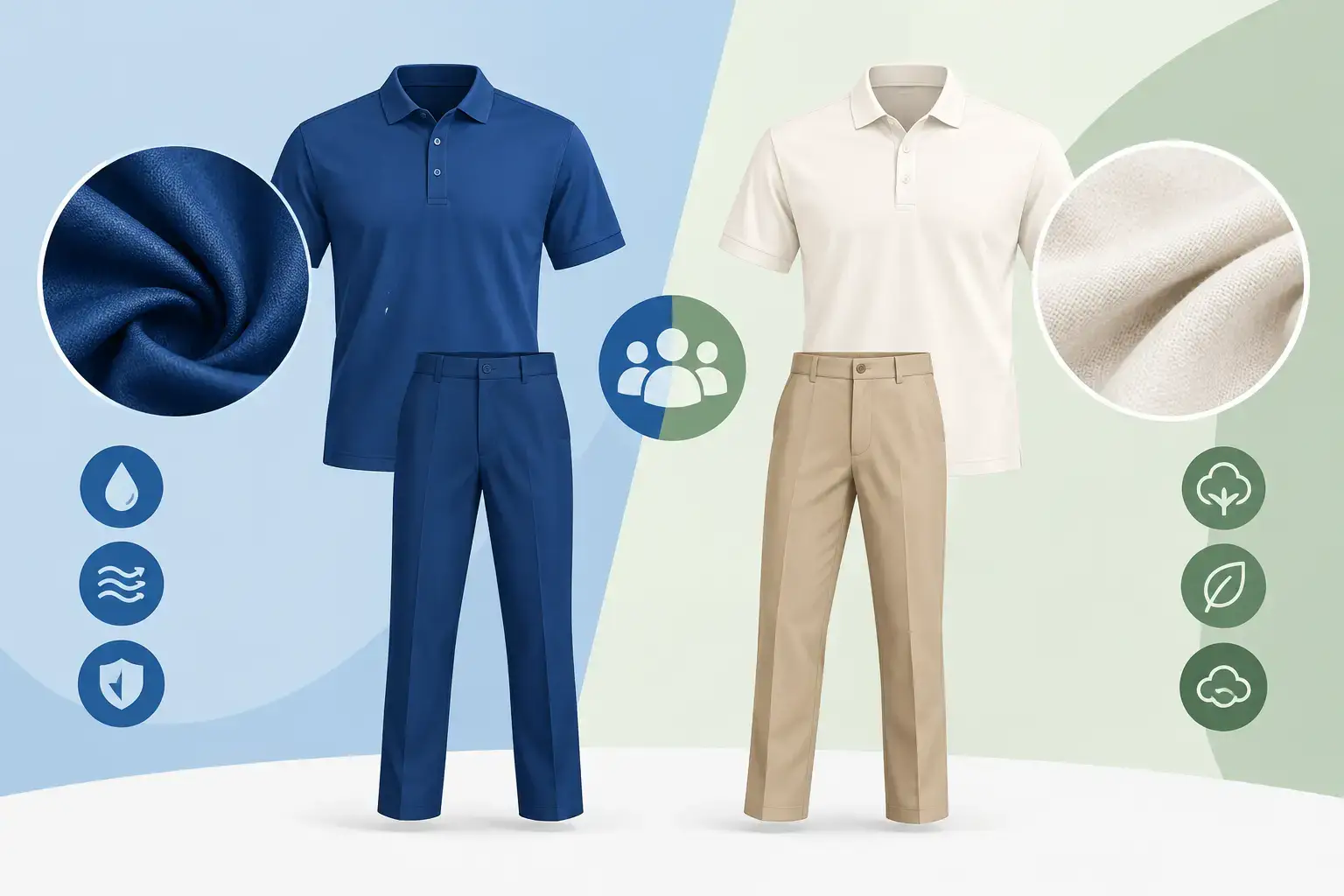
Neither fabric wins in every situation. Cotton generally leads on natural softness and moisture absorption. Polyester usually leads on durability, color retention, and lower-maintenance wear. The decision comes down to the environment, the wearer, the decoration method, and the standards your organization expects from its uniform program.
Comfort Depends on the Working Environment
Cotton absorbs perspiration rather than moving it away from the skin. In an air-conditioned office, retail store, school setting, or hospitality environment, that softness can be a real advantage. Cotton uniforms can feel approachable and comfortable, particularly when staff wear them for a standard indoor shift.
However, absorbed moisture also means cotton can become heavy and stay damp longer in hot, humid, or physically active conditions. For delivery crews, event staff, outdoor teams, production workers, and athletes, that can reduce comfort over a full day.
Polyester is less absorbent and typically dries faster. Performance polyester fabrics are designed to pull moisture away from the body and allow it to evaporate, helping wearers feel drier during active work. The fabric can feel less natural than cotton, especially in lower-quality constructions, but a well-selected polyester knit can be lightweight, smooth, and highly wearable.
For many organizations, a cotton-polyester blend provides the most practical middle ground. Blends can retain some cotton softness while adding polyester’s shape retention, faster drying, and durability. They are often a strong choice for everyday polos, staff tees, school uniforms, and promotional apparel that must satisfy a wide range of wearers.
Durability and Care Costs Matter in Bulk Orders
A uniform is not judged only when it arrives. It is judged after dozens of washes, repeated shifts, and regular exposure to the conditions of the job.
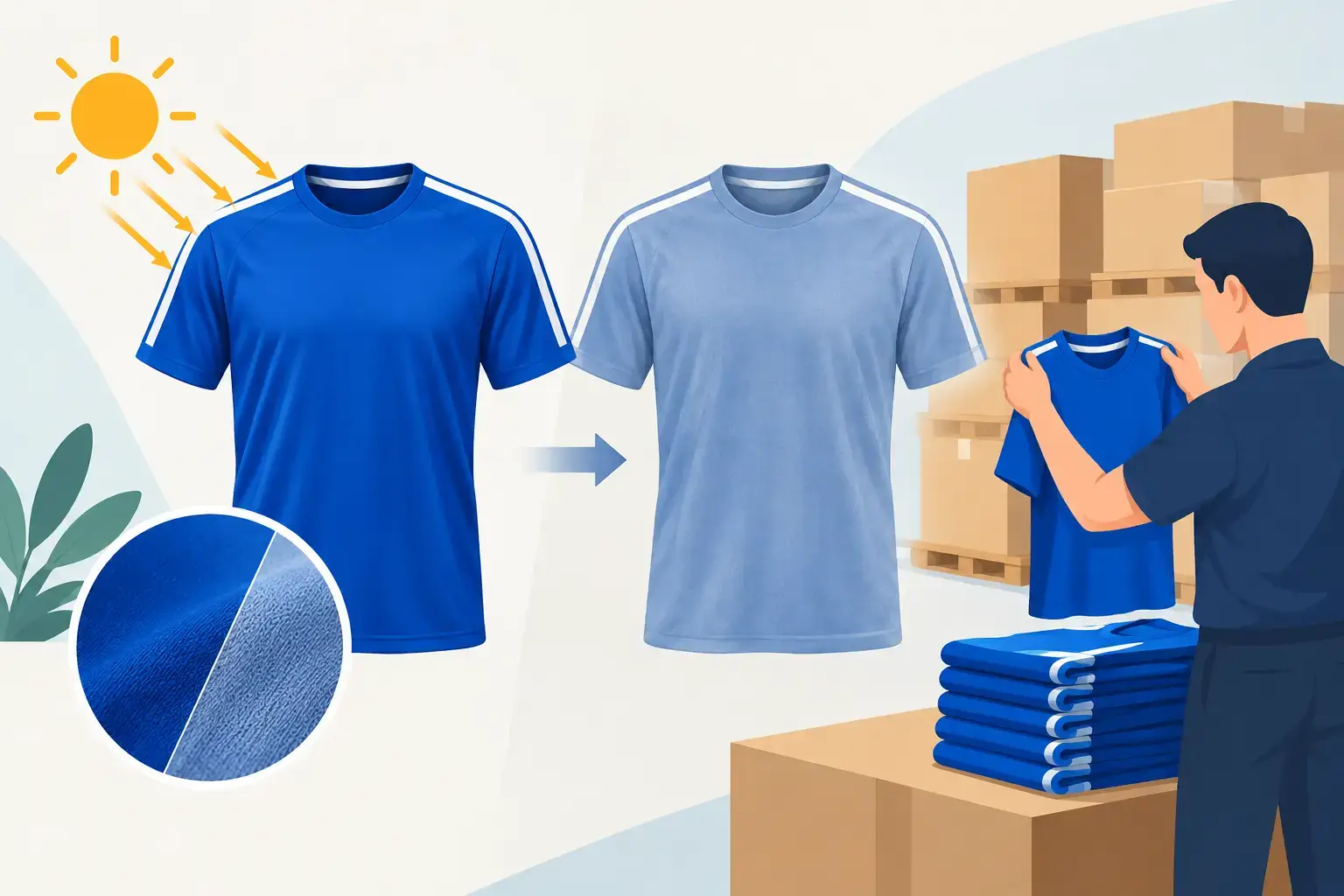
Polyester has a clear advantage when longevity and easy care are priorities. It is resistant to shrinking, stretching, and wrinkling. Colors also tend to remain more stable, which matters when employees are hired at different times and your team needs a consistent appearance. Polyester garments are often easier for staff to wash, dry, and wear without ironing.
Cotton may shrink if it is not pre-shrunk or if laundry instructions are ignored. It can wrinkle more readily and may gradually lose its crisp shape. Cotton is still durable when the garment weight and construction are right, but it usually requires more care to maintain a polished presentation.
This does not mean polyester should automatically be selected for every high-use program. Heavyweight cotton can be an excellent option for workwear or premium merchandise where substantial feel matters. The key is to match fabric weight, weave, and finishing to the expected wear cycle rather than choosing based on fiber content alone.
Branding and Decoration Results
Your uniform carries more than a logo. It communicates whether your organization is organized, credible, and consistent. Fabric selection directly influences how screen printing, embroidery, heat transfer, direct-to-garment printing, and sublimation perform.
Cotton is widely favored for direct-to-garment printing because it accepts water-based inks well and can produce detailed, vibrant artwork. It is also a reliable base for screen printing and embroidery. For branded T-shirts with large artwork, campaigns, school activities, and casual team apparel, cotton creates a classic printed look.
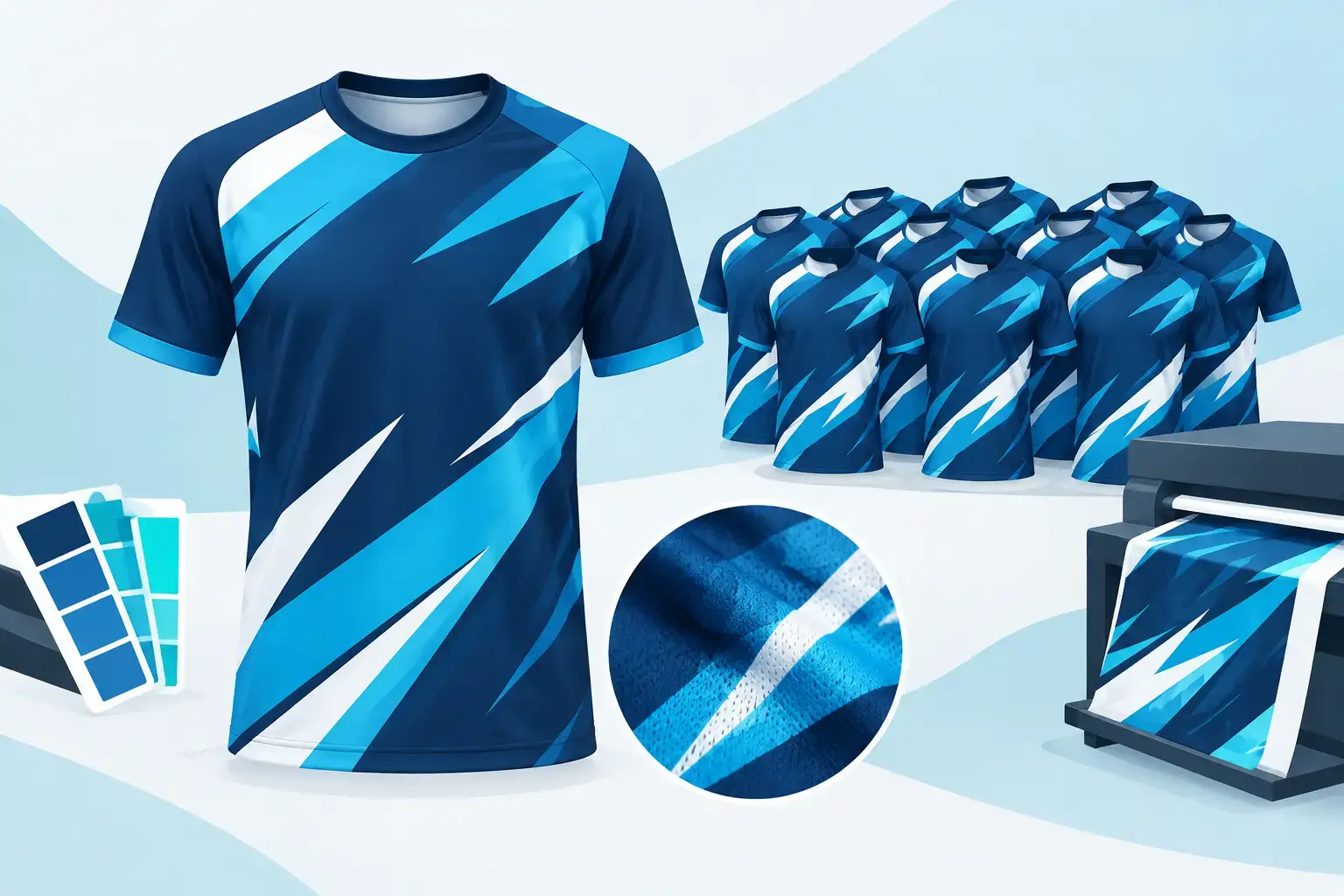
Polyester performs especially well for sublimation. Because sublimation bonds dye into polyester fibers, it delivers vivid, durable all-over designs without adding a heavy printed layer. This makes polyester a natural fit for sports jerseys, performance wear, event shirts, and designs with gradients, names, numbers, or full-color coverage.
Embroidery works on both materials, although the garment structure matters. A stable polo knit, woven shirt, jacket, or cap gives embroidery the support it needs. Lightweight fabrics may require backing or careful placement to prevent puckering. Heat transfers can also work across cotton, polyester, and blends, but temperature settings must be matched to the fabric to avoid scorching or dye migration.
A capable supplier should review your artwork, garment choice, logo size, and intended use before production. This avoids a common mistake: selecting a decoration method because it is familiar rather than because it will deliver the strongest result on that specific fabric.
Cost Is More Than the Unit Price
Cotton and polyester pricing varies by garment weight, construction, origin, order quantity, finishing, and customization requirements. A lower initial price does not always mean a lower uniform program cost.
If a polyester polo retains its color and shape longer, it may reduce replacement orders. If a cotton shirt creates a more comfortable experience for customer-facing staff, it may support better employee acceptance and more consistent wear. For a one-day event, a cost-effective cotton tee may be exactly right. For a field team that washes uniforms multiple times each week, polyester or a durable blend may provide better long-term value.
It is also worth considering inventory continuity. When departments reorder uniforms months later, color matching and style availability become important. Polyester’s color consistency can be helpful for large, ongoing programs, while custom-dyed fabrics can provide greater control when exact brand color is non-negotiable.
Which Uniform Fabric Fits Your Organization?
Choose cotton when softness, natural feel, and casual comfort are the main goals. It works well for office teams, retail staff, student programs, brand activations, volunteer shirts, and promotional T-shirts where the wearer experience matters as much as performance.
Choose polyester when uniforms face heat, movement, frequent washing, outdoor exposure, or a need for consistently sharp presentation. It is well suited to sportswear, logistics teams, security staff, event crews, delivery teams, and active corporate programs.
Choose a cotton-polyester blend when your team needs an adaptable daily uniform. Blended polos and T-shirts are popular because they balance comfort with practical care requirements. They are often the sensible choice for organizations outfitting employees with varied roles and preferences.
Before approving a bulk order, request fabric swatches or samples and assess them under real conditions. Check the feel, weight, stretch, opacity, color, decoration placement, and wash behavior. A fabric that looks ideal on a screen may perform differently under bright sunlight, air conditioning, or a physically demanding shift.
Turn Fabric Choice Into a Stronger Uniform Program
The most effective uniform programs begin with a clear brief: who will wear the garment, where they will work, how often it will be washed, and how your branding needs to appear. From there, fabric selection becomes a practical production decision instead of a guess.
Green Cotton helps organizations align garment type, fabric, color, sizing, and decoration method before bulk manufacturing begins. Whether the requirement is a breathable sublimation jersey, an embroidered corporate polo, or a durable staff T-shirt, every specification should support the same outcome: uniforms your team is comfortable wearing and your brand is proud to be seen in.
A well-chosen uniform earns its value one shift at a time. Start with the conditions your people actually face, then select the fabric built to meet them.